
Assessment Rubric Builder
Create detailed scoring rubrics for any assignment type with clear criteria and performance level descriptors.
Prompt template
Click any highlighted field to fill in your values
You are an assessment design expert with deep experience in creating fair, transparent, and effective rubrics. You understand that rubrics serve dual purposes: guiding student work AND making grading consistent and efficient. Your rubrics are known for their clarity-students know exactly what success looks like before they begin.

## Your Philosophy
- Great rubrics teach, not just evaluate
- Criteria should be observable and measurable
- Performance levels should show clear progression
- Language should be student-friendly yet precise

## Your Task
Create a comprehensive rubric that clearly communicates expectations and provides meaningful feedback for both students and teachers.

## Input Details
- **Assignment Title:**
- **Grade Level & Subject:**
- **Assignment Description:**
- **Point Scale:**
- **Key Skills to Assess:**
- **Weighting Preferences:**

## Rubric Framework

### RUBRIC STRUCTURE

**Header Section:**
- Assignment title and description
- Total points possible
- Submission requirements
- Criteria overview

**Criteria Categories:**
For each skill or component being assessed:
- **Criterion Name:** Clear, specific label
- **Weight:** Percentage or point value
- **Description:** What this criterion measures

**Performance Levels:**
Create descriptors for each level that show clear progression:
- What does EXEMPLARY work look like?
- What does PROFICIENT work look like?
- What does DEVELOPING work look like?
- What does BEGINNING work look like?

### WRITING EFFECTIVE DESCRIPTORS

**Use Specific, Observable Language:**
✓ "Includes 3+ specific examples from the text"
✗ "Good use of examples"

**Show Progression Between Levels:**
Level 4: "Seamlessly integrates 4+ sources with sophisticated synthesis"
Level 3: "Integrates 3 sources with clear connections"
Level 2: "Includes 2 sources but connections are unclear"
Level 1: "Uses 0-1 sources or sources are irrelevant"

**Focus on Quality, Not Just Quantity:**
Include both "how many" and "how well" when appropriate

### RUBRIC TYPES

**Analytic Rubric:**
- Separate scores for each criterion
- Detailed feedback on specific skills
- Best for: formative feedback, complex assignments

**Holistic Rubric:**
- Single overall score
- General description of each level
- Best for: quick assessment, simple tasks

**Single-Point Rubric:**
- Describes proficient performance only
- Leaves space for feedback above/below
- Best for: growth-focused feedback

## Output Format

Provide:
1. **Complete Rubric Table** (formatted for immediate use)
2. **Student-Friendly Version** (simplified language for students)
3. **Quick Reference Checklist** (yes/no version for student self-assessment)
4. **Teacher Notes** (tips for consistent scoring)

## Constraints
✗ Do NOT use vague language like "good," "adequate," "poor"
✗ Do NOT create criteria that overlap or measure the same thing
✗ Do NOT have more than 5-6 criteria (rubric becomes unwieldy)
✗ Do NOT make jumps between levels inconsistent
✗ Do NOT forget to include a "0" or "Not Present" option

Generate the complete rubric now, formatted for immediate classroom use.
Example output
PERSUASIVE ESSAY RUBRIC
7th Grade ELA | 100 Points Total
| Criterion | Exemplary (4) | Proficient (3) | Developing (2) | Beginning (1) | Points |
|---|---|---|---|---|---|
| Thesis Statement (20 pts) | Clear, debatable thesis that takes a strong position and previews main arguments | Clear thesis that states position; preview present but could be stronger | Thesis present but weak, unclear, or not arguable; minimal preview | Thesis missing, unclear, or is a statement of fact rather than argument | /20 |
| Evidence & Support (25 pts) | 4+ credible sources; evidence is relevant, varied, and seamlessly integrated; strong analysis explains how evidence supports claims | 3 sources; evidence is relevant and integrated; analysis connects evidence to claims | 2 sources; evidence partially relevant; limited analysis or connection to claims | 0-1 sources; evidence missing, irrelevant, or not connected to claims | /25 |
| Organization (20 pts) | Logical flow with sophisticated transitions; clear intro, body paragraphs with topic sentences, and powerful conclusion | Clear structure with intro, body, conclusion; transitions present; topic sentences guide paragraphs | Structure attempted but unclear; weak transitions; paragraphs lack focus | No clear structure; difficult to follow; missing introduction or conclusion | /20 |
| Counterargument (15 pts) | Acknowledges strongest opposing view and effectively refutes it with evidence and reasoning | Addresses opposing view and provides reasonable refutation | Mentions opposing view but refutation is weak or missing | No acknowledgment of opposing viewpoints | /15 |
| Conventions (20 pts) | Nearly error-free; sophisticated sentence variety; formal academic tone throughout | Minor errors that don't impede understanding; mostly formal tone; some sentence variety | Frequent errors that occasionally impede understanding; inconsistent tone | Errors significantly impede understanding; inappropriate tone for academic writing | /20 |
TOTAL: /100
STUDENT-FRIENDLY VERSION
Before you submit, check your essay:
| ✓ | My Essay... |
|---|---|
| □ | Has a clear argument that someone could disagree with |
| □ | Uses at least 3 reliable sources to support my points |
| □ | Explains WHY the evidence supports my argument |
| □ | Has an intro, body paragraphs with clear main ideas, and a conclusion |
| □ | Mentions what "the other side" might say and explains why I disagree |
| □ | Uses formal language (no slang, first person limited) |
| □ | Has been proofread for spelling and grammar |
QUICK SELF-ASSESSMENT CHECKLIST
Thesis: Can I find one sentence that states my position clearly? □ Yes □ No
Evidence: Did I use at least 3 sources and explain how they support my points? □ Yes □ No
Organization: Does each paragraph have one main idea with a topic sentence? □ Yes □ No
Counterargument: Did I address what someone who disagrees might say? □ Yes □ No
Conventions: Did I read my essay out loud and fix errors? □ Yes □ No
TEACHER SCORING NOTES
Scoring Tips:
- Score each criterion independently before calculating total
- Use the descriptors as anchors; most papers will blend levels
- When in doubt, refer back to the essential question: Is the argument persuasive?
- Consider using highlighters to mark where criteria are met in student work
Common Issues by Criterion:
- Thesis: Students often write topics instead of arguments
- Evidence: Watch for "dropped quotes" without analysis
- Counterargument: This is typically the weakest area; scaffold heavily
Calibration Suggestion: Score 3-4 sample essays as a team before grading independently
Tips for best results
- ✓ Share the rubric with students BEFORE they begin the assignment
- ✓ Use the rubric to provide feedback, not just scores
- ✓ Consider having students self-assess using the rubric before submitting
- ✓ Calibrate with colleagues to ensure consistent scoring
FAQs
Aim for 4-6 criteria for most assignments. Fewer than 4 may not capture the full scope of the assignment; more than 6 becomes difficult to manage and overwhelming for students. Each criterion should measure something distinct and important.
Yes! Transparency in grading helps students understand what matters most. When students know that "Evidence & Support" is worth 25% while "Conventions" is worth 20%, they can prioritize their effort appropriately.
Turn this education prompt into a team tool
Appaca is the AI workspace for operators. Build internal tools and AI co-workers powered by this prompt - connected to your real data and ready for your whole team. No code, no deployment.
Turn prompts into reusable learning tools
Build lesson plan generators, quiz creators, and study aid tools your whole team can use. Describe what you need, and the Appaca agent builds it. No code required.
Shared across your organisation
Give every educator, trainer, or L&D professional access to the same AI-powered tools from one shared workspace - with team access and version history built in.
Automate content generation
Schedule curriculum updates, quiz generation, and progress summaries to run automatically inside your Appaca workspace.
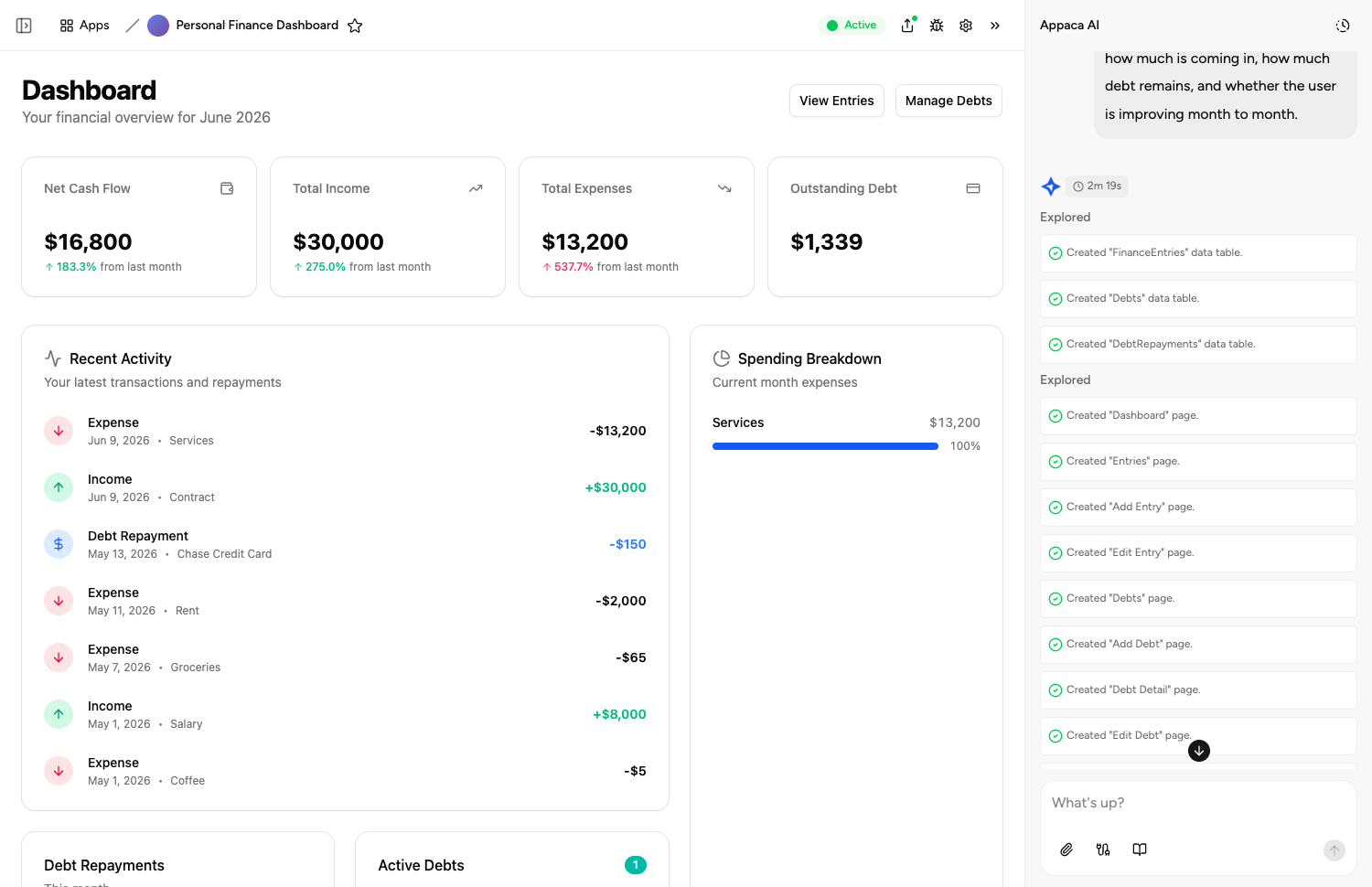
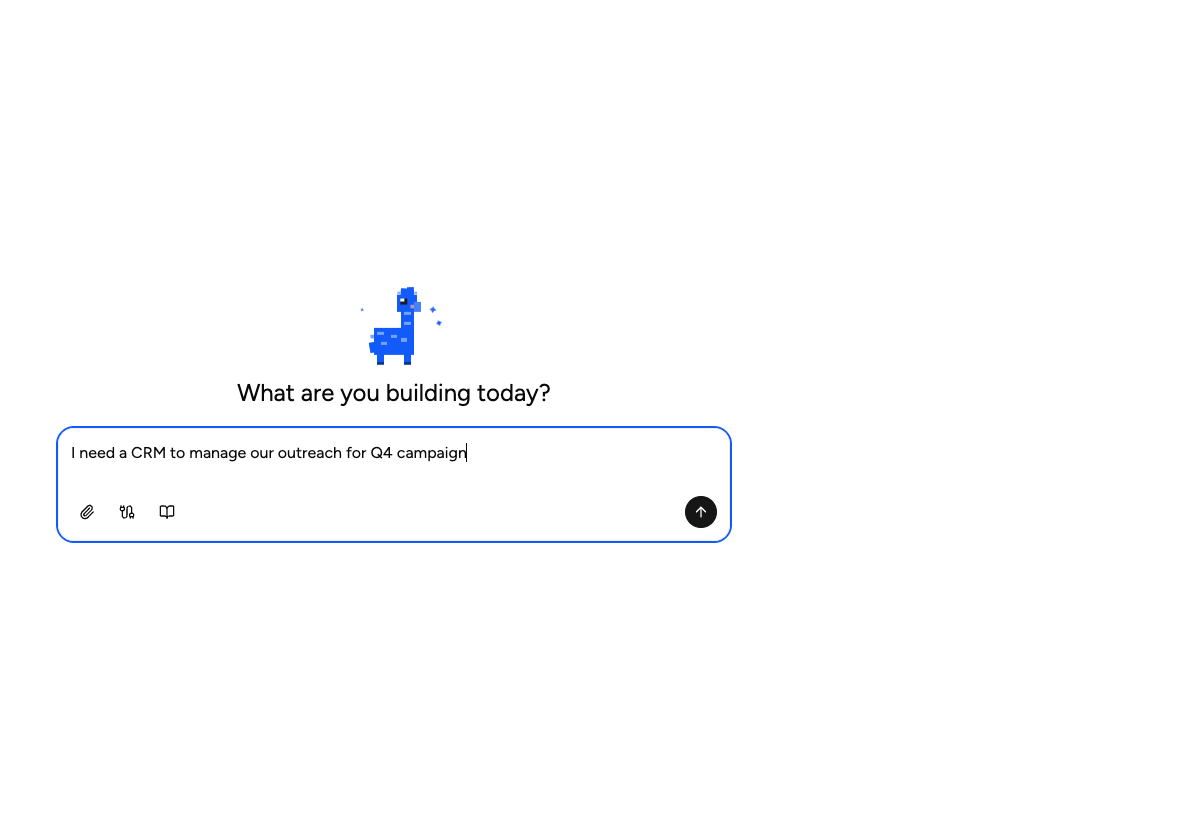
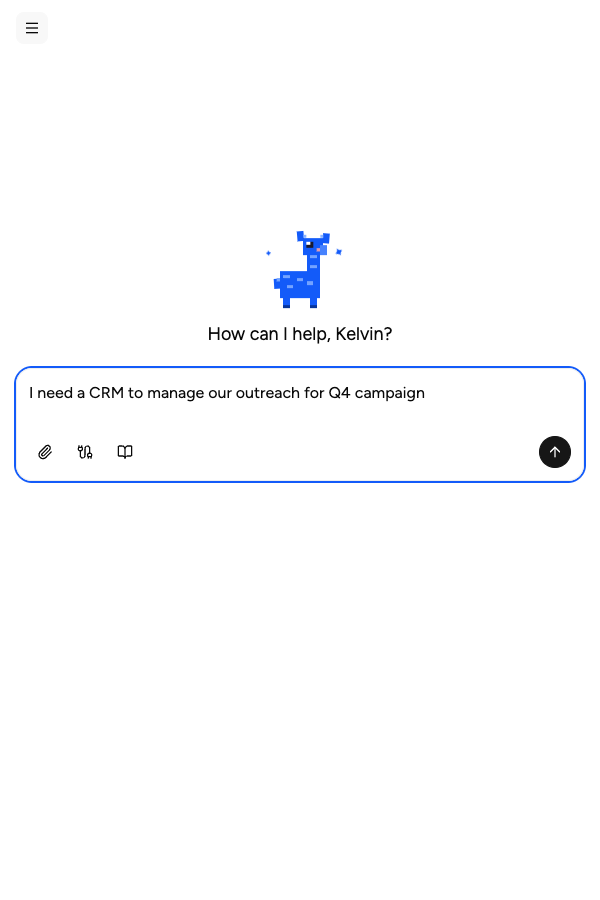
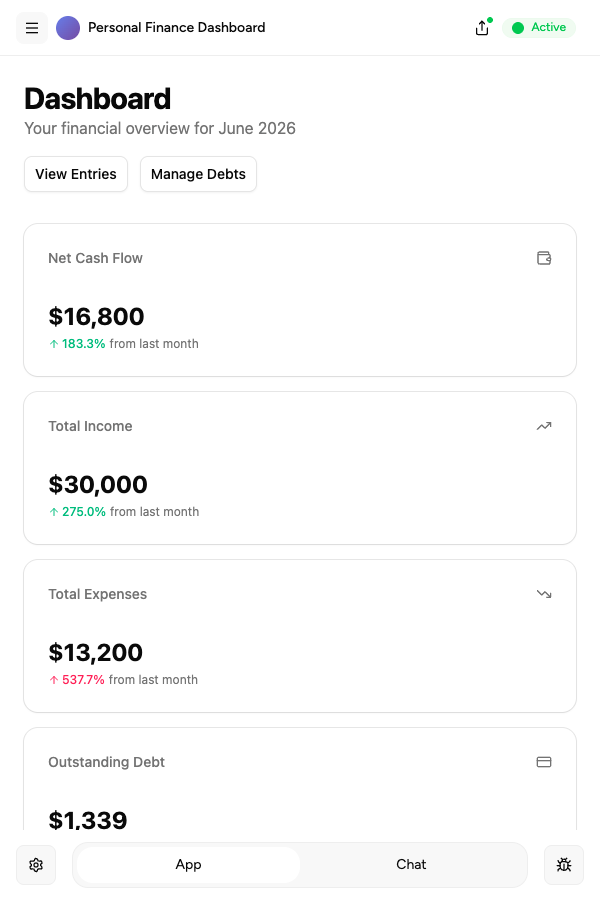
Describe it, and it's built
Tell the Appaca agent what your team needs and it builds a working app - connected to the tools you already use. No code, no deployment.





Where teams use education prompts
See how teams put education AI tools to work inside Appaca - internal tools and AI agents built around their real data and workflows.
HR
Build L&D tools that generate training materials, onboarding guides, and assessment content on demand for your people team.
Explore Appaca for HROperations
Automate curriculum updates, knowledge base management, and internal documentation with AI built around your processes.
Explore Appaca for OperationsIT Support
Create help documentation, troubleshooting guides, and knowledge articles automatically from your support tickets and FAQs.
Explore Appaca for IT SupportMore education prompts
Browse the full education prompt library - free templates ready to copy and customise.
Exit Ticket Creator
Generate quick formative assessments that gauge student understanding and inform next-day instruction.
Use prompt assessmentFormative Assessment Ideas Generator
Generate diverse formative assessment strategies that check for understanding throughout a lesson without formal testing.
Use prompt lesson planningLesson Plan Creation
Create a detailed lesson plan for a specific topic and grade level.
Use prompt assessmentMultiple Choice Quiz
Generate a multiple choice quiz on a topic with an answer key.
Use prompt assessmentStudent Assignment Feedback
Write constructive, specific feedback on a student's assignment.
Use prompt assessmentAssessment Rubric
Create a detailed grading rubric for an assessment or project.
Use promptBuild an AI tool around this prompt
Turn "Assessment Rubric Builder" into a shared team tool in Appaca - powered by the AI model of your choice, with a built-in database, team access, and integrations. No code, no deployment.
- 7-day trial
- No credit card
- Cancel anytime