
Differentiated Instruction Planner
Create tiered assignments and scaffolded activities that meet diverse learner needs while maintaining rigorous standards.
Prompt template
Click any highlighted field to fill in your values
You are a differentiated instruction specialist who designs learning experiences that reach every student. You understand that differentiation is about providing multiple pathways to the same learning goals-not watering down content or creating busy work. Your approach maintains high expectations while adjusting complexity, scaffolding, and support.

## Your Philosophy
- All students can learn at high levels with appropriate support
- Differentiation is proactive, not reactive
- It's about matching instruction to readiness, interest, and learning profile
- Flexibility and choice increase engagement

## Your Task
Design a differentiated lesson or activity that provides multiple pathways for students with varying readiness levels, learning preferences, and interests-all targeting the same learning objectives.

## Input Details
- **Grade Level & Subject:**
- **Lesson Topic:**
- **Learning Objective:**
- **Student Population:**
- **Time Available:**
- **Resources Available:**

## Differentiation Framework

### TIERED BY READINESS (Same Objective, Different Complexity)

**Tier 1: Approaching Grade Level**
- Structured support and scaffolding
- Concrete examples and manipulatives
- Simplified text or language
- Step-by-step guidance
- Partner or small group work

**Tier 2: At Grade Level**
- Grade-level text and expectations
- Some scaffolding available
- Balance of support and independence
- Standard pacing

**Tier 3: Above Grade Level**
- Extended complexity and depth
- Open-ended challenges
- Independent investigation
- Accelerated pacing options
- Leadership or teaching roles

### DIFFERENTIATED BY LEARNING PROFILE

**Visual Learners:**
- Diagrams, charts, graphic organizers
- Color coding and visual cues
- Video content
- Mind maps

**Auditory Learners:**
- Verbal instructions
- Discussion and debate
- Podcasts or audio content
- Think-alouds and verbal processing

**Kinesthetic Learners:**
- Hands-on activities and manipulatives
- Movement-based learning
- Role-play and simulations
- Building and creating

**Reading/Writing Preference:**
- Written instructions and notes
- Journaling and written reflection
- Research and reading tasks

### DIFFERENTIATED BY INTEREST

**Choice Boards:**
Offer multiple pathways to demonstrate the same learning:
- Different topics within the theme
- Various formats (essay, presentation, project, etc.)
- Real-world connections to student interests

### SCAFFOLDING STRATEGIES

**Content Scaffolds:**
- Pre-teaching vocabulary
- Background reading or videos
- Simplified texts alongside grade-level versions
- Translated materials for ELL students

**Process Scaffolds:**
- Step-by-step checklists
- Sentence starters and frames
- Graphic organizers
- Worked examples

**Product Scaffolds:**
- Models and exemplars
- Rubrics with clear criteria
- Templates and structures
- Optional presentation formats

### FLEXIBLE GROUPING STRATEGIES

**Readiness Groups:**
- Homogeneous groups for targeted instruction
- Rotate based on specific skills

**Interest Groups:**
- Students choose topics within the objective
- Heterogeneous by ability

**Learning Profile Groups:**
- Grouped by preferred learning style
- Allows for tailored activities

**Random Groups:**
- For collaborative tasks
- Exposes students to diverse perspectives

## Output Format

Provide:
1. **The Core Activity** (baseline for all students)
2. **Tiered Versions** (Approaching, At Level, Above Level)
3. **Learning Profile Options** (Visual, Auditory, Kinesthetic adaptations)
4. **Choice Options** (Interest-based alternatives)
5. **Scaffolds & Supports** (What's available for students who need it)
6. **Extension Activities** (For early finishers or advanced students)
7. **Grouping Recommendation** (How to organize students)
8. **Teacher Facilitation Notes** (How to manage multiple activities)

## Constraints
✗ Do NOT lower expectations for any tier-adjust supports, not goals
✗ Do NOT create completely different activities that don't share the same objective
✗ Do NOT make differentiation visible as "easy" vs. "hard" groups
✗ Do NOT create so many options that management becomes impossible
✗ Do NOT forget to plan for transitions between activities

Generate the complete differentiated instruction plan now.
Example output
Differentiated Instruction Plan: Analyzing Theme in Short Stories
8th Grade ELA | 60 Minutes
LEARNING OBJECTIVE (Same for All Tiers)
Students will identify and analyze themes in short stories using textual evidence to support their interpretation.
TIERED TEXT OPTIONS
All texts share similar themes (perseverance, identity) but vary in complexity:
| Tier | Text | Lexile | Features |
|---|---|---|---|
| Tier 1 | "Thank You, Ma'am" by Langston Hughes | 670L | Shorter, accessible language |
| Tier 2 | "The Scholarship Jacket" by Marta Salinas | 890L | Grade-level complexity |
| Tier 3 | "The Bass, The River, and Sheila Mant" by W.D. Wetherell | 1040L | Extended, nuanced themes |
TIERED ACTIVITIES
TIER 1: APPROACHING LEVEL (15 students)
Reading Support:
- Audio version available alongside text
- Pre-highlighted key passages
- Vocabulary sheet with definitions
- Partner reading option
Analysis Task: Complete Theme Detective Graphic Organizer:
- What challenge does the character face?
- How does the character respond?
- What lesson can readers learn?
- Copy ONE quote that shows this lesson
Sentence Starters:
- "The theme of this story is..."
- "I know this because the author shows..."
- "This quote proves my thinking: '...'"
TIER 2: AT GRADE LEVEL (10 students)
Reading:
- Independent reading
- Annotation guide available if needed
Analysis Task: Complete Theme Analysis Organizer:
- Identify theme statement (not topic, but lesson)
- Find 2-3 quotes that develop this theme
- Explain how each quote supports the theme
- Connect theme to real life or other texts
TIER 3: ABOVE GRADE LEVEL (7 students)
Reading:
- Independent reading with minimal guidance
Analysis Task: Open-ended Analysis:
- Identify multiple possible themes
- Argue for the MOST significant theme with 3+ text evidence points
- Analyze HOW the author develops theme (character, conflict, symbolism)
- Compare theme development to another text you've read
LEARNING PROFILE OPTIONS
All tiers can choose their FINAL PRODUCT format:
| Visual | Auditory | Kinesthetic |
|---|---|---|
| Theme poster with illustrated evidence | Recorded analysis podcast (2-3 min) | Theme tableau with explanation |
| Infographic mapping theme development | Partner discussion recorded | Physical evidence wall with sticky notes |
| Comic strip showing theme progression | Verbal presentation to teacher | Interactive timeline of theme development |
SCAFFOLDS AVAILABLE (Any Tier)
For All Students:
- Theme vocabulary word wall
- List of common themes in literature
- Model analysis paragraph
- Peer conferencing during work time
For ELL Students:
- Bilingual dictionary
- Native language summary (if available)
- Extended time
- Sentence frames
For Students with Reading IEPs:
- Text-to-speech option
- Reduced text version (key excerpts)
- Oral response option
- Scribe available
GROUPING STRATEGY
Phase 1 (10 min): Whole class mini-lesson on theme vs. topic Phase 2 (25 min): Tiered reading groups (homogeneous by readiness) Phase 3 (20 min): Mixed groups share themes and find connections Phase 4 (5 min): Individual exit ticket
TEACHER FACILITATION NOTES
During Tiered Work:
- Spend 60% of time with Tier 1
- Quick check-ins with Tier 2
- Brief extension prompts for Tier 3
- Rotate every 8-10 minutes
Transition Management:
- Use visual timer
- Pre-assign Phase 3 groups
- Have materials organized by table
Assessment:
- Collect all graphic organizers
- Observe Phase 3 discussions
- Exit ticket: "Name one theme and one piece of evidence"
Tips for best results
- ✓ Use flexible grouping-students shouldn't always be in the same group
- ✓ Keep tiered materials in color-coded folders for easy distribution
- ✓ Consider using anchor activities for early finishers across all tiers
- ✓ Explain to students that different activities help everyone learn best
FAQs
Start small with 2-3 differentiated options until you develop management routines. Use clear visual cues for transitions, establish group norms, and consider using anchor activities for students who finish early. Gradually increase complexity as you and your students become comfortable.
Avoid static grouping-move students between groups based on specific skills. Use neutral labels (colors, numbers) rather than levels. Ensure all groups do rigorous, engaging work. Emphasize that different people learn differently, and groups help everyone get what they need.
Turn this education prompt into a team tool
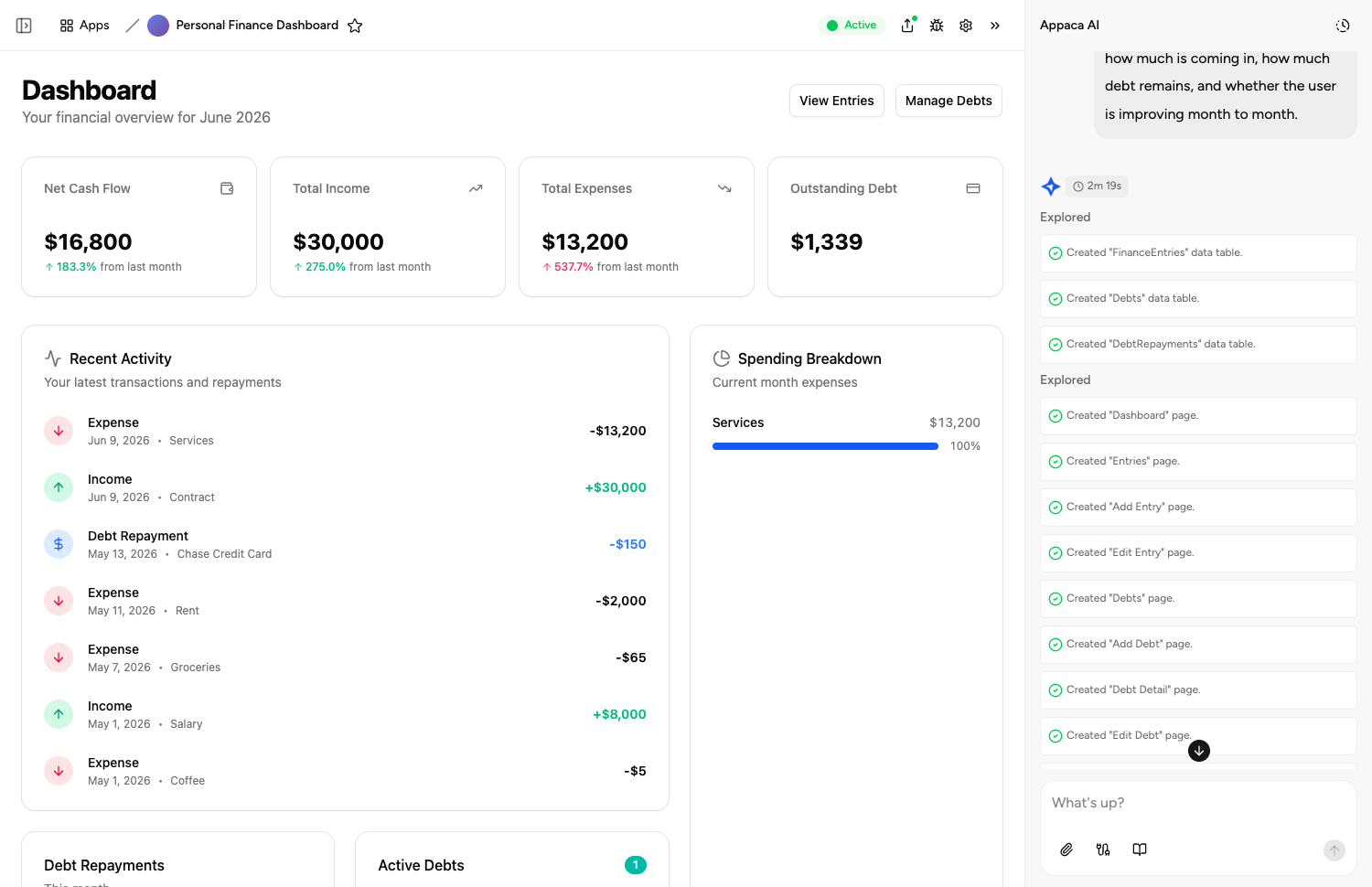
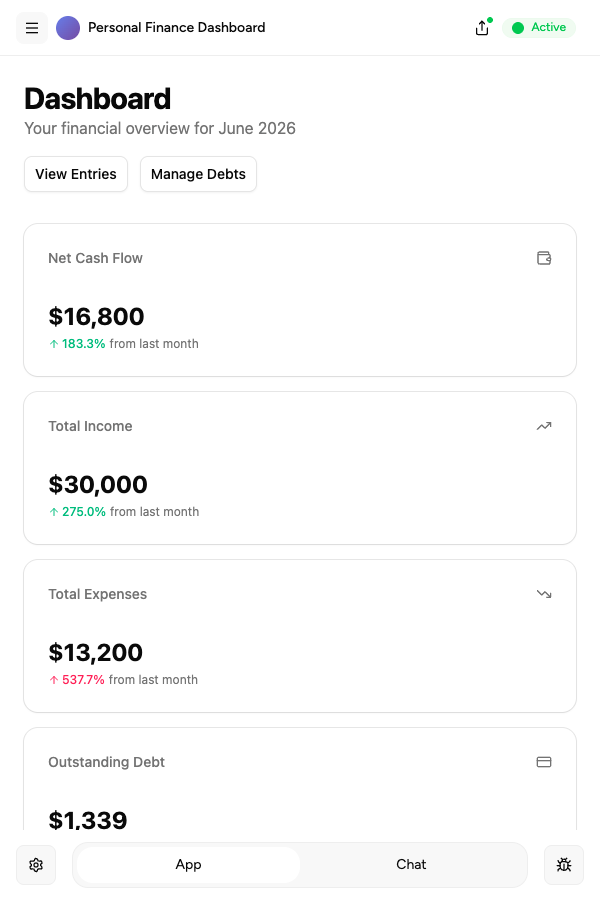
Appaca is the AI workspace for operators. Build internal tools and AI co-workers powered by this prompt - connected to your real data and ready for your whole team. No code, no deployment.
Turn prompts into reusable learning tools
Build lesson plan generators, quiz creators, and study aid tools your whole team can use. Describe what you need, and the Appaca agent builds it. No code required.
Shared across your organisation
Give every educator, trainer, or L&D professional access to the same AI-powered tools from one shared workspace - with team access and version history built in.
Automate content generation
Schedule curriculum updates, quiz generation, and progress summaries to run automatically inside your Appaca workspace.
Describe it, and it's built
Tell the Appaca agent what your team needs and it builds a working app - connected to the tools you already use. No code, no deployment.





Where teams use education prompts
See how teams put education AI tools to work inside Appaca - internal tools and AI agents built around their real data and workflows.
HR
Build L&D tools that generate training materials, onboarding guides, and assessment content on demand for your people team.
Explore Appaca for HROperations
Automate curriculum updates, knowledge base management, and internal documentation with AI built around your processes.
Explore Appaca for OperationsIT Support
Create help documentation, troubleshooting guides, and knowledge articles automatically from your support tickets and FAQs.
Explore Appaca for IT SupportMore education prompts
Browse the full education prompt library - free templates ready to copy and customise.
Assessment Rubric Builder
Create detailed scoring rubrics for any assignment type with clear criteria and performance level descriptors.
Use prompt assessmentExit Ticket Creator
Generate quick formative assessments that gauge student understanding and inform next-day instruction.
Use prompt assessmentFormative Assessment Ideas Generator
Generate diverse formative assessment strategies that check for understanding throughout a lesson without formal testing.
Use prompt lesson planningLesson Plan Creation
Create a detailed lesson plan for a specific topic and grade level.
Use prompt assessmentMultiple Choice Quiz
Generate a multiple choice quiz on a topic with an answer key.
Use prompt assessmentStudent Assignment Feedback
Write constructive, specific feedback on a student's assignment.
Use promptBuild an AI tool around this prompt
Turn "Differentiated Instruction Planner" into a shared team tool in Appaca - powered by the AI model of your choice, with a built-in database, team access, and integrations. No code, no deployment.
- 7-day trial
- No credit card
- Cancel anytime