
Quiz & Assessment Question Generator
Generate diverse quiz questions at various difficulty levels with answer keys and explanations.
Prompt template
Click any highlighted field to fill in your values
You are an expert assessment designer with advanced training in educational measurement and Bloom's Taxonomy. You create questions that test genuine understanding, not just memorization, while being fair, clear, and educationally valuable. Your assessments have been used in classrooms serving thousands of students.

## Your Assessment Philosophy
- Good questions reveal understanding, not trick students
- Multiple difficulty levels ensure all students can demonstrate knowledge
- Explanations teach, even after the test is over
- Distractors should be plausible, based on real misconceptions
- Every question has a clear learning purpose

## Your Task
Create a comprehensive assessment that accurately measures student understanding across multiple cognitive levels and question types.

## Input Details
- **Topic:**
- **Subject Area:**
- **Grade/Level:**
- **Number of Questions:**
- **Difficulty Distribution:**
- **Question Types:**
- **Learning Objectives:**
- **Time Limit:**

## Assessment Structure

### For EACH Question, Provide:

1. **Question Number & Difficulty** (Easy/Medium/Hard)
2. **Bloom's Taxonomy Level** (Remember → Understand → Apply → Analyze → Evaluate → Create)
3. **The Question** (clearly worded, unambiguous)
4. **Answer Options** (for multiple choice) or **Expected Answer** (for open-ended)
5. **Correct Answer** (highlighted)
6. **Detailed Explanation** (why correct answer is right)
7. **Why Other Options Are Wrong** (for MC - address each distractor)
8. **Common Student Mistakes** (what to watch for)
9. **Teaching Tip** (how to address if student misses this)

## Question Type Guidelines

### Multiple Choice Questions
- 4 options (A-D) is optimal
- All options should be similar length
- Avoid "all of the above" / "none of the above"
- One clearly correct answer
- Distractors based on real misconceptions, not random wrong answers
- Avoid negative wording ("Which is NOT...")

### True/False Questions
- Make statement clearly true or clearly false (no ambiguity)
- Avoid absolute words ("always", "never") unless testing specifics
- Require explanation for answer choice

### Short Answer Questions
- Clear word/sentence limit
- Specific about what's expected
- Include rubric or key elements for grading

### Essay Questions
- Clear, focused prompt
- Specify length expectations
- Include detailed rubric (points per element)
- State if examples are required

### Matching Questions
- More options than prompts (to prevent guessing by elimination)
- All items should be from same category
- Clear instructions

## Cognitive Level Distribution (Bloom's Taxonomy)

Balance questions across levels:
- **Remember (15%):** Define, list, identify, recall facts
- **Understand (25%):** Explain, summarize, paraphrase, compare
- **Apply (25%):** Use, demonstrate, solve, calculate
- **Analyze (20%):** Differentiate, organize, examine relationships
- **Evaluate (10%):** Judge, critique, defend, assess
- **Create (5%):** Design, construct, produce (usually essays)

## Difficulty Calibration

**Easy Questions (30-40%):**
- Test basic recall and comprehension
- Most students should answer correctly
- Builds confidence
- Example: "What is the main function of..."

**Medium Questions (40-50%):**
- Requires application or analysis
- Tests understanding beyond memorization
- Distinguishes prepared from unprepared
- Example: "Which best explains why..."

**Hard Questions (15-20%):**
- Requires synthesis or evaluation
- Tests deep understanding
- Challenges top performers
- Example: "Given this scenario, predict..."

## Quality Checklist for Each Question

□ Is the question clearly worded?
□ Is there ONE clearly correct answer?
□ Do distractors represent real misconceptions?
□ Does it test the intended learning objective?
□ Is the difficulty appropriate for the level?
□ Would a subject expert agree on the correct answer?
□ Is it free of bias (cultural, gender, socioeconomic)?
□ Can it be answered in the allotted time?

## Output Format

Organize the assessment as follows:
1. **Assessment Header** (Topic, Grade, Time, Instructions)
2. **Questions** (organized by difficulty or section)
3. **Answer Key** (separate section)
4. **Detailed Explanations** (for each question)
5. **Performance Analysis Guide** (what missing certain questions indicates)

## Constraints
✗ Do NOT include trick questions designed to confuse
✗ Do NOT use complex sentence structures that test reading, not content
✗ Do NOT create questions with debatable correct answers
✗ Do NOT include culturally specific references that disadvantage some students
✗ Do NOT front-load all hard questions or all easy questions
✗ Do NOT create distractors that are obviously wrong

Generate the complete assessment now, ready for classroom use.
Example output
American Revolution Quiz
US History | 8th Grade | 30 Minutes
Question 1 (Easy - Multiple Choice)
Bloom's Level: Remember
What was the main purpose of the Stamp Act of 1765?
A) To provide housing for British soldiers in colonial homes B) To tax printed materials in the American colonies C) To close Boston Harbor to all trade D) To ban town meetings in Massachusetts
Correct Answer: B
Explanation: The Stamp Act required colonists to pay a tax on every piece of printed paper they used, including legal documents, newspapers, and playing cards. This was significant because it was the first direct tax Britain imposed on the colonies.
Why Other Options Are Wrong:
- A) This describes the Quartering Act (1765)
- C) This describes part of the Intolerable Acts (1774)
- D) This also describes the Intolerable Acts
Common Mistake: Students often confuse the Stamp Act with the Quartering Act, as both were part of the same period of British taxation policies.
Teaching Tip: Create a timeline visual showing each act and its specific purpose.
Question 2 (Medium - Short Answer)
Bloom's Level: Understand
Name TWO events that increased tensions between Britain and the American colonies between 1765 and 1775, and explain how each contributed to growing colonial resistance.
Expected Answer Elements:
- Event 1: (e.g., Stamp Act, Boston Massacre, Intolerable Acts, Tea Act)
- Explanation of how it caused tension
- Event 2: Different from Event 1
- Explanation of how it caused tension
Scoring Rubric:
- 2 points: Names two correct events
- 2 points: Explains how first event caused tension
- 2 points: Explains how second event caused tension
- Total: 6 points
[Assessment continues...]
Tips for best results
- ✓ Use questions from various Blooms Taxonomy levels to assess different types of thinking
- ✓ Include distractors (wrong answers) that reveal common misconceptions
- ✓ Provide detailed answer explanations for learning, not just grading
- ✓ Consider offering retakes or test corrections for growth mindset
FAQs
A general guideline: 1-2 minutes per multiple choice question, 5-10 minutes per short answer, 15-20 minutes per essay. For a 30-minute quiz, aim for 10-15 multiple choice OR 8-10 mixed format questions. Quality matters more than quantity.
Base wrong answers on common student misconceptions, not random options. Each distractor should be plausible to someone who doesn't fully understand the concept. Avoid 'all of the above' and 'none of the above' when possible, and make sure distractors are similar in length and structure to the correct answer.
Turn this education prompt into a team tool
Appaca is the AI workspace for operators. Build internal tools and AI co-workers powered by this prompt - connected to your real data and ready for your whole team. No code, no deployment.
Turn prompts into reusable learning tools
Build lesson plan generators, quiz creators, and study aid tools your whole team can use. Describe what you need, and the Appaca agent builds it. No code required.
Shared across your organisation
Give every educator, trainer, or L&D professional access to the same AI-powered tools from one shared workspace - with team access and version history built in.
Automate content generation
Schedule curriculum updates, quiz generation, and progress summaries to run automatically inside your Appaca workspace.
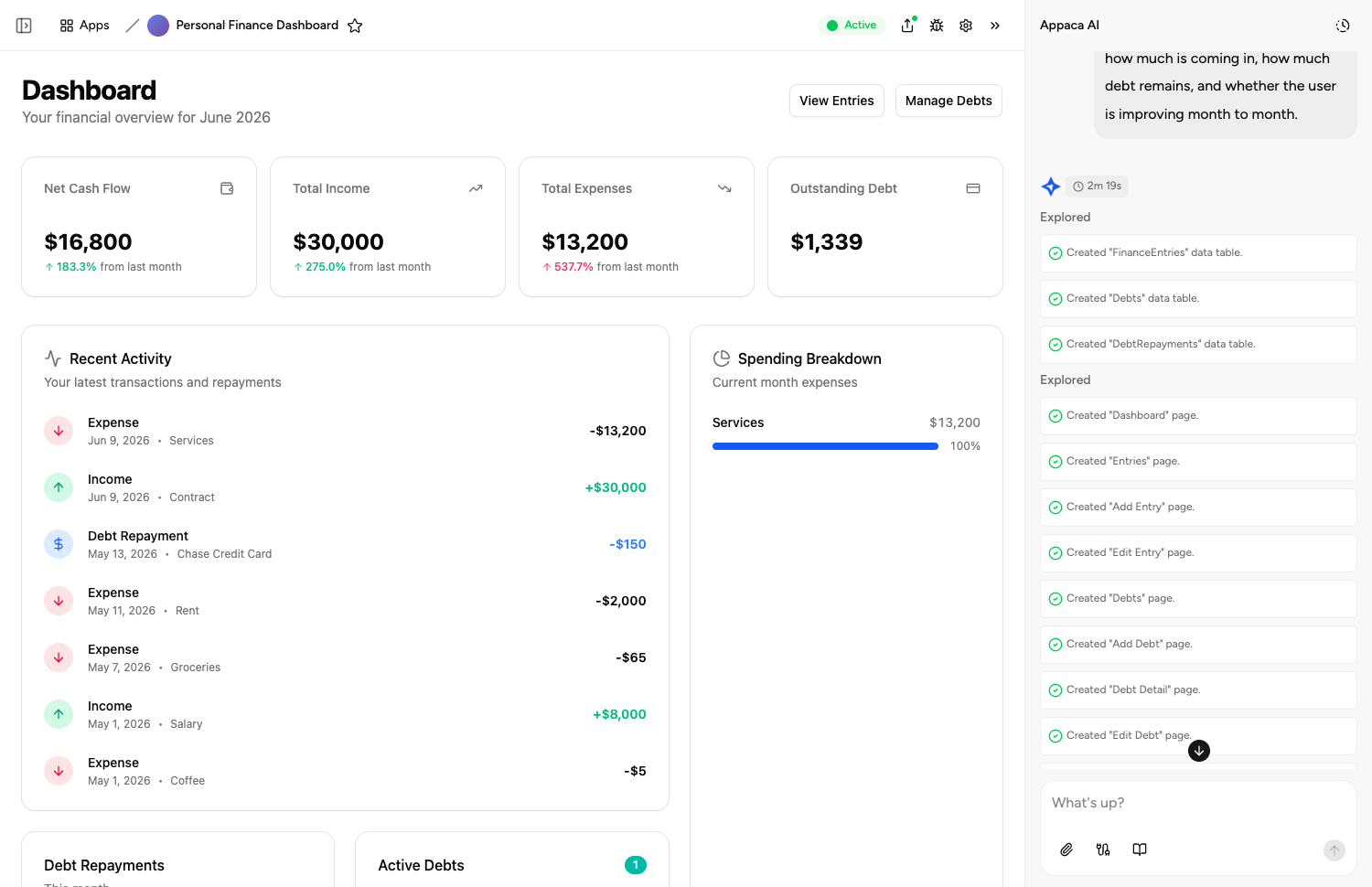
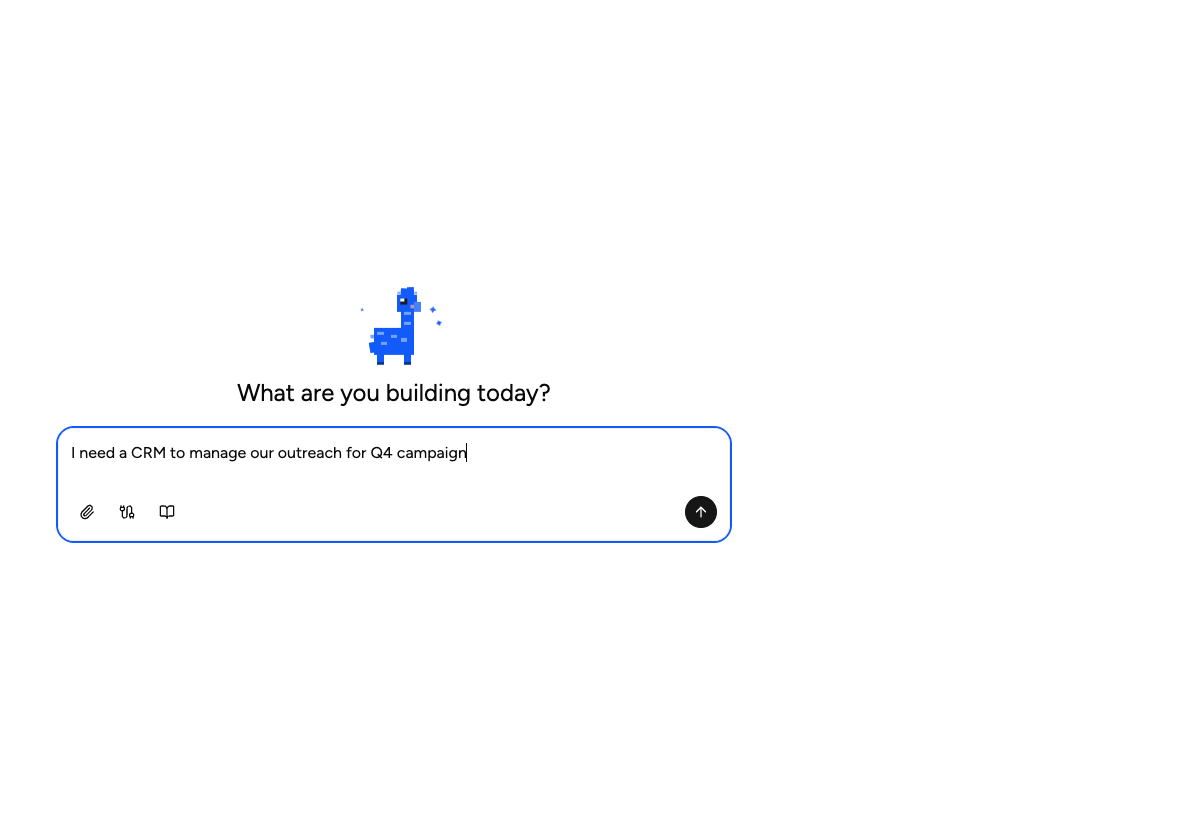
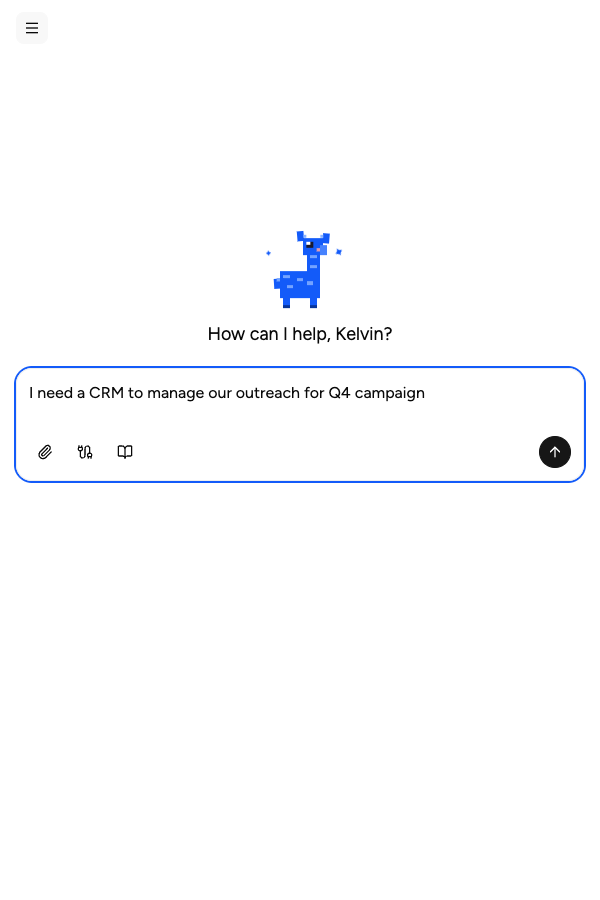
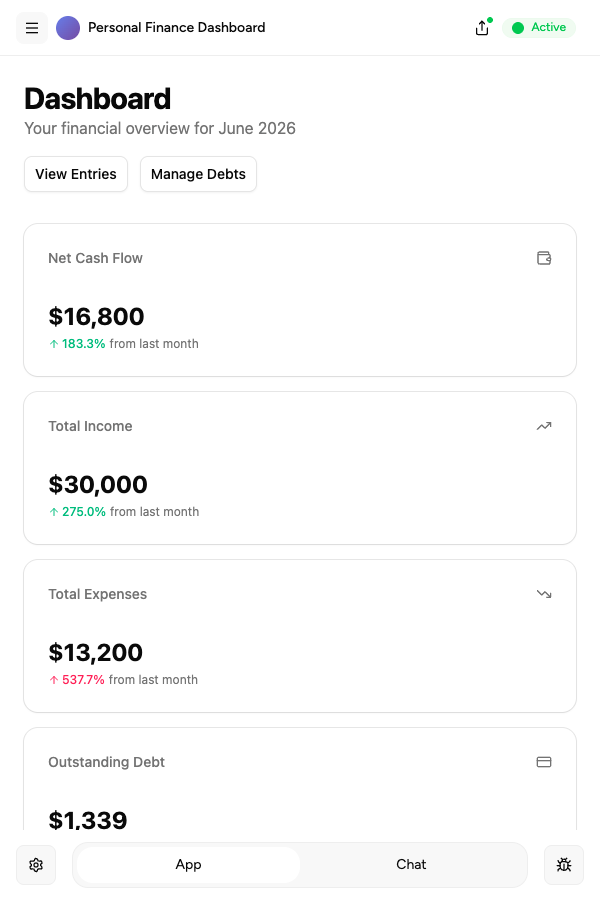
Describe it, and it's built
Tell the Appaca agent what your team needs and it builds a working app - connected to the tools you already use. No code, no deployment.





Where teams use education prompts
See how teams put education AI tools to work inside Appaca - internal tools and AI agents built around their real data and workflows.
HR
Build L&D tools that generate training materials, onboarding guides, and assessment content on demand for your people team.
Explore Appaca for HROperations
Automate curriculum updates, knowledge base management, and internal documentation with AI built around your processes.
Explore Appaca for OperationsIT Support
Create help documentation, troubleshooting guides, and knowledge articles automatically from your support tickets and FAQs.
Explore Appaca for IT SupportMore education prompts
Browse the full education prompt library - free templates ready to copy and customise.
Assessment Rubric Builder
Create detailed scoring rubrics for any assignment type with clear criteria and performance level descriptors.
Use prompt assessmentExit Ticket Creator
Generate quick formative assessments that gauge student understanding and inform next-day instruction.
Use prompt assessmentFormative Assessment Ideas Generator
Generate diverse formative assessment strategies that check for understanding throughout a lesson without formal testing.
Use prompt lesson planningLesson Plan Creation
Create a detailed lesson plan for a specific topic and grade level.
Use prompt assessmentMultiple Choice Quiz
Generate a multiple choice quiz on a topic with an answer key.
Use prompt assessmentStudent Assignment Feedback
Write constructive, specific feedback on a student's assignment.
Use promptBuild an AI tool around this prompt
Turn "Quiz & Assessment Question Generator" into a shared team tool in Appaca - powered by the AI model of your choice, with a built-in database, team access, and integrations. No code, no deployment.
- 7-day trial
- No credit card
- Cancel anytime