Try Appaca - the Coda alternative for personal software
Get started freeAppaca vs Coda
Coda is powerful but complex. Appaca generates fully functional apps from a description - no formula writing, no block configuration, no doc-building required.
Feature Comparison
| Feature | Appaca | Coda |
|---|---|---|
| Primary Approach | Describe what you need, get a ready-to-use app | Doc editor with tables, formulas, and automation blocks |
| Target User | Anyone - no technical skills needed | Power users comfortable with docs and formulas |
| Coding Required | None | No code but formula writing required |
| Apps Run Inside Platform | Yes - no deployment needed | Yes - cloud-based docs platform |
| Hosting Required | No - built-in | No - built-in |
| Database Included | Yes - automatic | Yes - inline tables as data stores |
| Team Collaboration | Yes - shared workspaces | Yes - real-time doc collaboration |
| Free Plan | Yes (100 AI credits) | Yes (limited Doc size) |
| Starting Price | Free (paid from $24/mo) | Free (paid from $10/user/mo) |
| Integrations | Google Sheets, Slack, Notion, and more | Slack, Google Drive, Zapier, and more |
What makes Appaca different
See how Appaca's approach to personal software compares to Coda.
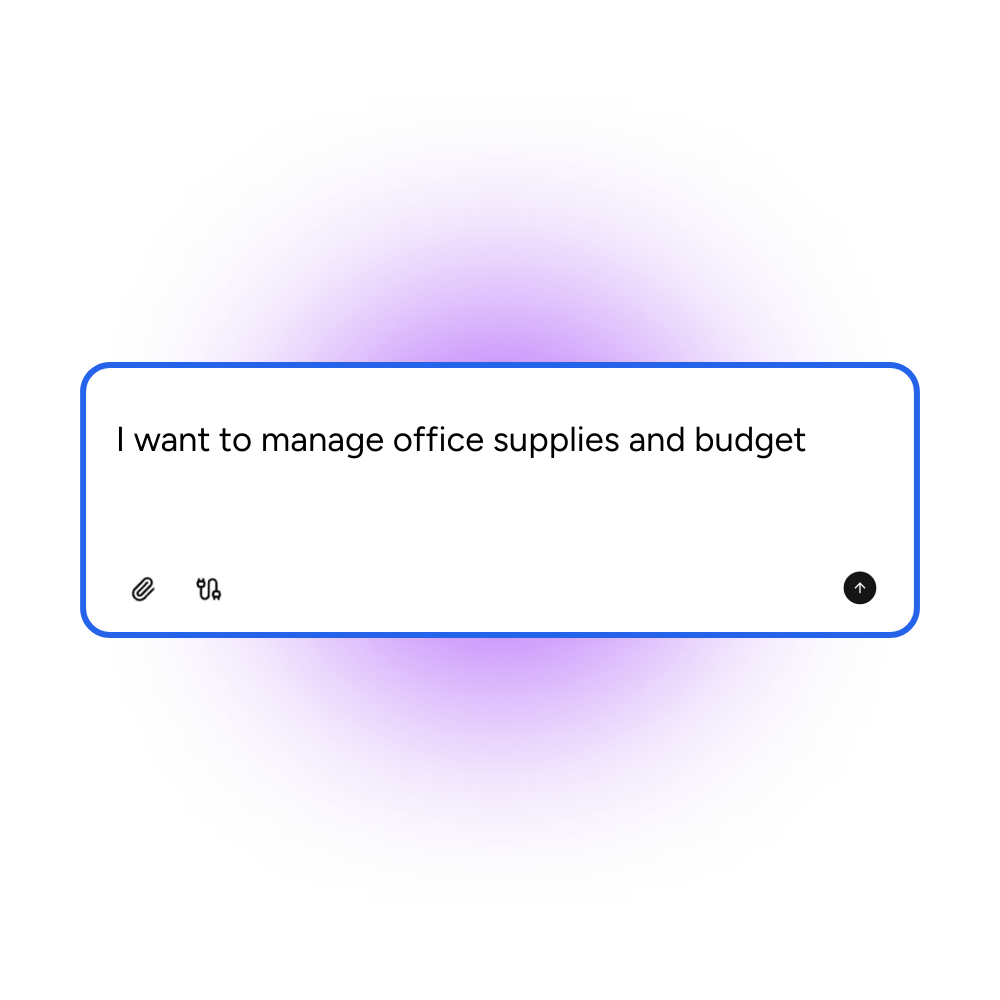
No formula writing needed
Coda requires Coda formulas to power automations and logic. Appaca generates all logic automatically from your description - no formula knowledge required.
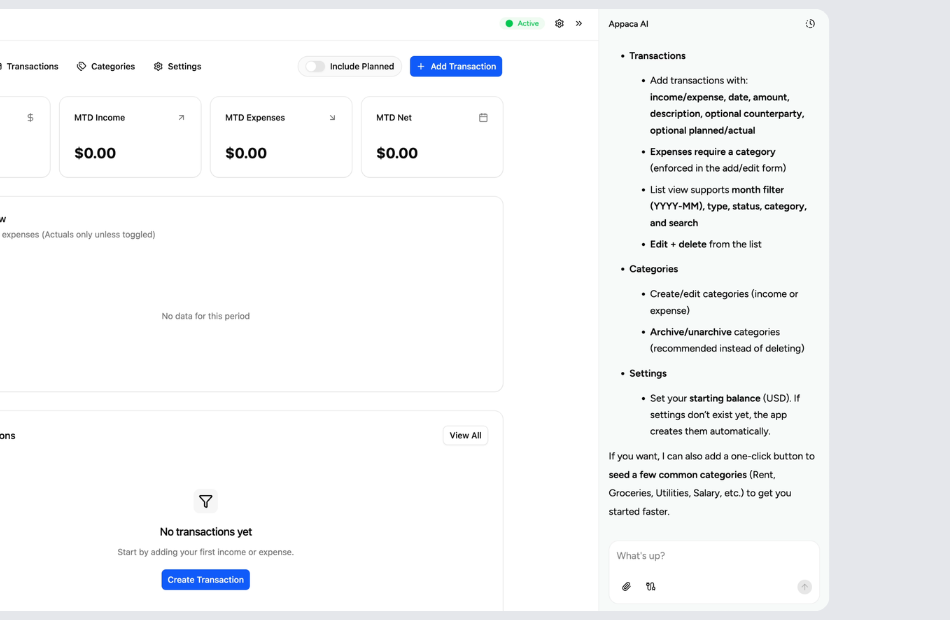
Purpose-built apps vs flexible docs
Coda is a flexible doc platform you adapt to your needs. Appaca generates a purpose-built app tailored specifically to your workflow from the start.

Faster time to working app
Building a Coda doc to function like an app requires significant time and formula expertise. Appaca gets you to a working app in minutes with no doc-building needed.
The Appaca approach
Appaca creates personal software that is ready to use. Here is how it works compared to Coda.
From description to app
Coda requires you to build your doc structure, add table views, write formulas, and configure automations. Appaca generates the complete app from a plain description - all the logic and data structure is handled automatically.

Built-in automatic database
Coda uses inline tables as data stores which require manual schema design. Appaca creates the right data model for your app automatically based on what you describe.
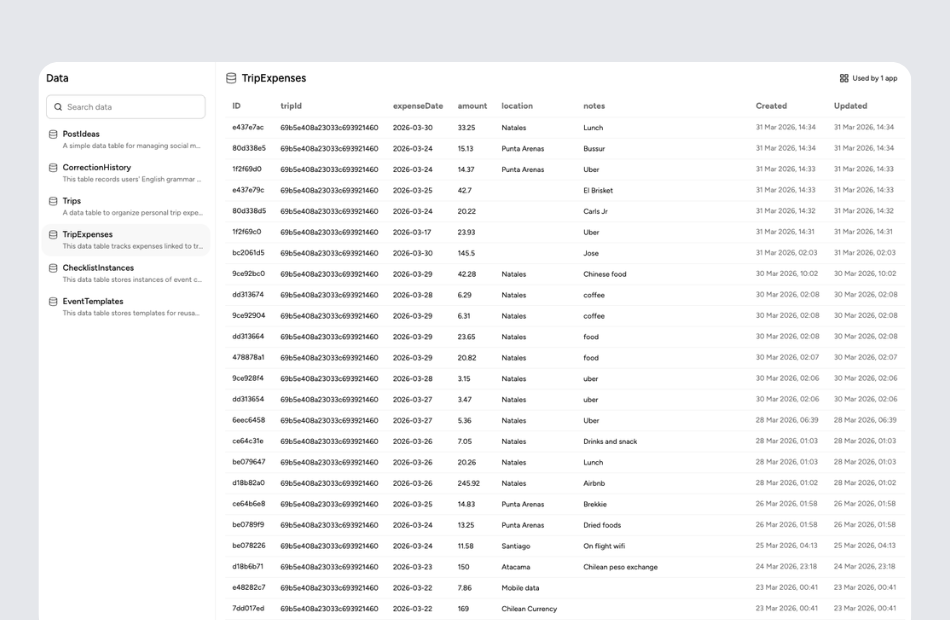
Better for operational apps
Coda excels for team knowledge and process documentation. Appaca is better for operational tools that team members use daily - forms, trackers, and dashboards that are focused and easy to use.
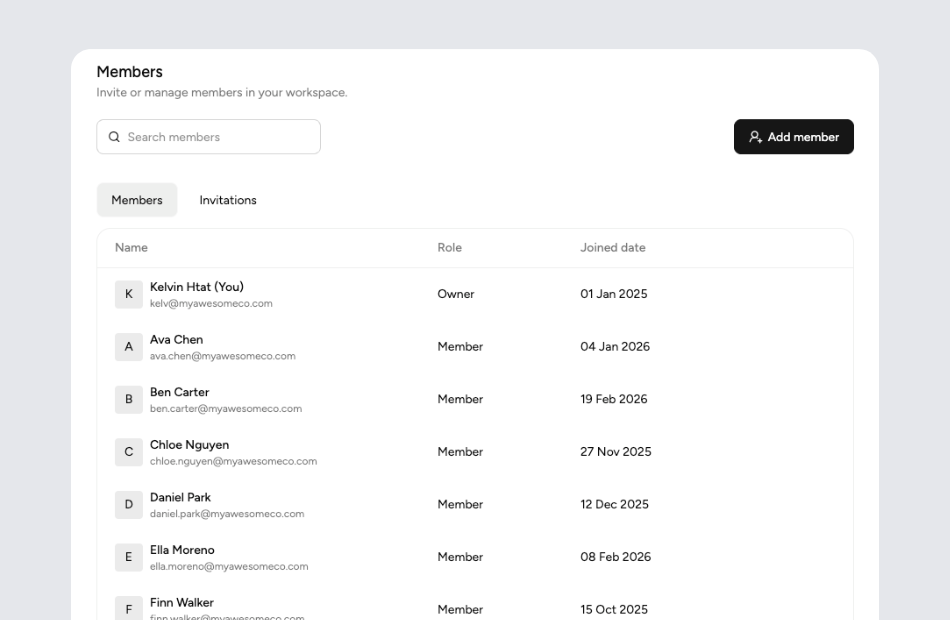
What is Coda?
Coda is an all-in-one document platform that combines writing, tables, and automations in a single workspace. It uses a block-based editor with powerful formula capabilities, allowing teams to build everything from simple docs to complex, data-driven workflows. Coda is popular with product teams, operations managers, and teams looking for a more powerful alternative to Notion.
Key differences between Appaca and Coda
Coda is a flexible docs platform where you build your own workflows through formula writing and block configuration. Appaca generates complete apps from plain-language descriptions - no formulas, no block setup, no doc architecture needed. Appaca is faster to get started with and requires much less learning investment.
Why choose Appaca over Coda
Choose Appaca if you want a working app without investing time in learning Coda's formula language and block system. Appaca delivers purpose-built apps in minutes. It's particularly better for non-technical team members who need tools they can use without becoming power users of a complex doc platform.
Questions & answers
Yes. Coda requires learning its formula language and block system to build powerful workflows. Appaca generates your app from a plain description with no learning curve.
Appaca builds operational apps and tools. Coda is better for complex doc-driven workflows that combine writing with structured data. For apps and operational tools, Appaca is simpler and faster.
For teams, yes. Coda charges $10/user/mo. Appaca has flat pricing from $24/mo regardless of team size.
Yes. Appaca builds logic and workflows into your app automatically. You can also connect to Zapier and Make for extended automation.
Absolutely. Appaca requires no formulas, no coding, and no technical knowledge. Just describe your app in plain language.
Also compare
See how Appaca compares to other AI app builders and vibe coding tools.
Power Apps
Microsoft low-code platformMicrosoft's low-code platform for building business apps integrated with Microsoft 365.
Compare with AppacaThunkable
No-code mobile app builderA drag-and-drop platform for building native mobile apps for iOS and Android.
Compare with AppacaBackendless
Visual app development platformA visual app development platform with backend, database, and UI building capabilities.
Compare with AppacaStacker
No-code client portal builderBuild internal tools and client portals on top of your data without writing code.
Compare with Appaca