
The Lovable alternative built for operators, not product demos
Lovable is built for shipping consumer products. Appaca is built for the internal tools your company runs on — team access, built-in database, and no credit meter slowing every revision.
- 7-day trial
- No credit card
- Cancel anytime
- No SQL or developers required
- Built-in database + team access
- Flat pricing, not per seat

Why Appaca
Why operations teams are choosing Appaca over Lovable
Lovable has its place. But for teams who want to move fast without a developer or per-seat pricing, Appaca is built differently.
No backend setup required
Lovable uses Supabase for the database, auth, and storage - meaning you need to configure Supabase alongside it. Appaca includes everything: the database, hosting, and team access are built in.
No credit limits on iteration
Lovable charges per message credit (100/month on Pro). Complex apps or frequent refinements burn through credits quickly. Appaca lets you refine your tool without counting messages.
Built for internal use, not SaaS launch
Lovable is designed for founders shipping products to customers. Appaca is designed for operators building the internal tools their team relies on every day.
Platform
Appaca gives your operations team the power to work better
Lovable solves one piece of the puzzle. Appaca is an AI workspace that gives your team apps, AI co-workers, and a shared knowledge base - all in one place, with no code and no infrastructure.
Build apps with AI
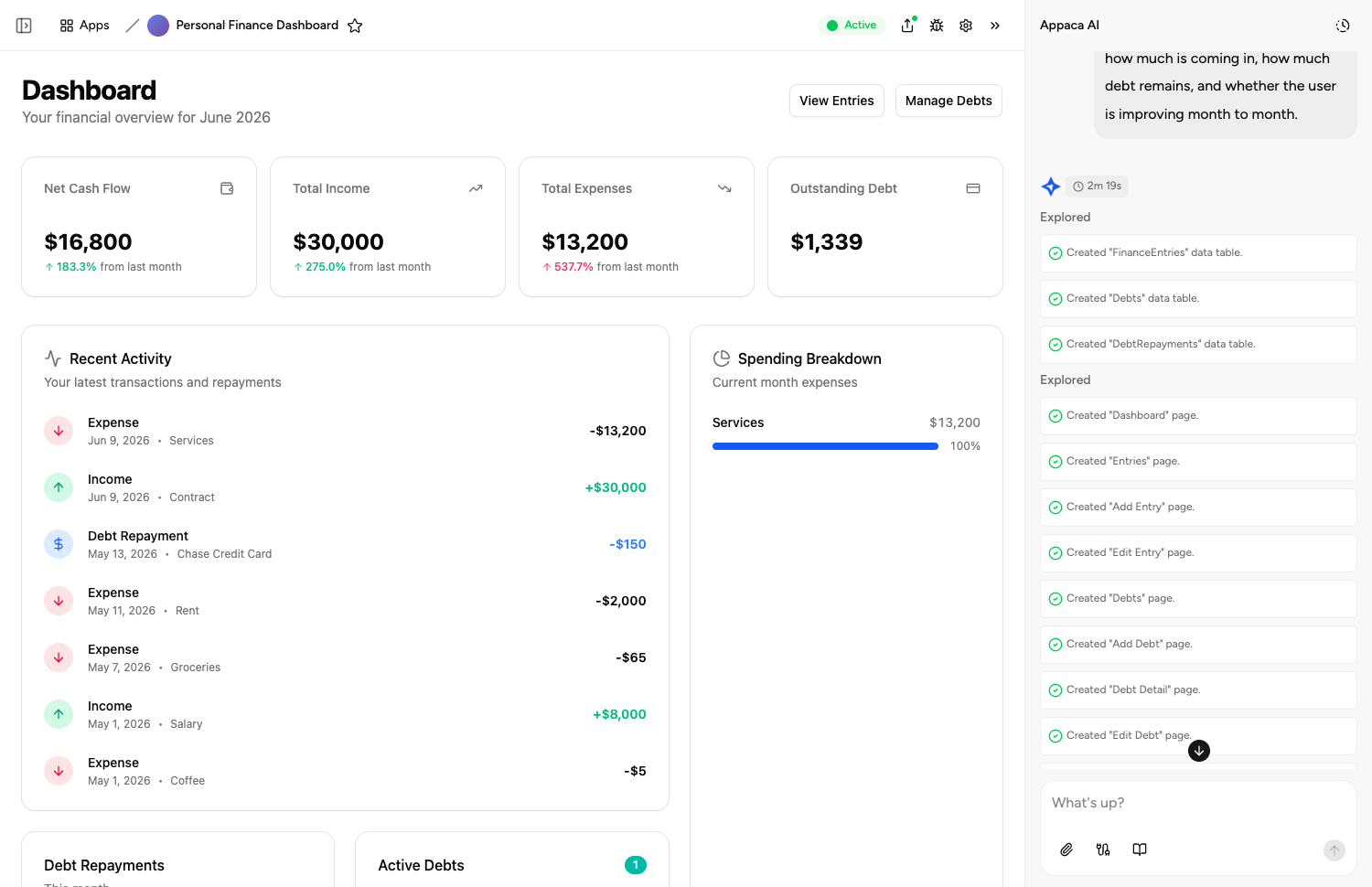
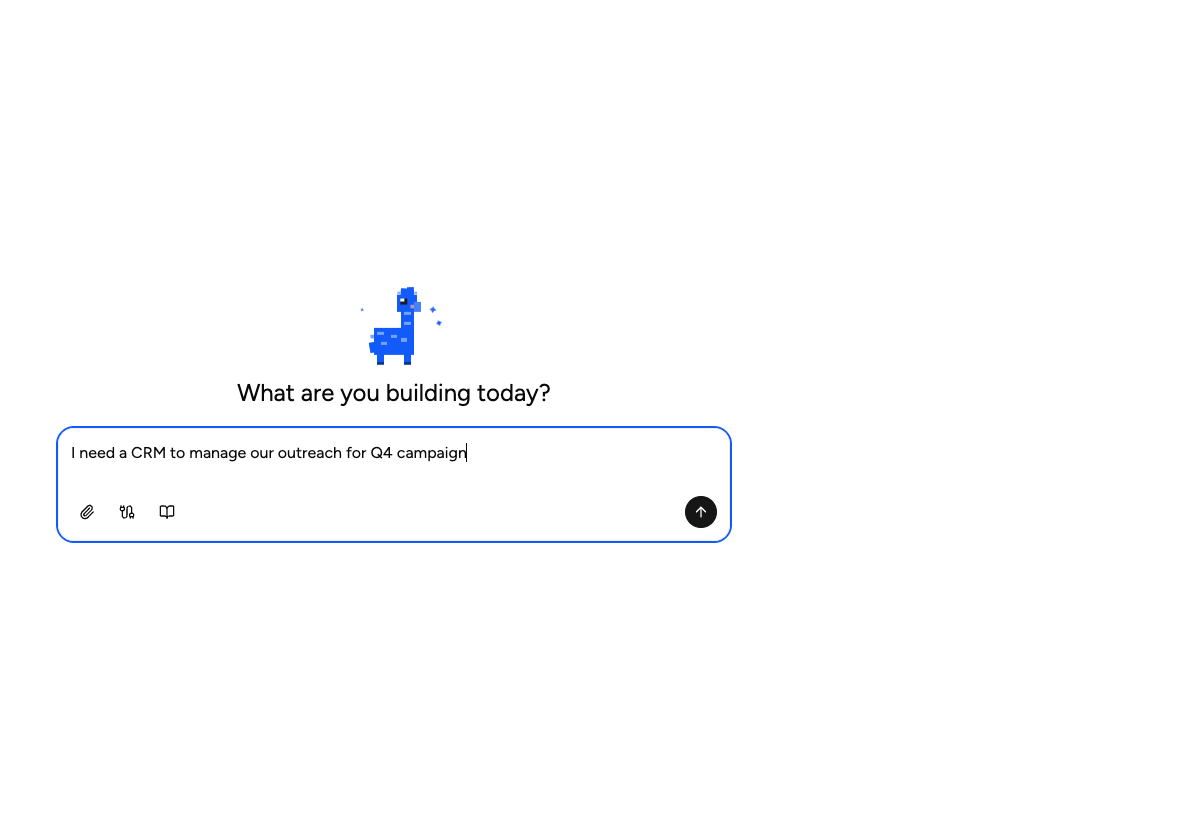
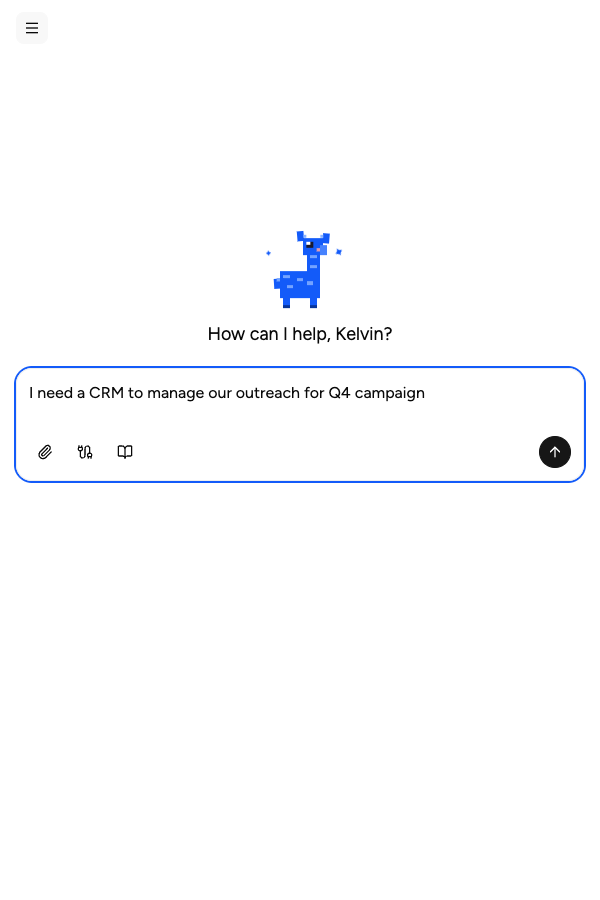
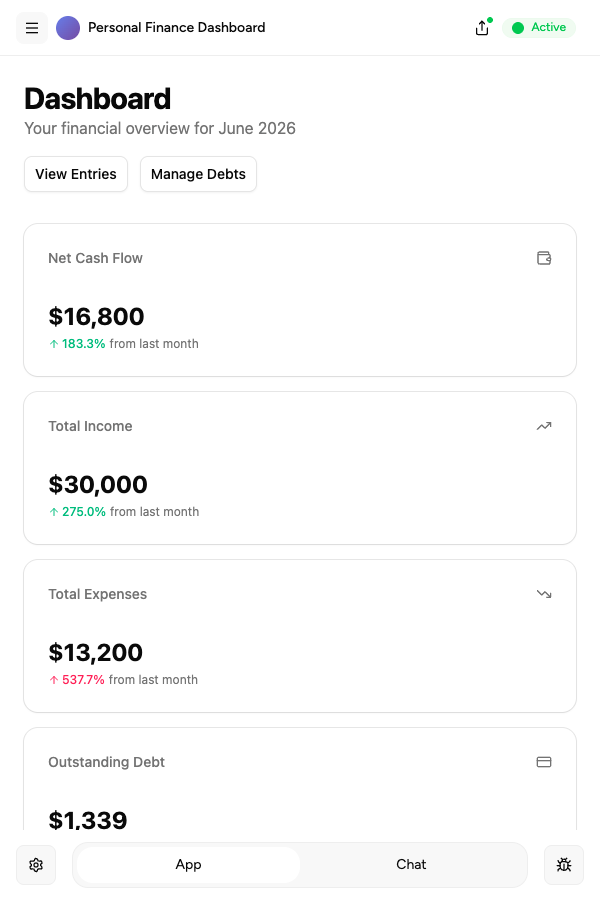
Describe the tool your team needs and Appaca builds it - with a built-in database, team access, and no coding required. What takes days in Lovable takes minutes here.
AI co-workers that know your business
Create specialised AI agents that answer questions, run workflows, and assist your team 24/7 - trained on your own data and processes.
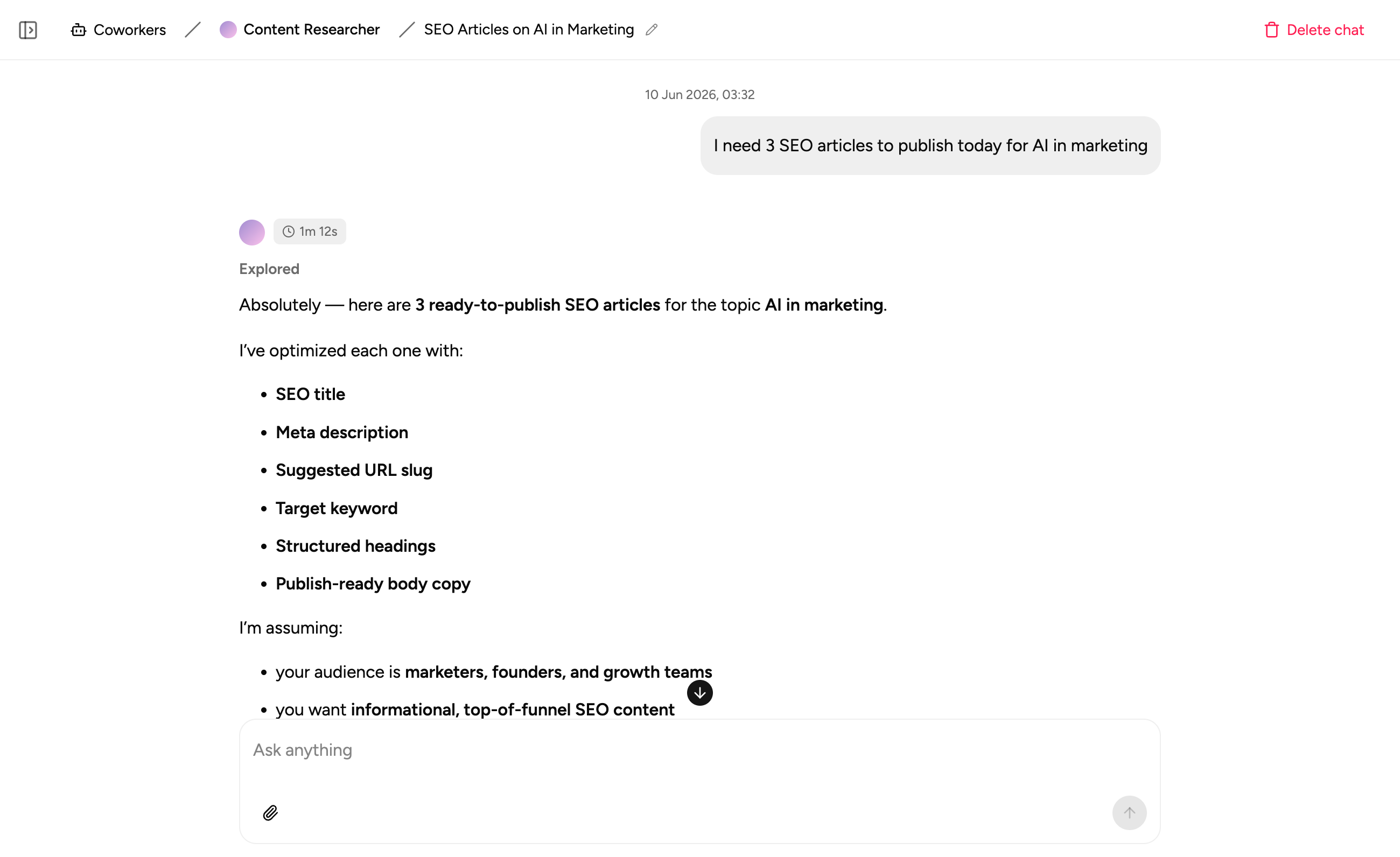
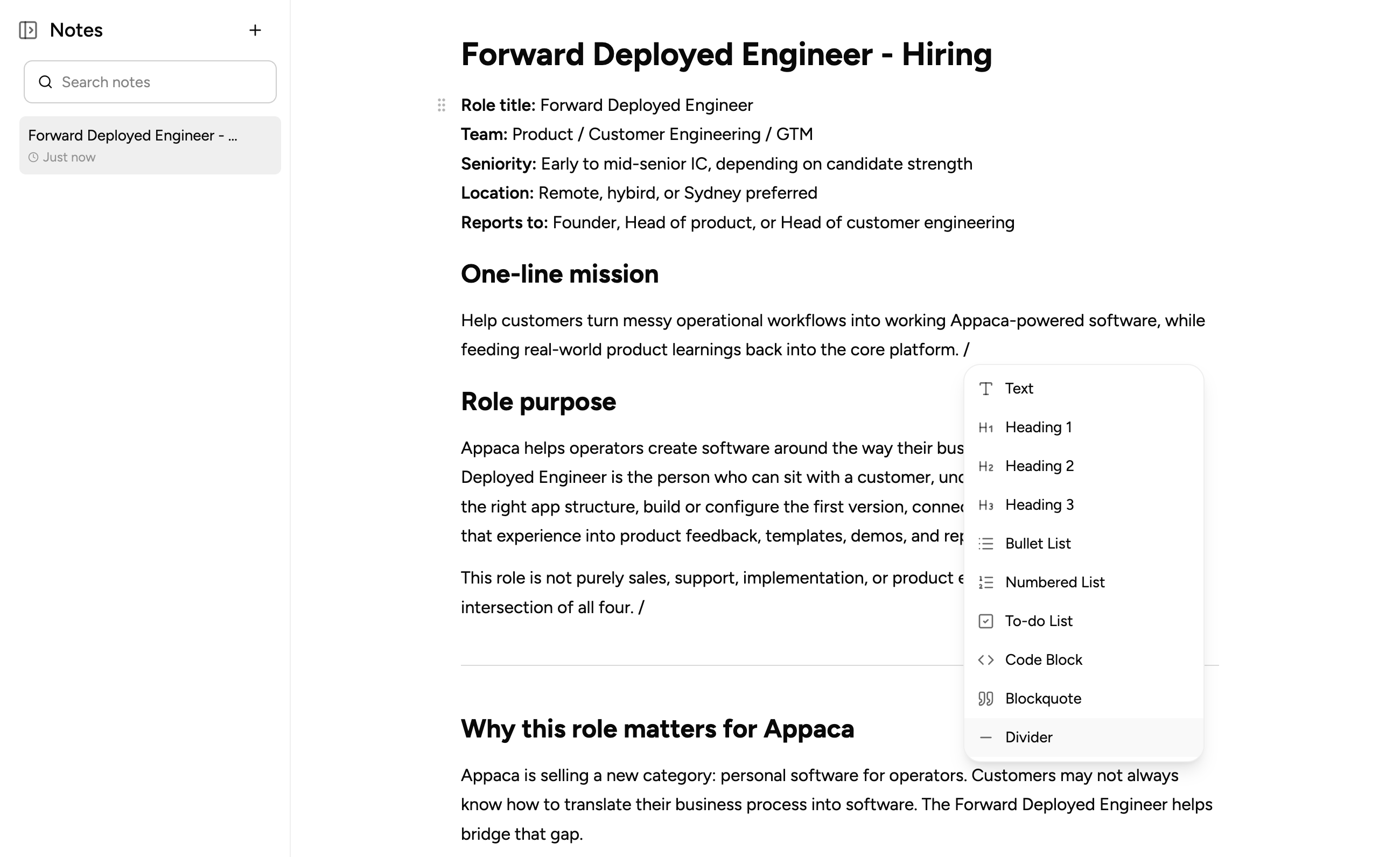
Keep notes organised
Capture meeting notes, ideas, tasks, and docs in one shared workspace your team can easily find and update. No more switching between tools to find what you need.
Comparison
See how Appaca compares to Lovable
Deciding whether to switch to Appaca? With Appaca, you get a complete AI workspace that adapts to how your team works.
| Feature | Appaca | Lovable |
|---|---|---|
| Primary approach | Describe in plain English, app is generated | AI generates React/TypeScript code |
| Target user | Business operators and internal teams | Non-technical founders building SaaS |
| Coding required | No | No |
| Built-in database | Yes | Supabase (requires setup) |
| Built-in hosting | Yes | Lovable hosting or Supabase |
| AI-powered creation | Yes | Yes |
| Internal tools focus | Yes | No |
| Code ownership / export | No | Yes |
| GitHub sync | No | Yes |
| Pricing model | Flat usage-based | Credit-based ($25/mo for 100 credits) |
| Time to first working app | Minutes | Minutes (plus backend setup) |
Get started
Prefer to read first? See pricing, the per-seat cost calculator, or how Appaca builds internal tools.
The bottom line
Appaca is exactly what your team needs
Not just a feature list - here's the real reason teams leave Lovable behind.
01
No Supabase, no GitHub, no backend configuration - everything is built in
02
Refine your tool freely - no per-message credit limits counting down
03
Shared team workspaces with role-based access - built for teams, not solo founders
04
Built for the operational tools your business runs on, not consumer SaaS products
FAQ
Common questions
Is Appaca a good Lovable alternative for internal business tools?
Yes. Lovable is designed for non-technical founders building consumer SaaS products. Appaca is built for operators who need the tools their business runs on - without Supabase setup, GitHub, or credit limits.
Does Appaca require Supabase and GitHub like Lovable?
No. Lovable uses Supabase for the database and GitHub for code ownership. Appaca includes a built-in database and hosting - there is nothing external to configure.
How does Appaca compare to Lovable's credit system?
Lovable charges per message credit (100 per month on Pro). Complex apps or frequent refinements burn through credits quickly. Appaca lets you build and refine without counting messages.
Can Appaca build team tools that Lovable cannot support?
Yes. Lovable is optimised for a solo founder shipping a product to external users. Appaca includes shared team workspaces, role-based access, and tools that multiple people use together from day one.
What is the best Lovable alternative for internal tools in 2026?
If you need team ops tools rather than a consumer SaaS MVP, Appaca is the stronger Lovable alternative. You describe the internal tool, get a working app with database and permissions, and skip Supabase, GitHub, and credit limits.
Should I use Lovable or Appaca for business operations software?
Use Lovable when you are building a product to ship to external users. Use Appaca when operators need admin panels, CRMs, approval flows, or trackers inside the company — with shared workspaces and role-based access from day one.
Who should switch from Lovable to Appaca?
Ops, revops, and support leaders who tried AI app builders and hit credit walls, GitHub friction, or tools that were not designed for multi-user internal workflows. Appaca is for running the business, not pitching a product.
How hard is it to migrate from Lovable to Appaca for internal tools?
If your Lovable project was really an internal ops tool, migration is usually a rebuild: describe the workflow in Appaca, generate the app with built-in database and team access, then move data. You leave credit burn, Supabase setup, and GitHub friction behind when the goal is running the business, not shipping a product.
See how Appaca compares to other tools
AI Builder
Appaca vs Base44
Build fully functional apps with AI
AI Builder
Appaca vs Bolt
Build full-stack web apps in your browser
AI Builder
Appaca vs Floot
Turn your ideas into products without coding
AI Builder
Appaca vs Kintable
AI app builder for governed business systems
AI Builder
Appaca vs Zite
AI builder for production business software
No-Code
Appaca vs Adalo
Build native apps without code
Productivity
Appaca vs Airtable
Build future-proof applications at scale
No-Code
Appaca vs AppSheet
Build apps from your Google Sheets and cloud data
Ready to replace Lovable?
Describe the tool your team needs and Appaca builds it - with a built-in database, team access, and no code required.
- 7-day trial
- No credit card
- Cancel anytime