
Best AI Models for Data Analysis
Data analysis LLMs must reason correctly about numbers, generate accurate and executable code, and translate raw data into clear, actionable narrative. Unlike writing errors that are easy to spot, quantitative mistakes can go undetected - making model reliability and confidence calibration especially critical for data workflows.
Top AI models for Data Analysis
Ranked by real-world performance on data analysis tasks - pricing, context windows, and strengths for each.
GPT-5.5
text 1M tokens contextOpenAI's smartest and most capable model yet for agentic coding, knowledge work, and computer use, delivering a new class of intelligence at GPT-5.4 latency.
Claude 4 Opus
text 200K tokens contextThe flagship model, focused on deep reasoning, large-scale coding and sustained multi-step agentic workflows.
GPT-5.4
text 1.1M tokens contextOpenAI's frontier model for complex professional work with best intelligence at scale for agentic, coding, and professional workflows.
Claude 4 Sonnet
text 1M tokens contextA balanced-hybrid reasoning model tuned for everyday assistant and high-volume tasks.
Evaluation criteria for Data Analysis
The four factors that matter most when choosing an AI model for data analysis tasks.
Accuracy of quantitative reasoning and calculations
Quality of SQL and Python code generation
Ability to interpret charts and structured data
Clear, concise data-driven narrative generation
Compare top Data Analysis models
Side-by-side pricing, specs, and strengths for every pair of top data analysis models.
GPT-5.5 vs Claude 4 Opus
OpenAI vs Anthropic for data analysis - pricing, context windows, and strengths compared.
See the comparisonGPT-5.5 vs GPT-5.4
OpenAI vs OpenAI for data analysis - pricing, context windows, and strengths compared.
See the comparisonGPT-5.5 vs Claude 4 Sonnet
OpenAI vs Anthropic for data analysis - pricing, context windows, and strengths compared.
See the comparisonGPT-5.4 vs Claude 4 Opus
OpenAI vs Anthropic for data analysis - pricing, context windows, and strengths compared.
See the comparisonClaude 4 Sonnet vs Claude 4 Opus
Anthropic vs Anthropic for data analysis - pricing, context windows, and strengths compared.
See the comparisonGPT-5.4 vs Claude 4 Sonnet
OpenAI vs Anthropic for data analysis - pricing, context windows, and strengths compared.
See the comparisonBuild Data Analysis tools with the right model
Appaca is the AI workspace for operators. Build internal tools and AI co-workers powered by any of these models - connected to your real data and ready for your whole team. No code, no deployment.
Build data analysis tools instantly
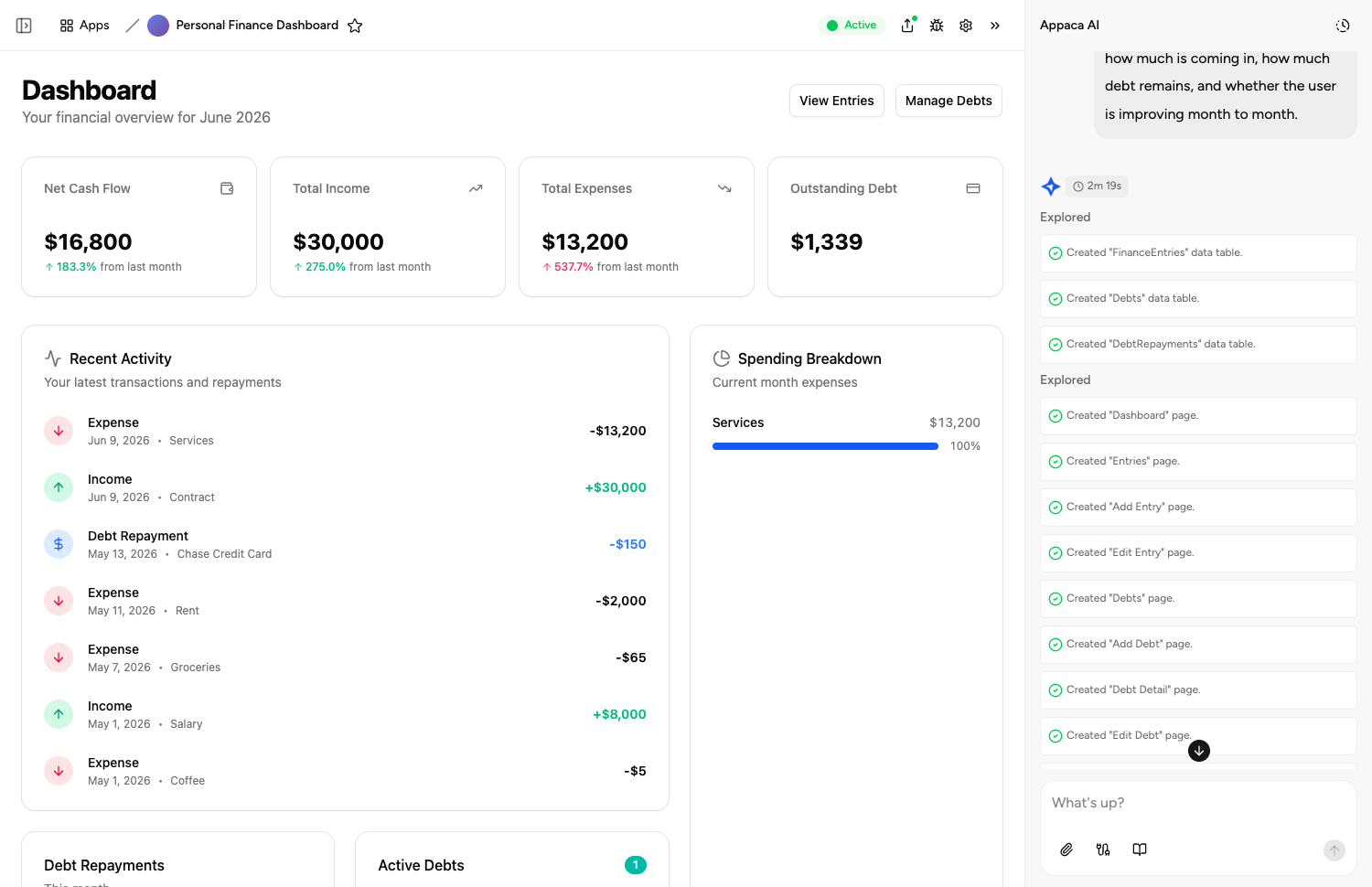
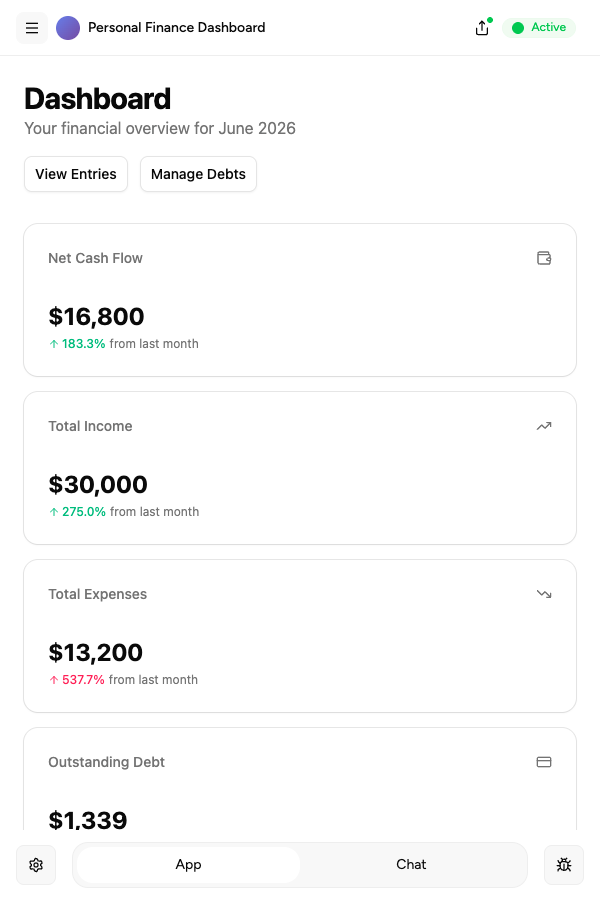
Tell the Appaca agent the internal tool you need and it builds a working app powered by the model you choose for data analysis. No code, no API keys, no deployment.
Connected to your real data
Connect Slack, Notion, Google Sheets, Airtable, and more, plus a built-in database - so your AI tools work with your team's real context instead of generic answers.
Automated for the whole team
Schedule tools to run on autopilot - daily digests, weekly reports, real-time triggers - and share them with your whole team from one workspace.
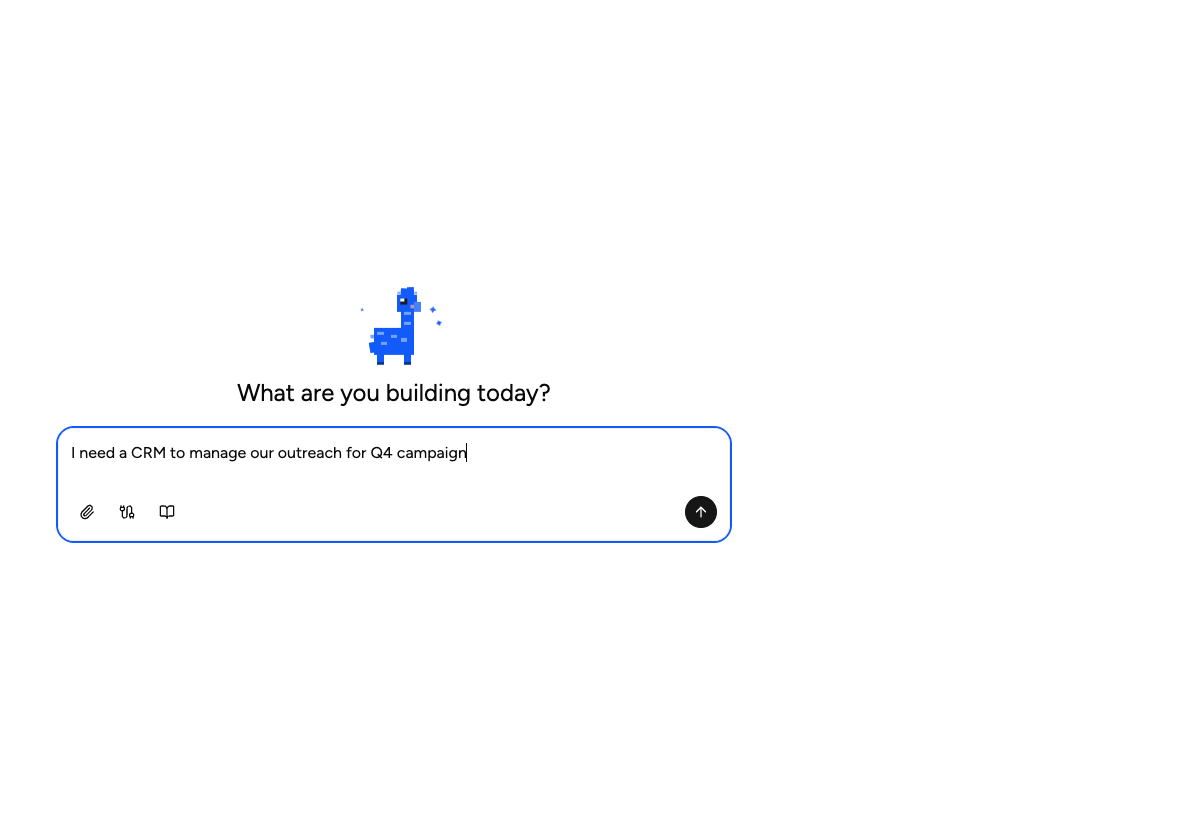
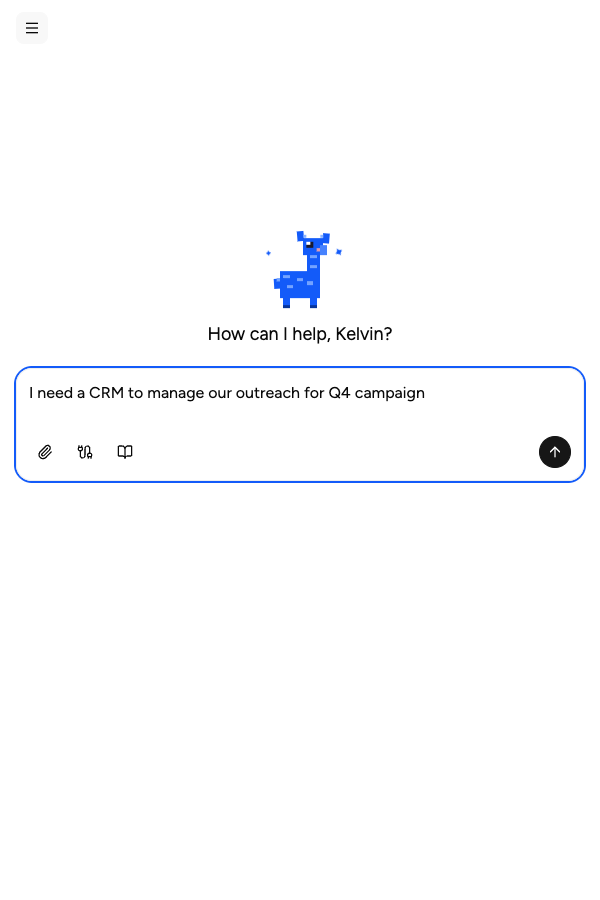
Describe it, and it's built
Tell the Appaca agent what your team needs and it builds a working app powered by the model you choose - connected to the tools you already use.





Explore more use cases
Top-ranked AI models for other common business tasks.
FAQs
GPT-5.5 and Gemini 2.5 Pro are the top data analysis LLMs in 2026. GPT-5.5 leads on quantitative reasoning and complex multi-step calculation tasks. Gemini 2.5 Pro is particularly strong on interpreting structured data, large tables, and multi-modal inputs like charts and graphs. Claude 4 Opus is the best choice when generating analysis narratives and executive summaries alongside the data work.
Yes, modern LLMs are highly capable SQL writers for standard query patterns - joins, aggregations, window functions, CTEs, and subqueries. Accuracy improves significantly when you provide your schema, sample data, and clearly state what question you want answered. GPT-5.5 and Claude 4 Opus are the most reliable for complex SQL with edge cases and performance optimisation requirements.
GPT-5.5 is generally stronger for Python data science tasks, producing more idiomatic pandas, numpy, and scikit-learn code. Claude 4 Opus tends to write cleaner, better-documented Python with more thorough error handling. For Jupyter notebook workflows that mix code and narrative explanation, Claude 4 Opus is often preferred for the quality of its inline comments and narrative.
Gemini 2.5 Pro handles large structured inputs most effectively due to its 1M token context window and strong performance on multimodal data including pasted tables, CSV samples, and chart images. For very large files, chunk your data or use a vector database with RAG rather than pasting raw content directly.
Treat LLM outputs as a first draft that requires verification. LLMs can make arithmetic errors, misinterpret units, and confidently state incorrect statistical conclusions. Always validate calculations programmatically and cross-check key findings against your source data. Use LLMs for exploration, hypothesis generation, and code scaffolding - then verify the outputs before presenting to stakeholders.
Build AI tools for Data Analysis
Describe the data analysis tool your team needs and get a working app powered by the right model - with a built-in database, team access, and integrations. No code, no deployment.