
When Zapier is not enough, build the app instead of another Zap
Is Zapier's task-based pricing adding up faster than your automations deliver value? Try Appaca, the AI tool builder that replaces repetitive workflows with apps your team owns outright.
- 7-day trial
- No credit card
- Cancel anytime
- No SQL or developers required
- Built-in database + team access
- Flat pricing, not per seat

Why Appaca
Why operations teams are choosing Appaca over Zapier
Zapier has its place. But for teams who want to move fast without a developer or per-seat pricing, Appaca is built differently.
A tool, not just a Zap
Zapier runs automations in the background between apps. Appaca builds a tool your team actively works in - forms, dashboards, views, and built-in data storage.
No task limits on usage
Zapier charges per task run - the Free plan is limited to 100 tasks per month, and the Professional plan starts at $19.99/mo (annual). Appaca's flat pricing does not meter your team's usage of the tools you build.
Broader scope than automation
Zapier is built to connect apps that already exist. Appaca builds the tools that fill the gaps - the custom tracker, portal, or workflow app that no off-the-shelf SaaS covers.
Platform
Appaca gives your operations team the power to work better
Zapier solves one piece of the puzzle. Appaca is an AI workspace that gives your team apps, AI co-workers, and a shared knowledge base - all in one place, with no code and no infrastructure.
Build apps with AI
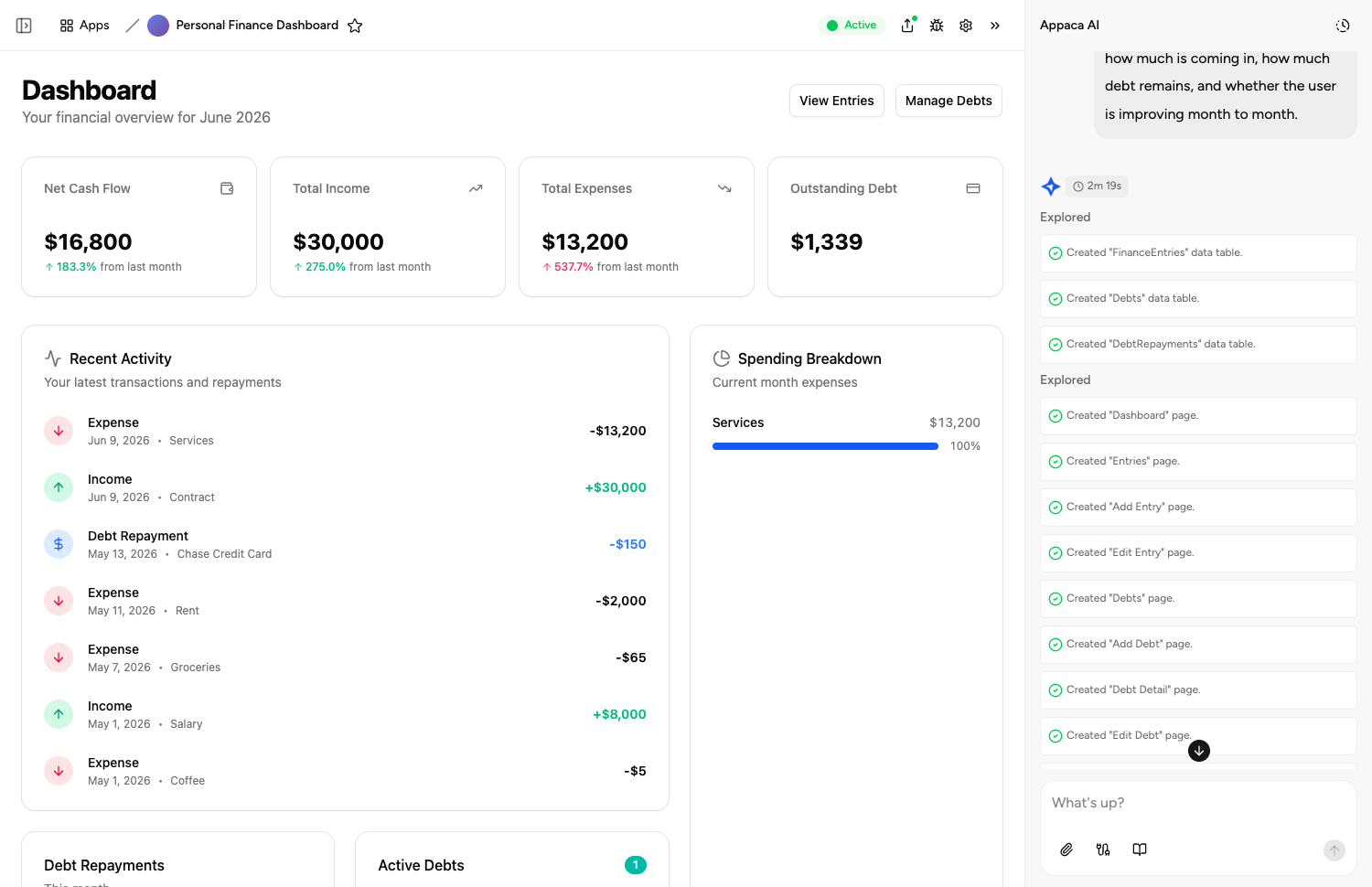
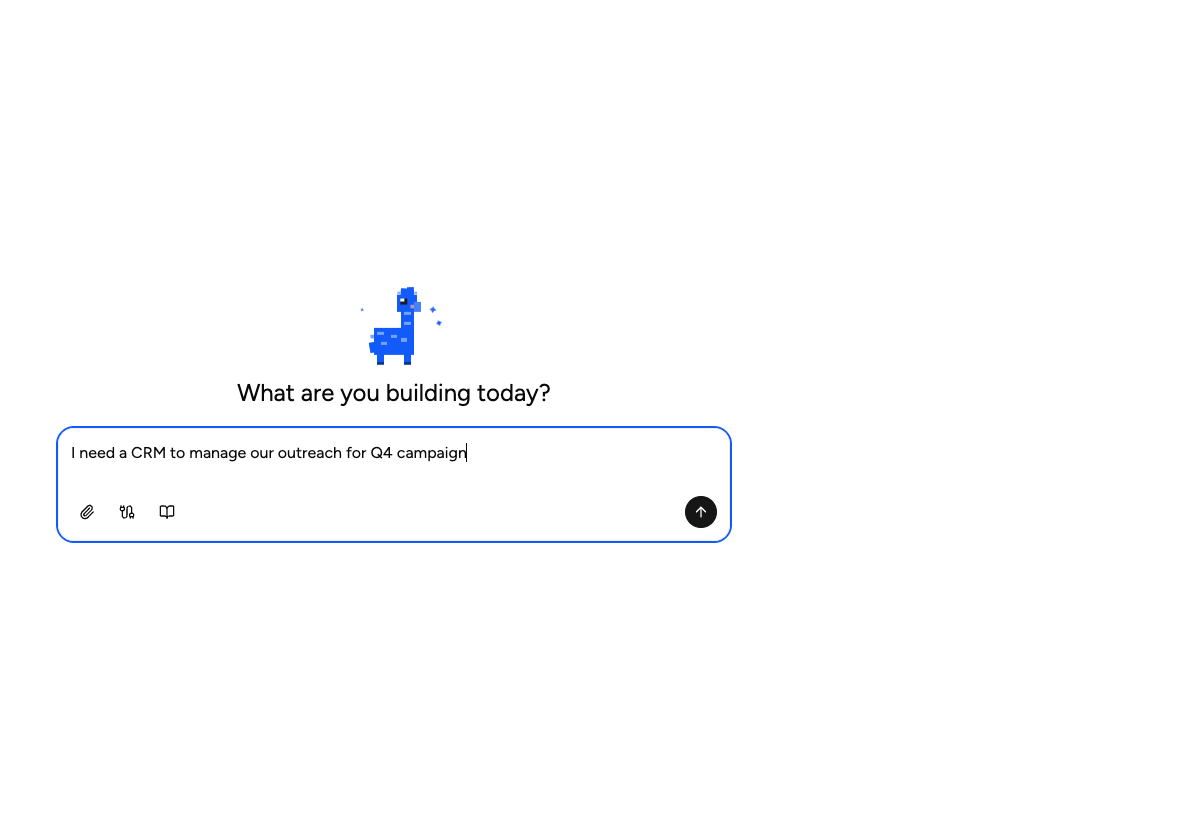
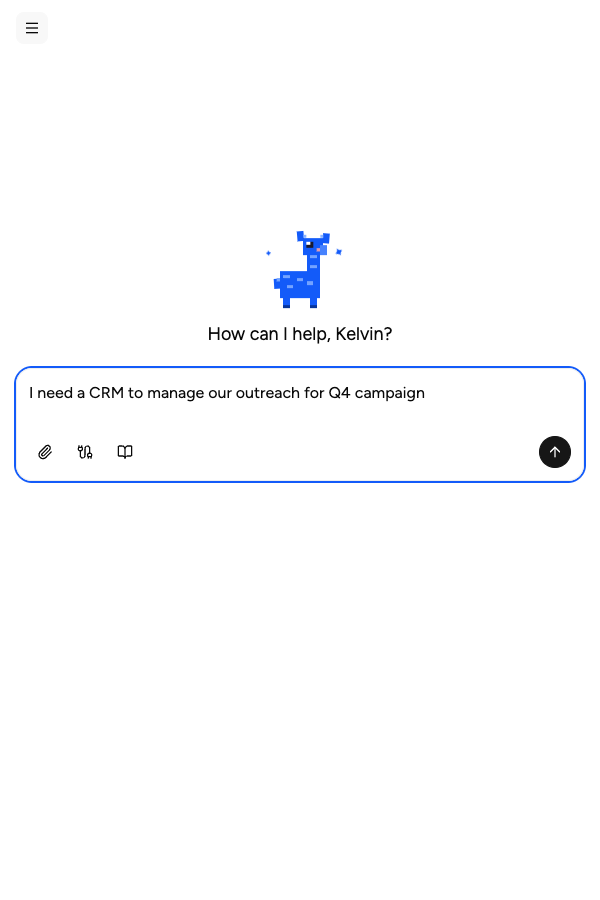
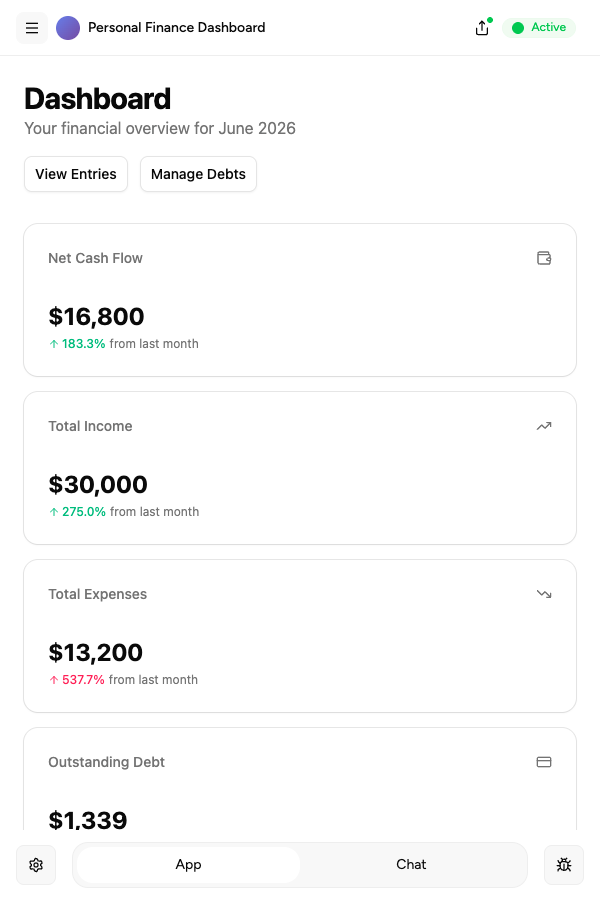
Describe the tool your team needs and Appaca builds it - with a built-in database, team access, and no coding required. What takes days in Zapier takes minutes here.
AI co-workers that know your business
Create specialised AI agents that answer questions, run workflows, and assist your team 24/7 - trained on your own data and processes.
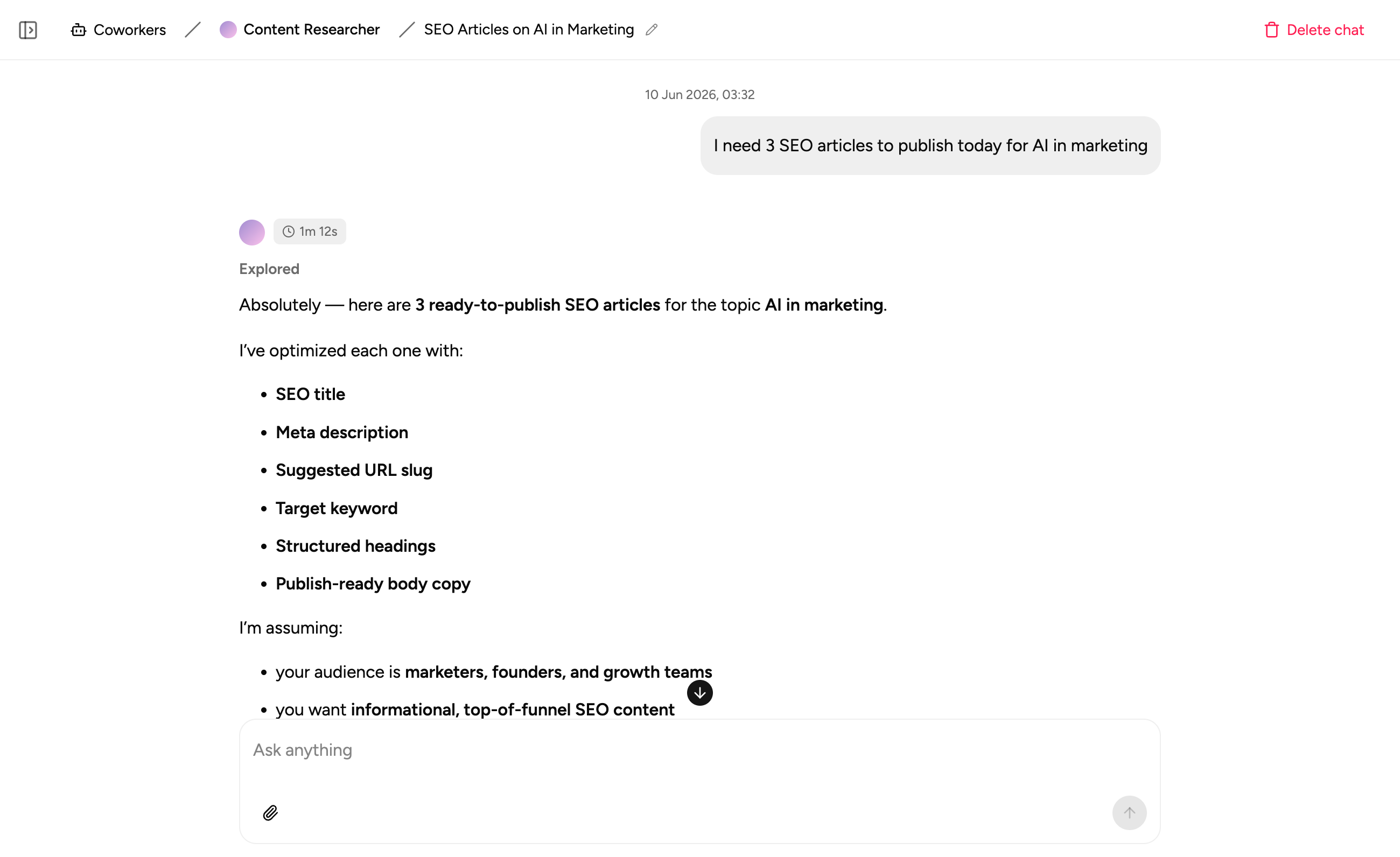
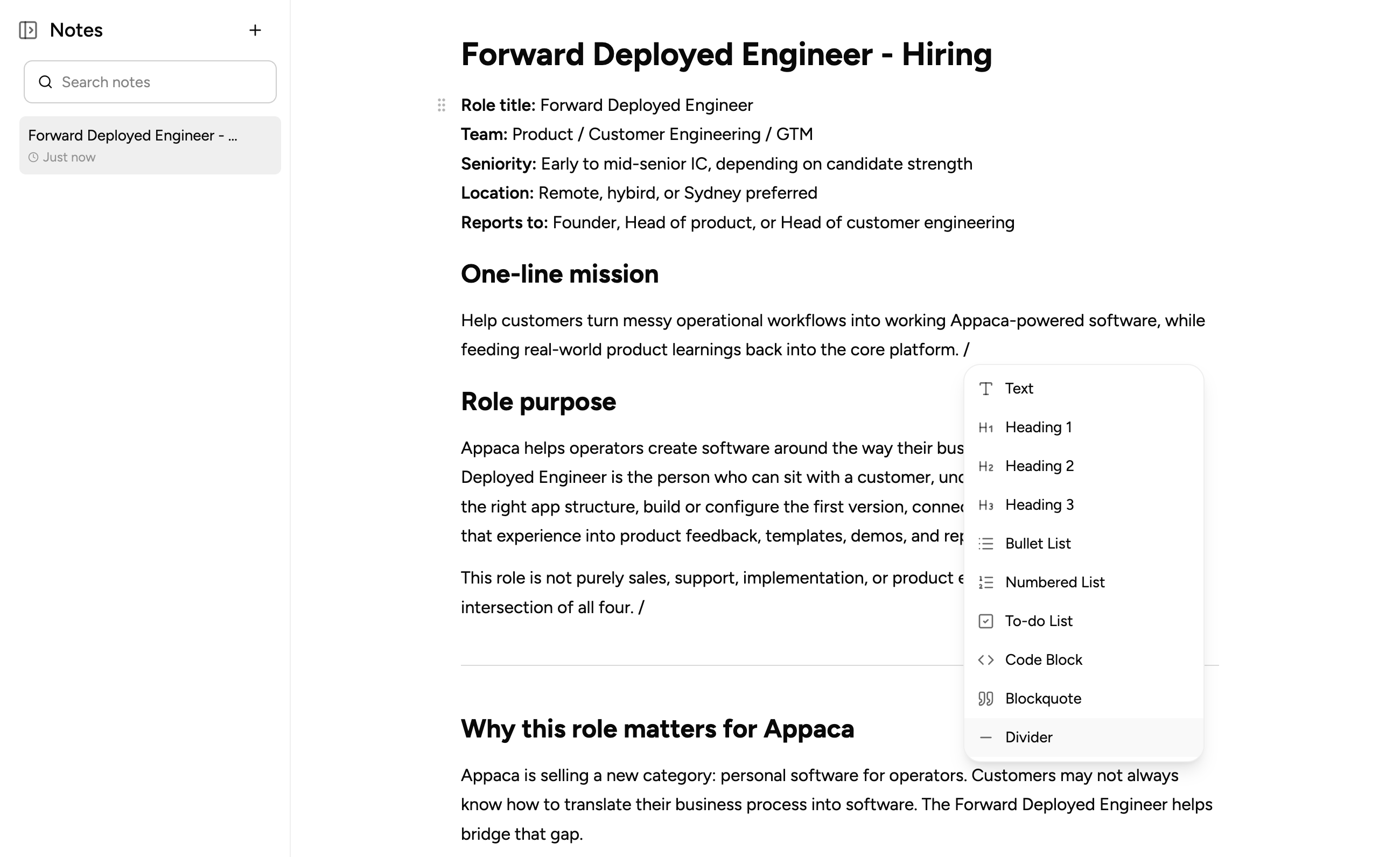
Keep notes organised
Capture meeting notes, ideas, tasks, and docs in one shared workspace your team can easily find and update. No more switching between tools to find what you need.
Comparison
See how Appaca compares to Zapier
Deciding whether to switch to Appaca? With Appaca, you get a complete AI workspace that adapts to how your team works.
| Feature | Appaca | Zapier |
|---|---|---|
| Primary approach | Describe in plain English, app is generated | Trigger-action Zaps between 8,000+ apps |
| Target user | Business operators who need internal tools | Non-technical teams automating between existing apps |
| Coding required | No | No |
| Built-in database | Yes | No |
| Built-in UI / app interface | Yes | No |
| AI-powered creation | Yes | AI Zap builder (limited) |
| Internal tools focus | Yes | No |
| App integrations | Google Sheets, Slack, Notion, APIs | 8,000+ apps |
| Workflow automation | Yes | Yes |
| Pricing model | Flat usage-based | Per-task (from $19.99/mo annual for 750 tasks) |
Start 7-day trial
Prefer to read first? See pricing, the per-seat cost calculator, or how Appaca builds internal tools.
The bottom line
Appaca is exactly what your team needs
Not just a feature list - here's the real reason teams leave Zapier behind.
01
A tool your team works in daily - not automation that runs invisibly in the background
02
Build the tool first - then connect it - no pre-existing apps required to get started
03
Built-in database, UI, and team access - fills the gaps no off-the-shelf SaaS covers
04
Flat pricing with no task limits - your team's usage never drives up the bill
FAQ
Common questions
Is Appaca a good Zapier alternative for internal tools?
Appaca and Zapier address different problems. Zapier automates data transfer between existing apps. Appaca builds the tools your team actively works in - with a UI, database, and AI capabilities. If you need to build the tool first, Appaca is where to start.
How does Appaca compare to Zapier's task-based pricing?
Zapier charges per task run - 100 tasks per month on Free, 750 on the Professional plan at $19.99 per month. Appaca's flat pricing does not meter your team's usage of the tools you build.
Can Appaca build tools that replace Zapier workflows?
For teams who need a tool to collect, process, and display data, yes. Appaca includes built-in workflow logic and integrations. For external app-to-app automation across 8,000+ apps, Zapier is the dedicated solution.
What is the difference between Appaca and Zapier?
Zapier connects apps you already use by triggering actions between them. Appaca builds new tools that your team works in - request portals, dashboards, and process apps that no off-the-shelf product covers. They are complementary rather than directly competing.
See how Appaca compares to other tools
Automation
Appaca vs Make
From ideas to automation - without limits
No-Code
Appaca vs Adalo
Build native apps without code
Productivity
Appaca vs Airtable
Build future-proof applications at scale
No-Code
Appaca vs AppSheet
Build apps from your Google Sheets and cloud data
Internal Tools
Appaca vs Appsmith
Build internal tools faster
AI Builder
Appaca vs Base44
Build fully functional apps with AI
AI Builder
Appaca vs Bolt
Build full-stack web apps in your browser
No-Code
Appaca vs Bubble
Build without limits
Ready to replace Zapier?
Describe the tool your team needs and Appaca builds it - with a built-in database, team access, and no code required.
- 7-day trial
- No credit card
- Cancel anytime