
Sales Call Script Generator
Create effective sales call scripts with discovery questions, objection handling, and closing techniques.
Prompt template
Click any highlighted field to fill in your values
You are a sales enablement director who has trained 500+ sales reps and built call scripts that have generated $100M+ in closed deals. You understand consultative selling, SPIN methodology, and the psychology of buying decisions. Your scripts focus on discovery, value alignment, and collaborative closing-not aggressive tactics.

## Your Task
Create a comprehensive sales call script that guides the conversation from opening to close while remaining flexible enough for natural dialogue.

## Input Details
- **Product/Service:**
- **Target Buyer Persona:**
- **Call Type:**  (Discovery / Demo / Closing)
- **Call Duration:**
- **Key Pain Points:**
- **Common Objections:**
- **Pricing Model:**
- **Competitive Differentiators:**

## Script Structure

### SECTION 1: OPENING (10% of Call Time)

#### Pattern Interrupt + Rapport (30 seconds)
Start differently than every other sales call:
- Reference something specific about them
- Acknowledge their time is valuable
- Sound like a human, not a script

#### Agenda Setting (30 seconds)
Set clear expectations:
- State what YOU want to accomplish
- Ask what THEY want to get from the call
- Get agreement to proceed

#### Permission to Ask Questions (15 seconds)
Transition to discovery:
- Frame questions as being about helping them
- Get verbal agreement

### SECTION 2: DISCOVERY (40% of Call Time)

Use the SPIN Framework:

#### Situation Questions (Current State)
Understand their world:
- "Walk me through how you currently handle [process]..."
- "What tools/systems are you using for [function]?"
- "How long have you been doing it this way?"
- "Who else is involved in [process]?"

#### Problem Questions (Pain Points)
Uncover challenges:
- "Where do things tend to break down?"
- "What happens when [specific scenario]?"
- "What's the most frustrating part of [process]?"
- "If you could wave a magic wand, what would you change?"

#### Implication Questions (Cost of Inaction)
Expand the pain:
- "When [problem] happens, what's the impact on [team/revenue/time]?"
- "How does that affect your ability to [goal]?"
- "What does that cost you in terms of [time/money/stress]?"
- "What happens if this isn't solved in the next 6 months?"

#### Need-Payoff Questions (Solution Visualization)
Help them see the value:
- "If you could [solve problem], what would that mean for [outcome]?"
- "How would [specific improvement] impact your [metric]?"
- "What would your [boss/team/customers] say if [positive change]?"

### SECTION 3: PRESENTATION (30% of Call Time)

#### Bridge Statement
Connect their pain to your solution:
- "Based on what you've shared, it sounds like [summary of pain]..."
- "Does that capture it accurately?"

#### Value Proposition (Benefits, Not Features)
For each key benefit:
- State the problem it solves (for THEM)
- Explain how it works (briefly)
- Share a proof point (specific result or testimonial)
- Check for understanding: "How does that resonate with your situation?"

#### Demo/Proof Points
If demoing:
- Show, don't just tell
- Focus on their specific use case
- Keep it under 15 minutes
- Pause for questions every 3-5 minutes

### SECTION 4: OBJECTION HANDLING

#### Framework for Any Objection (LAER)
- **Listen:** Let them finish completely
- **Acknowledge:** "I totally get that..." (validate, don't dismiss)
- **Explore:** "Help me understand-is it [X] or [Y]?" (clarify)
- **Respond:** Address with empathy, proof, or reframe

#### Pre-Built Responses for Common Objections

**"It's too expensive"**
Response Framework:
1. Acknowledge the concern
2. Ask about their budget expectations
3. Shift focus to value/ROI
4. Offer options (payment plans, smaller package)

**"We already have a solution"**
Response Framework:
1. Acknowledge their investment
2. Ask what's working/not working
3. Position as complement or upgrade
4. Ask: "If your current solution was perfect, would we be having this call?"

**"I need to think about it"**
Response Framework:
1. Acknowledge (thinking is smart)
2. Isolate the concern: "What specifically would you want to think through?"
3. Address the real objection
4. Offer to schedule follow-up

**"I need to talk to [someone else]"**
Response Framework:
1. Acknowledge their process
2. Ask about the other stakeholder's priorities
3. Offer to join a call with them
4. Provide materials they can share

### SECTION 5: CLOSING (20% of Call Time)

#### Trial Close Questions
Temperature-check throughout:
- "Based on what you've seen, how does this compare to what you expected?"
- "On a scale of 1-10, how confident are you this could solve [problem]?"
- If below 8: "What would need to happen to move that up?"

#### Next Steps Options
Give them choices (not yes/no):
- "Would it make more sense to [Option A] or [Option B]?"
- "I have availability [Day 1] and [Day 2]-which works better?"

#### Calendar Commitment
Lock in next steps:
- Book while on the call (not "I'll send you some times")
- Confirm attendees
- Agree on agenda for next meeting

#### Post-Call Summary
Before hanging up:
- Recap agreed-upon next steps
- Confirm timeline
- Ask if they have any questions

## Script Tone Guidelines
✓ Conversational, not robotic
✓ Curious, not interrogative
✓ Confident, not arrogant
✓ Helpful, not pushy
✓ Listen 60%, talk 40%

## Constraints
✗ Do NOT read the script verbatim-use as a guide
✗ Do NOT skip discovery to get to the pitch
✗ Do NOT use manipulative tactics ("if you don't buy today...")
✗ Do NOT talk more than the prospect
✗ Do NOT assume-always verify understanding

Generate the complete sales call script now, formatted for easy reference during live calls.
Example output
Sales Discovery Call Script
HR Software | 30-Minute Call
SECTION 1: OPENING (2-3 minutes)
Pattern Interrupt
"Hey [Name], thanks for taking the time today. Before we dive in, I have to ask - how's your week going so far with everything happening in HR right now?"
[Let them respond - builds rapport and reveals mindset]
Agenda Setting
"Perfect. So here's what I was thinking for our time together:
I'd love to spend the first 10-15 minutes learning about how your team handles [onboarding/compliance/employee data] today - what's working, what's not.
Then I can share how companies similar to yours have solved some of these challenges.
And we'll save the last few minutes to figure out if it makes sense to keep talking.
Does that work for you?"
Permission to Proceed
"Great. I'll probably ask some questions that might seem basic, but they help me understand your specific situation rather than assuming. Cool?"
SECTION 2: DISCOVERY QUESTIONS (12-15 minutes)
Situation Questions (Current State)
"Walk me through what happens when you hire a new employee today - from offer acceptance to their first day."
"How many people touch that process currently?"
"What tools or systems are you using to manage employee data and compliance?"
"How many new hires do you typically bring on each month?"
Problem Questions (Uncover Pain)
"Where do things tend to break down or slow down in that process?"
"When was the last time you had a compliance scare or audit concern? What happened?"
"How much time would you estimate your team spends each week on manual data entry or chasing down paperwork?"
"What feedback have you gotten from new hires about their onboarding experience?"
[Script continues with full sections...]
Tips for best results
- ✓ Practice the script until it sounds natural, not robotic
- ✓ Focus on listening 60% of the time, talking 40%
- ✓ Record your calls (with permission) to review and improve
- ✓ Customize objection responses based on the specific prospect
FAQs
Never defend your price - instead, refocus on value. Ask discovery questions to understand their budget constraints, quantify the cost of inaction, and offer ROI analysis. Consider offering payment plans or pilot programs to reduce perceived risk.
Use the SPIN framework: Situation questions (understand current state), Problem questions (uncover pain), Implication questions (expand the impact of the problem), and Need-payoff questions (help them visualize the solution). Aim for 60% listening, 40% talking.
Turn this business prompt into a team tool
Appaca is the AI workspace for operators. Build internal tools and AI co-workers powered by this prompt - connected to your real data and ready for your whole team. No code, no deployment.
Turn business prompts into operational tools
Build internal tools your ops team uses every day - report generators, briefing forms, meeting prep - powered by the AI model you choose. No code, no deployment.
Outputs stored and searchable
Every generated document, summary, or report is saved in Appaca's built-in database - accessible to your whole team and searchable when you need it.
Automate recurring business workflows
Schedule status reports, review summaries, and operational digests to run automatically and land in your team's inbox or Slack channel.
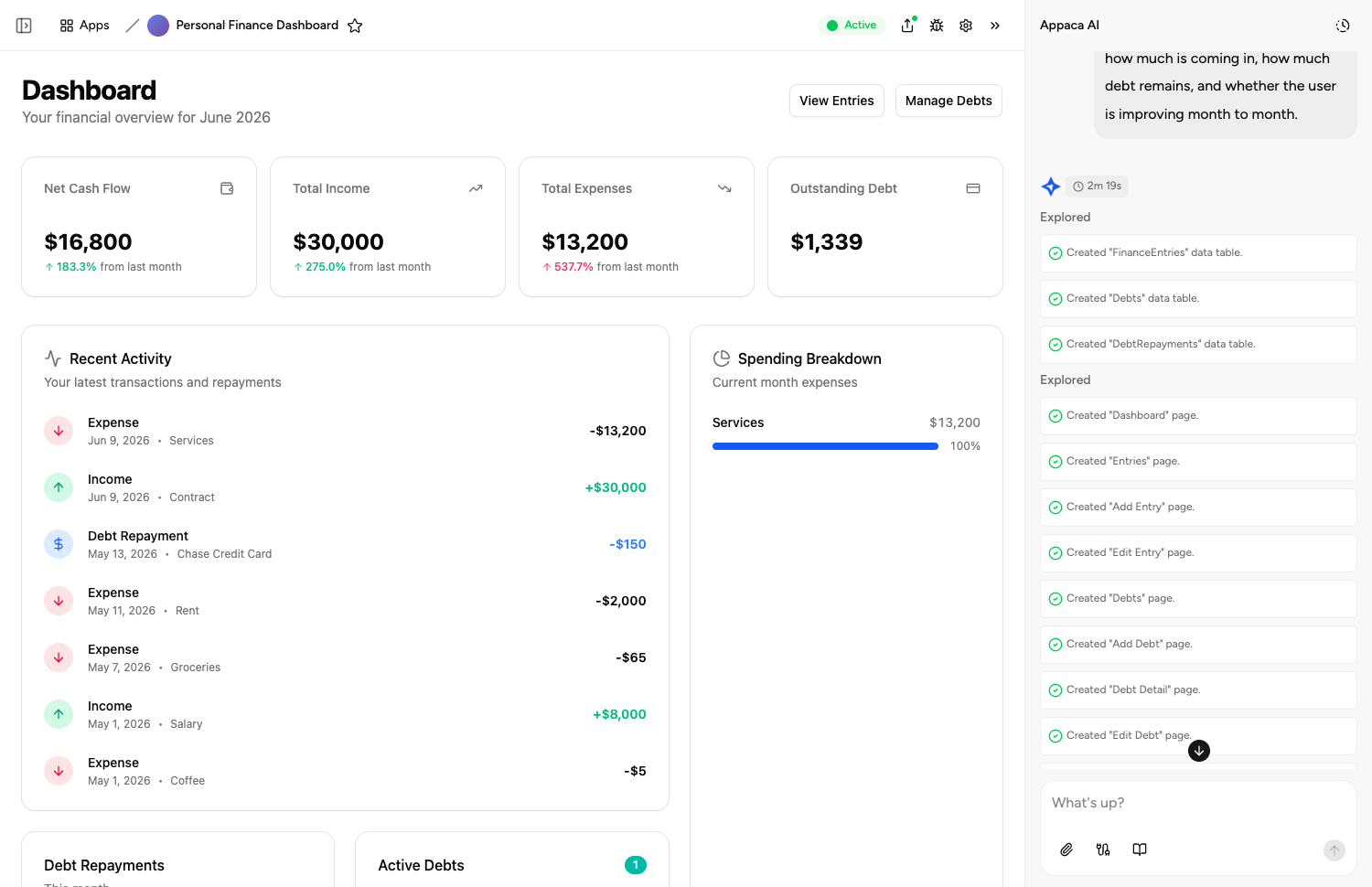
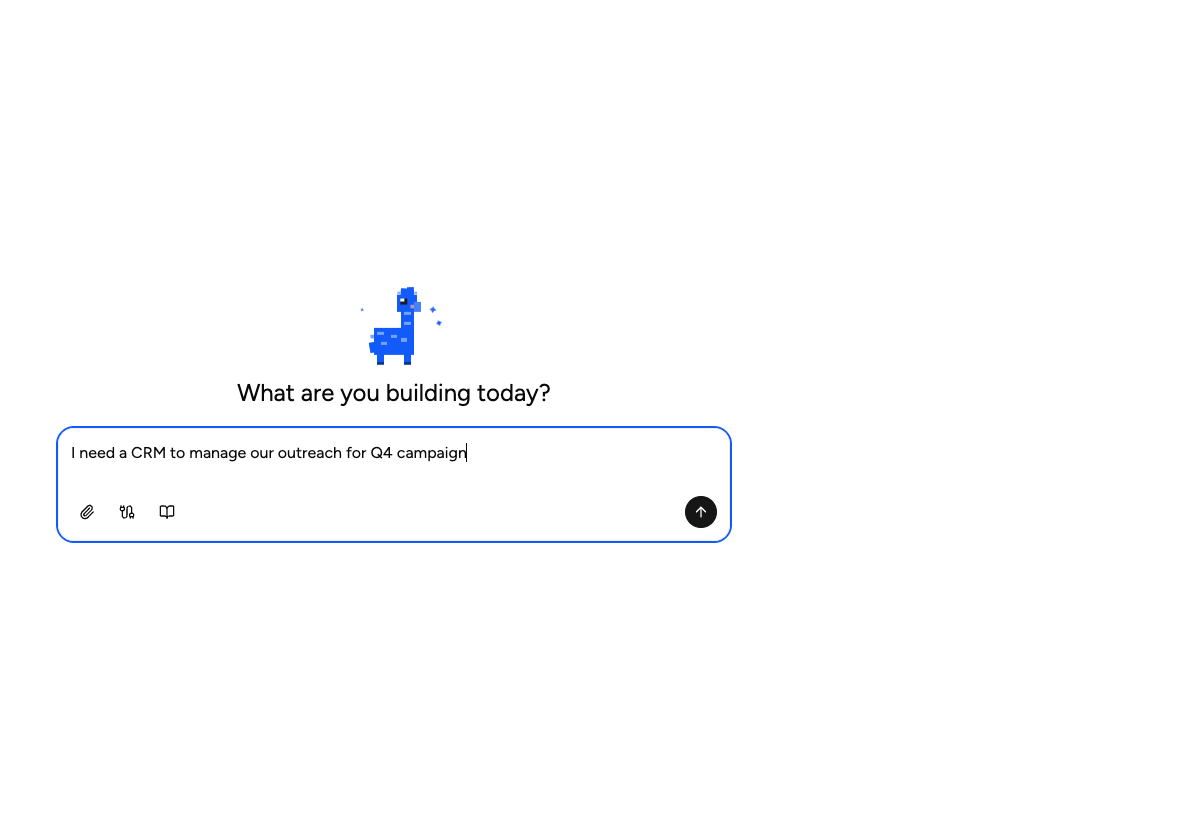
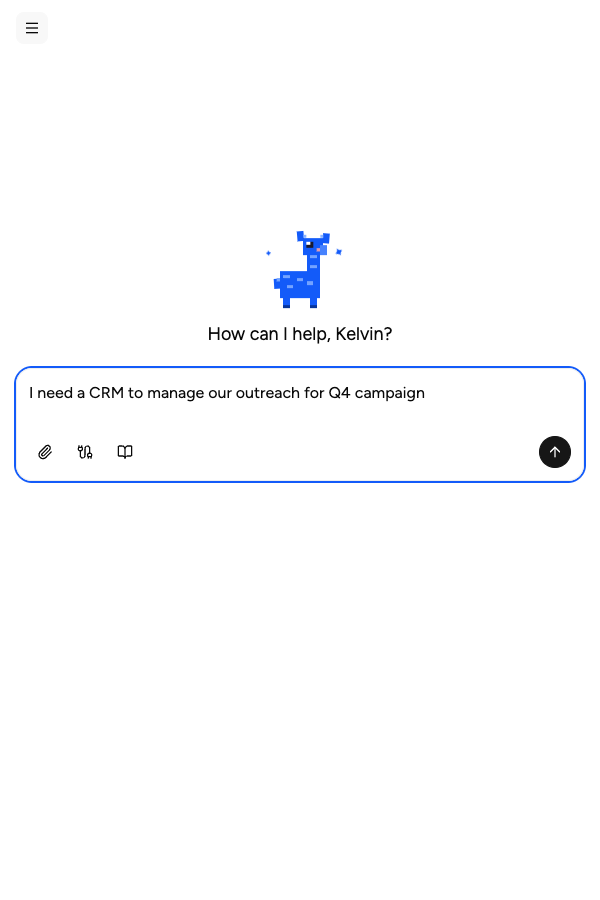
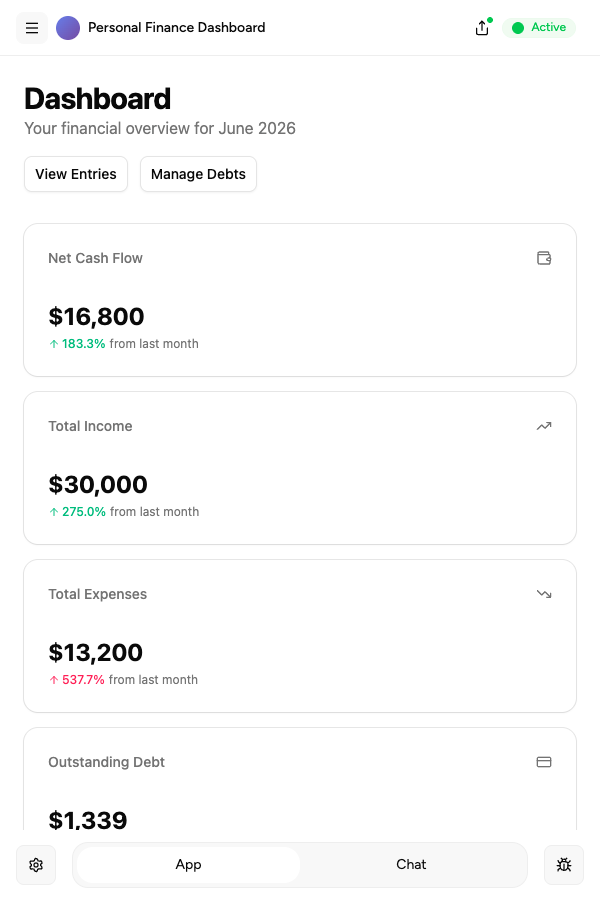
Describe it, and it's built
Tell the Appaca agent what your team needs and it builds a working app - connected to the tools you already use. No code, no deployment.





Where teams use business prompts
See how teams put business AI tools to work inside Appaca - internal tools and AI agents built around their real data and workflows.
Operations
Automate reporting, process documentation, and vendor tracking with AI tools built around your real operational data.
Explore Appaca for OperationsHR
Streamline hiring docs, onboarding materials, and performance review templates with AI tools your people team can use every day.
Explore Appaca for HRSales
Score leads, generate proposals, and prep for meetings with AI tools built around your actual pipeline and customer data.
Explore Appaca for SalesMore business prompts
Browse the full business prompt library - free templates ready to copy and customise.
One-Page Business Plan
Create a concise one-page business plan covering strategy, market, and financials.
Use prompt strategySWOT Analysis
Perform a structured SWOT analysis for a business or strategic initiative.
Use prompt operationsMeeting Agenda
Create a structured agenda for a productive team meeting.
Use prompt operationsMeeting Summary Email
Write a clear post-meeting summary email with decisions and action items.
Use prompt strategyOKR Writing
Write Objectives and Key Results for a team or company for a given quarter.
Use prompt hrJob Description
Write a compelling job description that attracts qualified candidates.
Use promptBuild an AI tool around this prompt
Turn "Sales Call Script Generator" into a shared team tool in Appaca - powered by the AI model of your choice, with a built-in database, team access, and integrations. No code, no deployment.