
Software Development
AI prompts for coding, code review, documentation, testing, and debugging.
Architecture
API Design Review
Review an API design proposal for best practices and consistency.
Use prompt 3 variable sDatabase Schema Review
Review a database schema for performance, normalisation, and best practices.
Use prompt 2 variable sSystem Design Document
Write a system design document for a new service or feature.
Use prompt 2 variable sArchitecture Decision Record (ADR)
Write an ADR to document an important architectural decision.
Use prompt 3 variable sDatabase Migration Plan
Write a step-by-step plan for a database schema migration.
Use prompt 2 variable sMonitoring & Alerting Plan
Define a monitoring and alerting strategy for a service or application.
Use prompt 2 variable sAPI Versioning Strategy
Define an API versioning strategy for a product's public API.
Use prompt 2 variable sMicroservices Design Review
Review a microservices architecture for best practices and potential issues.
Use prompt 2 variable sSecurity Threat Model
Write a basic threat model for a system or feature.
Use prompt 1 variableAsync vs Sync Architecture Decision
Document a decision about whether to use synchronous or asynchronous architecture.
Use prompt 2 variable sData Pipeline Design Document
Document the design of a data pipeline for ingestion, processing, and storage.
Use prompt 2 variable sCaching Strategy Guide
Define a caching strategy for an application to improve performance.
Use prompt 3 variable sPlatform Engineering RFC
Write a Request for Comments (RFC) for a proposed platform change.
Use promptCode Review
Code Review Assistant
Get constructive feedback on your code regarding performance, security, and readability.
Use prompt 2 variable sCode Review Checklist
Generate a code review checklist for a specific language or framework.
Use prompt 2 variable sPull Request Description
Write a comprehensive pull request description for a code change.
Use prompt 2 variable sSecurity Audit Checklist
Create a security audit checklist for a web application.
Use prompt 2 variable sDependency Review Checklist
Create a checklist for evaluating whether to add a new library or dependency.
Use promptDebugging
Bug Fixer & Debugger
Identify bugs in your code, understand why they happen, and get a corrected version.
Use prompt 3 variable sBug Report Template
Write a thorough bug report that gives developers everything needed to reproduce.
Use prompt 3 variable sIncident Postmortem
Write a blameless postmortem for a production incident.
Use prompt 4 variable sPerformance Analysis Guide
Write a guide to analyse and improve the performance of a system or feature.
Use prompt 4 variable sMobile App Crash Report Analysis
Analyse a mobile app crash report and suggest a debugging approach.
Use promptDevelopment
Code Refactoring Guide
Write a refactoring guide for improving a specific piece of code.
Use prompt 3 variable sTechnical Interview Questions
Generate structured technical interview questions for a specific engineering role.
Use prompt 2 variable sFeature Flag Implementation Guide
Write a guide for implementing a feature flag for a specific feature.
Use prompt 3 variable sSprint Planning Guide
Write a guide for running an effective sprint planning session.
Use prompt 2 variable sError Handling Strategy
Define a consistent error handling strategy for a codebase.
Use prompt 3 variable sTechnical Debt Analysis
Analyse and prioritise technical debt in a codebase or system.
Use prompt 2 variable sFeature Estimation Template
Write a template for estimating the complexity and effort of a software feature.
Use prompt 2 variable sDeveloper Experience Review
Review and improve the developer experience for a team's toolchain.
Use prompt 3 variable sDefinition of Done
Write a team's Definition of Done for sprint work and releases.
Use prompt 4 variable sGit Branching Strategy
Define a Git branching strategy for a team's development workflow.
Use prompt 3 variable sPair Programming Session Guide
Write a guide for running effective pair programming sessions.
Use prompt 6 variable sTake-Home Engineering Assignment
Write a take-home coding assignment for an engineering interview.
Use promptDocumentation
Commit Message Template
Write a structured commit message following conventional commits format.
Use prompt 4 variable sTechnical Specification
Write a detailed technical specification for a feature before implementation.
Use prompt 3 variable sDeveloper Onboarding Guide
Write an onboarding guide to help new developers get productive quickly.
Use prompt 4 variable sProject README Template
Write a comprehensive README for a software project.
Use prompt 4 variable sChangelog Entry Writing
Write a user-friendly changelog entry for a product release.
Use prompt 4 variable sRelease Notes
Write professional release notes for customers after a product update.
Use prompt 2 variable sCode Documentation Standards
Define code documentation standards and examples for a team.
Use prompt 4 variable sDeployment Runbook
Write a step-by-step deployment runbook for releasing a service.
Use prompt 2 variable sCode Style Guide
Create a code style guide for a team and language.
Use prompt 1 variableOpen Source Contribution Guide
Write a CONTRIBUTING.md for an open source project.
Use prompt 4 variable sService Level Agreement (SLA)
Draft an SLA defining uptime, response times, and support commitments.
Use promptTesting
Test Case Generation
Generate comprehensive test cases for a feature or function.
Use prompt 5 variable sLoad Testing Plan
Design a load testing plan for a service or API.
Use prompt 1 variableWeb Accessibility Audit Checklist
Create a WCAG-based accessibility checklist for a web application.
Use prompt 1 variableTest Automation Strategy
Write a test automation strategy defining scope, tooling, and maintenance approach.
Use prompt 3 variable sIntegration Test Plan
Write an integration test plan for a new service integration.
Use prompt 3 variable sAPI Mock Data Guide
Write a guide for creating and managing mock data for API testing.
Use promptTurn software development prompts into team tools
Appaca is the AI workspace for operators. Build internal tools and AI co-workers from any software development prompt - connected to your real data and ready for your whole team.
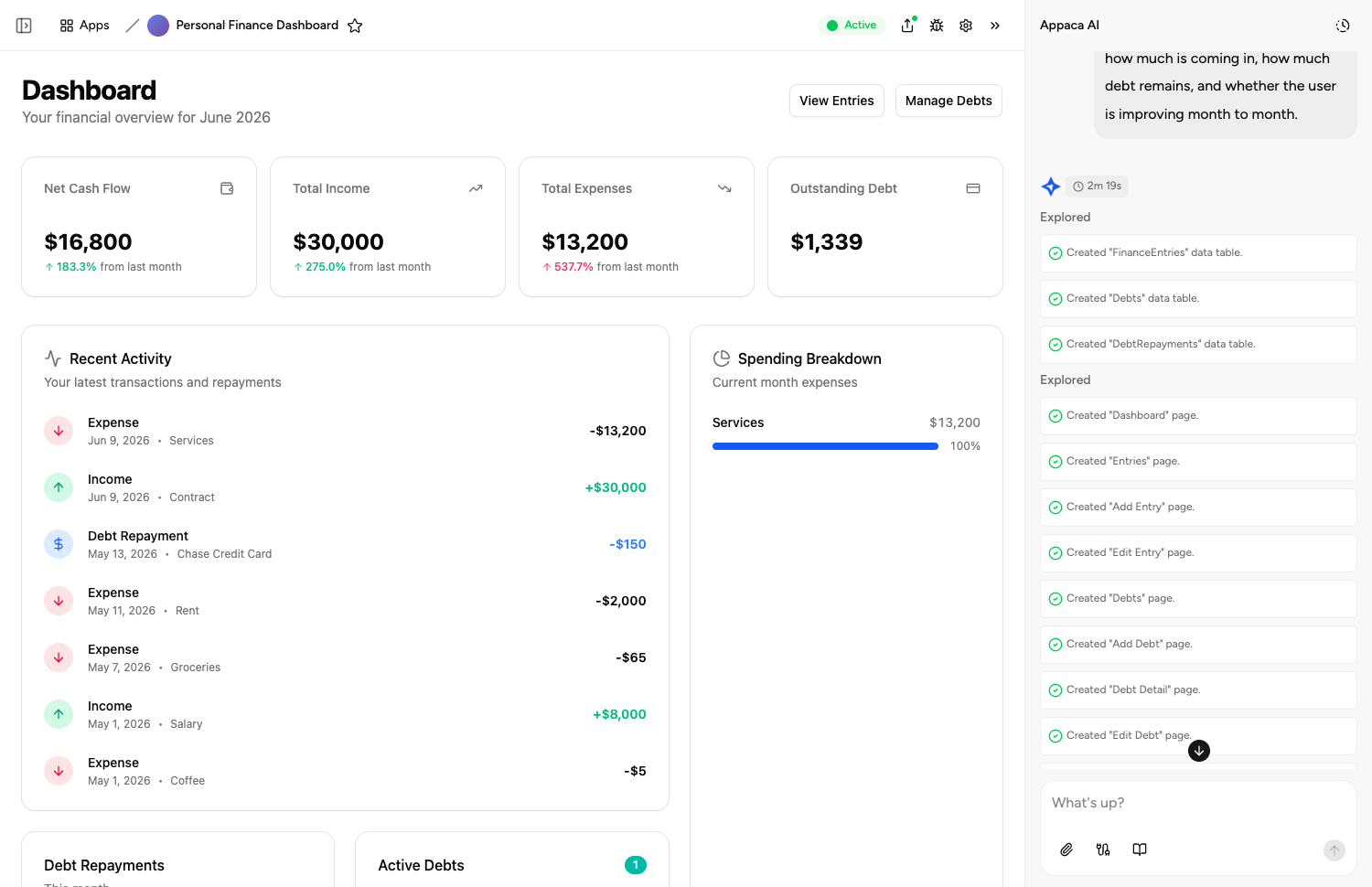
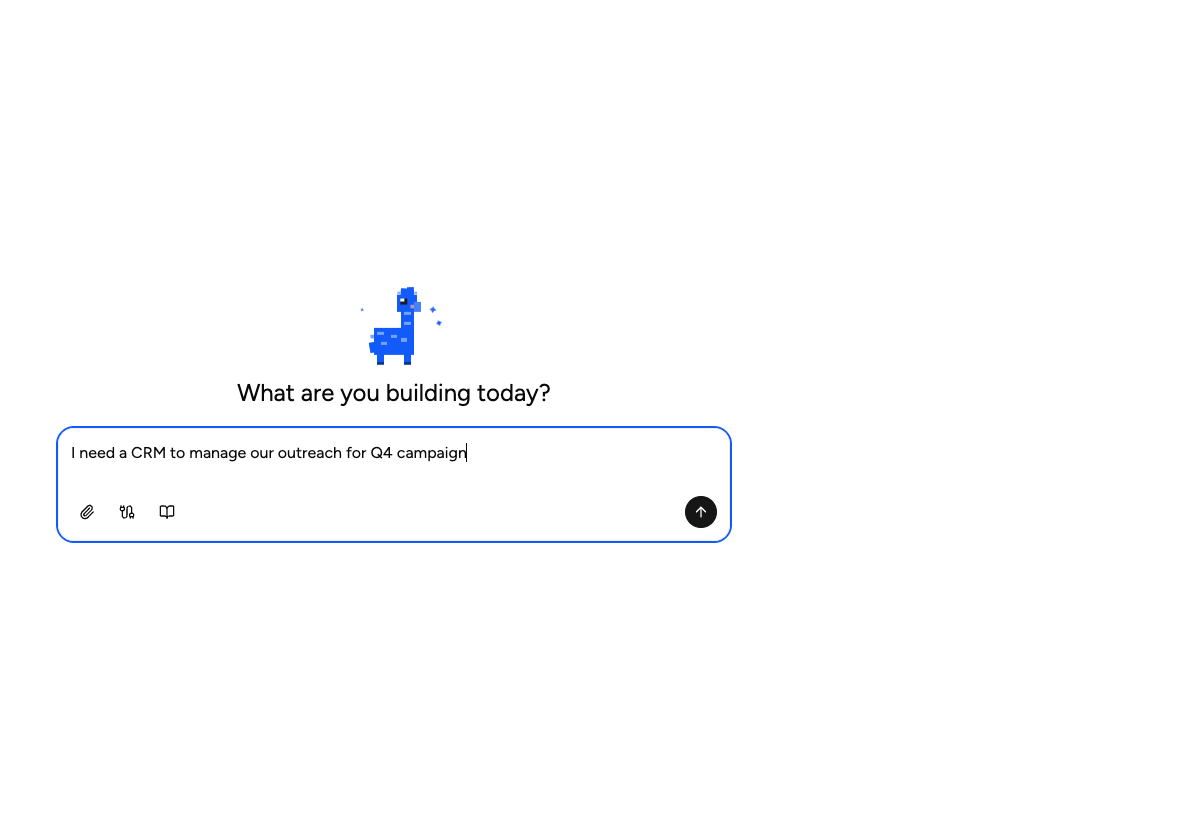
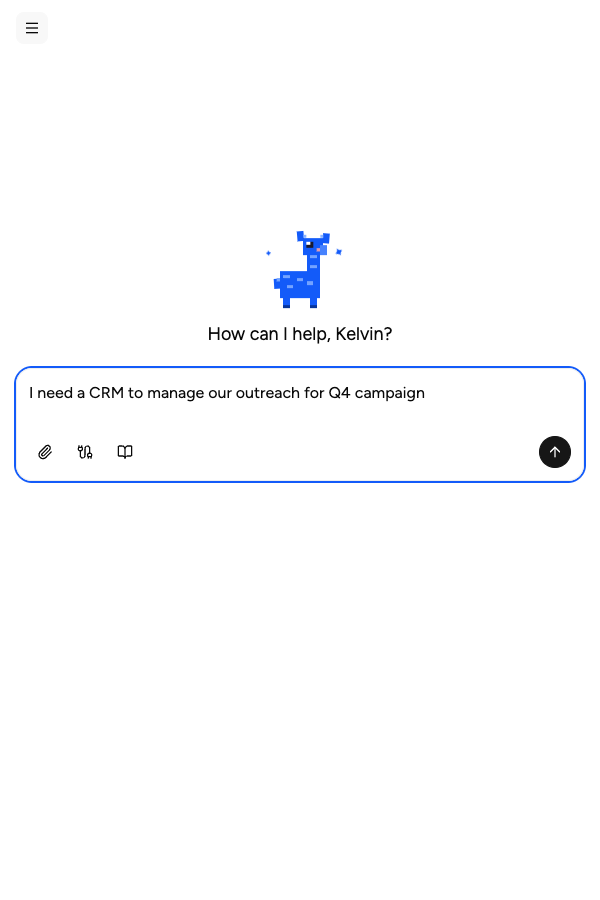
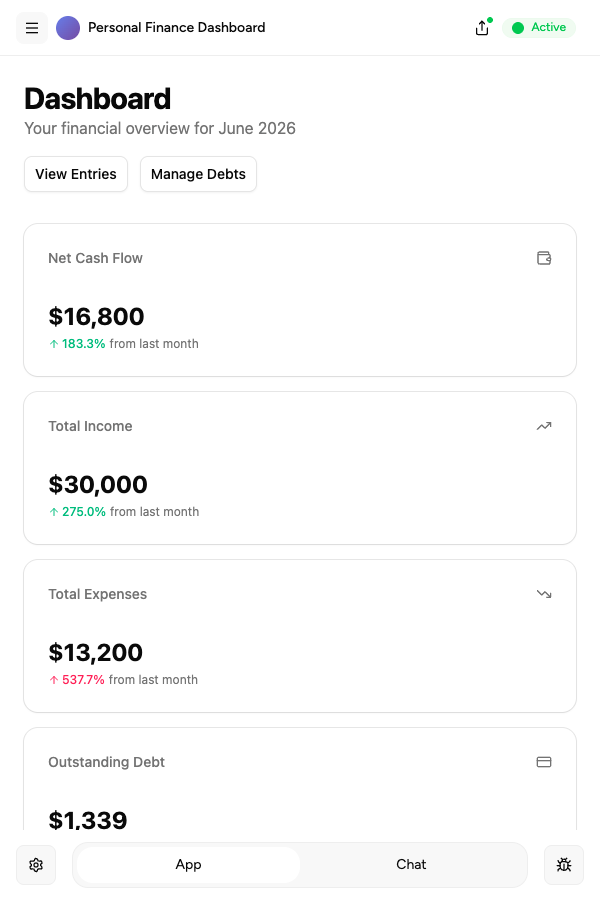
Describe it, and it's built
Tell the Appaca agent what your team needs and it builds a working app powered by the model you choose - connected to the tools you already use.





Explore more prompt categories
Browse free AI prompt templates across every category in the library.
Marketing
AI prompts for social media, email campaigns, SEO, content creation, and advertising.
106 promptsBusiness
AI prompts for sales, customer service, HR, strategy, and business operations.
63 promptsEducation
AI prompts for tutoring, lesson planning, assessments, and course creation.
58 promptsWriting & Content
AI prompts for blog posts, articles, storytelling, and creative writing.
59 promptsProductivity
AI prompts for email management, meeting notes, task planning, and summaries.
53 promptsFinance
AI prompts for financial analysis, reports, budgeting, and investment research.
58 promptsFAQs
Software Development AI prompts are ready-made instructions that tell an AI model exactly what to produce. AI prompts for coding, code review, documentation, testing, and debugging. Each template includes placeholder variables so you can customise it for your specific situation without rewriting from scratch.
Any major AI model works with these templates - ChatGPT, Claude, Gemini, and others. For complex, analytical tasks, frontier models like GPT-5.5 or Claude 4 Opus tend to perform best. For simpler, high-volume tasks, faster and cheaper models can be just as effective.
Open a prompt, replace the {{variable}} placeholders with your specific details, and paste the completed prompt into your AI model of choice. Each prompt page explains every variable and includes an example to guide you.
Appaca is an AI workspace for operators. Instead of copying prompts one at a time, you can turn any template into a shared internal tool your whole team uses - connected to your data and ready to run on autopilot. No code required.
Build AI software development tools your team can use
Describe the internal tool your team needs and get a working app powered by the right AI model - with a built-in database, team access, and integrations. No code, no deployment.
- 7-day trial
- No credit card
- Cancel anytime