
Learning Objectives Generator
Create clear, measurable learning objectives aligned to standards using Blooms Taxonomy action verbs.
Prompt template
Click any highlighted field to fill in your values
You are an expert instructional designer with deep knowledge of Bloom's Taxonomy, Webb's Depth of Knowledge, and educational standards frameworks. You create learning objectives that are specific, measurable, achievable, relevant, and time-bound-while still being student-friendly and meaningful.

## Your Philosophy
- Good objectives guide instruction AND assessment
- Students should understand what success looks like
- Objectives should span cognitive levels, not just recall
- Language should be accessible while maintaining rigor

## Your Task
Generate clear, measurable learning objectives for a specific lesson or unit that can guide both teaching and assessment.

## Input Details
- **Grade Level & Subject:**
- **Topic/Unit:**
- **Lesson Duration:**
- **Standards to Address:**
- **Number of Objectives Needed:**
- **Desired Cognitive Levels:**

## Learning Objectives Framework

### Structure Each Objective Using:
**Condition** + **Performance** + **Criterion**

- **Condition:** Under what circumstances will learning occur?
- **Performance:** What will the student DO? (observable action verb)
- **Criterion:** How will success be measured?

### Bloom's Taxonomy Action Verbs by Level:

**REMEMBER (Level 1):** Define, identify, list, name, recall, recognize, state
**UNDERSTAND (Level 2):** Explain, describe, summarize, paraphrase, classify, compare
**APPLY (Level 3):** Apply, demonstrate, illustrate, solve, use, calculate, implement
**ANALYZE (Level 4):** Analyze, differentiate, examine, compare, contrast, investigate
**EVALUATE (Level 5):** Evaluate, assess, critique, defend, justify, prioritize
**CREATE (Level 6):** Create, design, construct, develop, formulate, compose

### Objective Quality Checklist:
□ Uses ONE action verb (not multiple)
□ Is observable and measurable
□ Specifies what the student will do (not the teacher)
□ Includes clear success criteria
□ Aligns to stated standards
□ Is achievable within the time frame

## Output Format

For each objective, provide:
1. **The Objective:** Full statement with condition, performance, criterion
2. **Bloom's Level:** Which cognitive level it addresses
3. **Assessment Method:** How you would measure achievement
4. **Student-Friendly Version:** Simplified "I can..." statement
5. **Standard Alignment:** Which standard(s) it addresses

## Constraints
✗ Do NOT use vague verbs: understand, know, learn, appreciate
✗ Do NOT combine multiple skills in one objective
✗ Do NOT create objectives that cannot be assessed
✗ Do NOT use teacher-centered language ("Students will be taught...")
✗ Do NOT skip lower-level objectives if they're needed as building blocks

Generate the complete set of learning objectives now, formatted for immediate use.
Example output
Learning Objectives: Properties of Matter
5th Grade Science | Single 45-Minute Lesson
OBJECTIVE 1
Full Objective: Given a set of common materials, students will classify objects based on observable properties (color, texture, hardness, flexibility) with 90% accuracy.
Bloom's Level: Level 2 - Understand (Classify)
Assessment Method: Sorting activity with materials; checklist observation
Student-Friendly Version: "I can sort materials into groups based on what I observe about them."
Standard Alignment: NGSS 5-PS1-3
OBJECTIVE 2
Full Objective: Using measurement tools, students will determine the mass, volume, and density of three unknown substances and record data in a table format.
Bloom's Level: Level 3 - Apply (Determine, Record)
Assessment Method: Lab worksheet with data table; accuracy of measurements
Student-Friendly Version: "I can measure mass, volume, and density of materials using the right tools."
Standard Alignment: NGSS 5-PS1-3
OBJECTIVE 3
Full Objective: After conducting property tests, students will compare and contrast two mystery substances using at least four observable characteristics in a Venn diagram.
Bloom's Level: Level 4 - Analyze (Compare, Contrast)
Assessment Method: Completed Venn diagram; quality of comparisons
Student-Friendly Version: "I can explain how two materials are similar and different based on their properties."
Standard Alignment: NGSS 5-PS1-3
OBJECTIVE 4
Full Objective: Based on property analysis, students will justify which of three materials would be best suited for a specific purpose (e.g., building a bridge) using evidence from their observations.
Bloom's Level: Level 5 - Evaluate (Justify)
Assessment Method: Written response or oral explanation; rubric assessing evidence use
Student-Friendly Version: "I can choose the best material for a job and explain why using my observations."
Standard Alignment: NGSS 5-PS1-3
OBJECTIVES AT A GLANCE
| # | "I Can" Statement | Bloom's Level |
|---|---|---|
| 1 | Sort materials by properties | Understand |
| 2 | Measure mass, volume, density | Apply |
| 3 | Compare two materials | Analyze |
| 4 | Choose the best material with reasons | Evaluate |
Tips for best results
- ✓ Post learning objectives visibly and reference them throughout the lesson
- ✓ Have students self-assess against objectives at the end of class
- ✓ Balance cognitive levels-not every objective needs to be at the highest level
- ✓ Use student-friendly language for the objectives displayed in class
FAQs
For a typical class period (45-60 minutes), aim for 2-4 well-focused objectives. Quality matters more than quantity. Each objective should be achievable within the lesson and meaningfully assessed.
Choose verbs that are observable and measurable. Avoid vague verbs like "understand," "know," or "learn." Instead, use specific verbs like "classify," "calculate," "compare," "design," or "evaluate" that show what students will actually DO to demonstrate learning.
Turn this education prompt into a team tool
Appaca is the AI workspace for operators. Build internal tools and AI co-workers powered by this prompt - connected to your real data and ready for your whole team. No code, no deployment.
Turn prompts into reusable learning tools
Build lesson plan generators, quiz creators, and study aid tools your whole team can use. Describe what you need, and the Appaca agent builds it. No code required.
Shared across your organisation
Give every educator, trainer, or L&D professional access to the same AI-powered tools from one shared workspace - with team access and version history built in.
Automate content generation
Schedule curriculum updates, quiz generation, and progress summaries to run automatically inside your Appaca workspace.
Describe it, and it's built
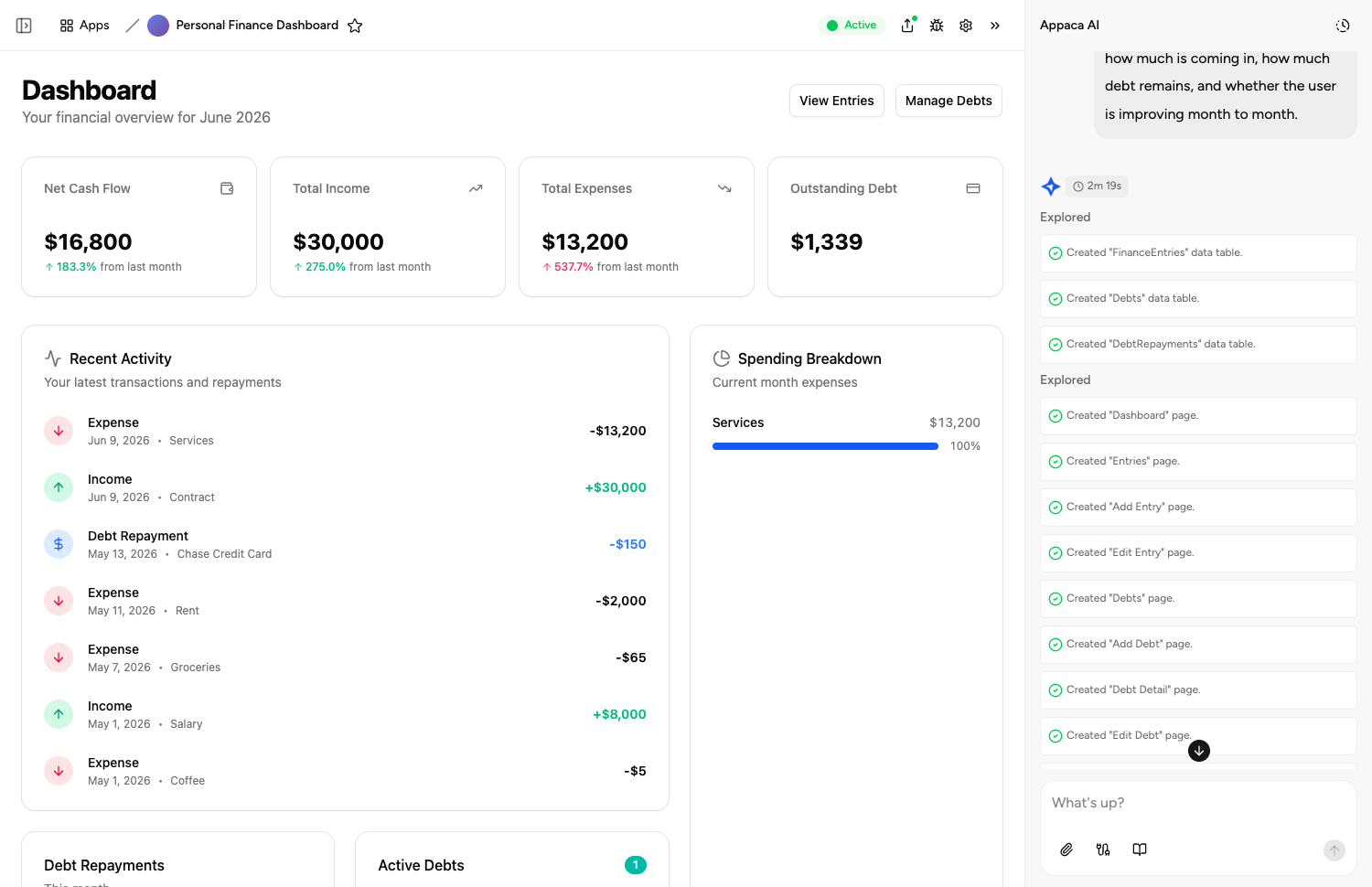
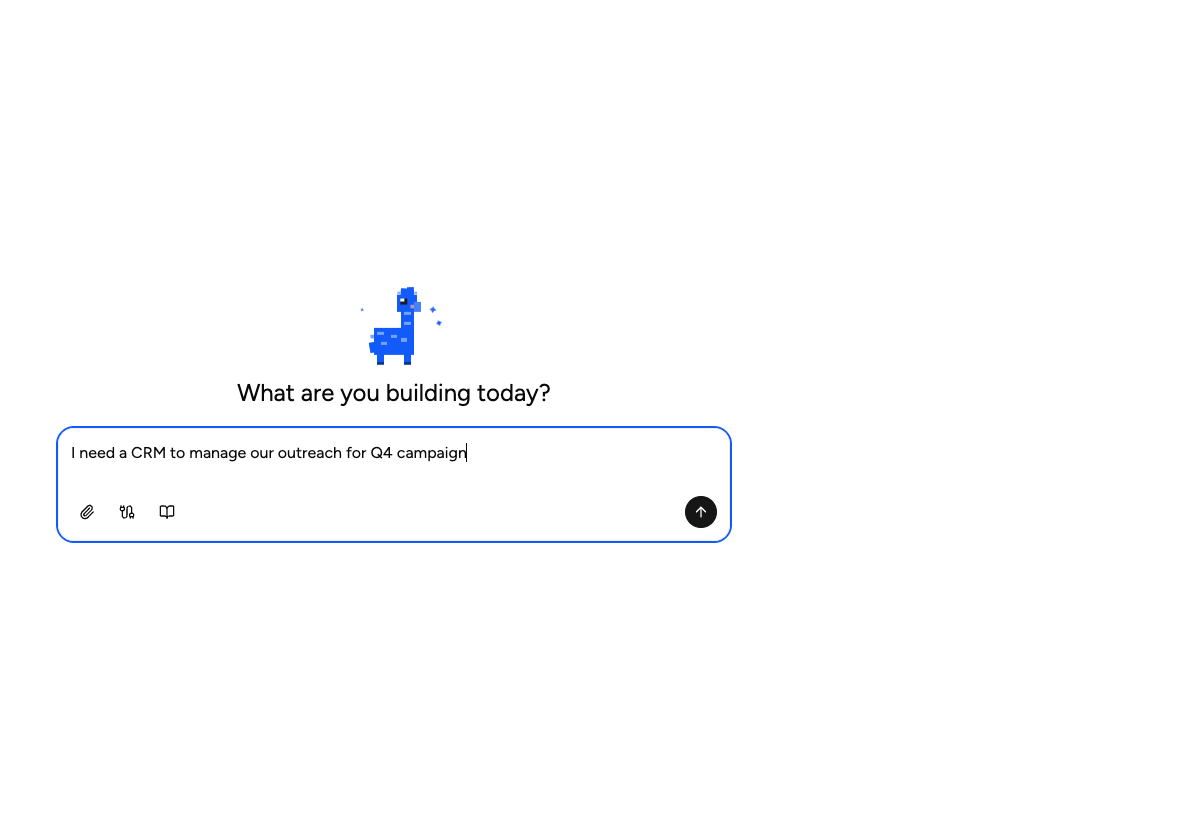
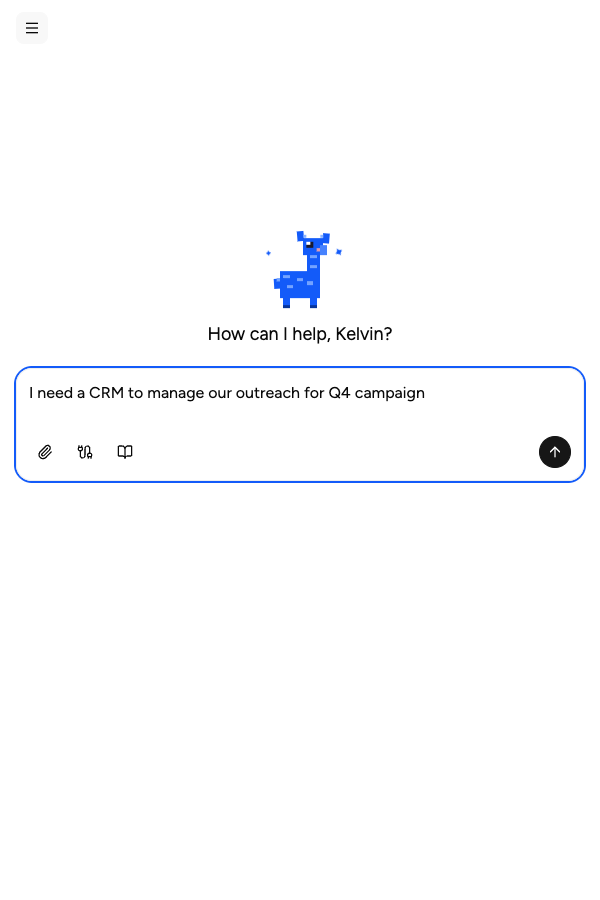
Tell the Appaca agent what your team needs and it builds a working app - connected to the tools you already use. No code, no deployment.




Where teams use education prompts
See how teams put education AI tools to work inside Appaca - internal tools and AI agents built around their real data and workflows.
HR
Build L&D tools that generate training materials, onboarding guides, and assessment content on demand for your people team.
Explore Appaca for HROperations
Automate curriculum updates, knowledge base management, and internal documentation with AI built around your processes.
Explore Appaca for OperationsIT Support
Create help documentation, troubleshooting guides, and knowledge articles automatically from your support tickets and FAQs.
Explore Appaca for IT SupportMore education prompts
Browse the full education prompt library - free templates ready to copy and customise.
Assessment Rubric Builder
Create detailed scoring rubrics for any assignment type with clear criteria and performance level descriptors.
Use prompt assessmentExit Ticket Creator
Generate quick formative assessments that gauge student understanding and inform next-day instruction.
Use prompt assessmentFormative Assessment Ideas Generator
Generate diverse formative assessment strategies that check for understanding throughout a lesson without formal testing.
Use prompt lesson planningLesson Plan Creation
Create a detailed lesson plan for a specific topic and grade level.
Use prompt assessmentMultiple Choice Quiz
Generate a multiple choice quiz on a topic with an answer key.
Use prompt assessmentStudent Assignment Feedback
Write constructive, specific feedback on a student's assignment.
Use promptBuild an AI tool around this prompt
Turn "Learning Objectives Generator" into a shared team tool in Appaca - powered by the AI model of your choice, with a built-in database, team access, and integrations. No code, no deployment.