
GPT-5.5 vs Claude 4 Sonnet for Content Creation
Compare GPT-5.5 by OpenAI and Claude 4 Sonnet by Anthropic for content creation tasks - pricing, context windows, and strengths, and see how to put either to work in Appaca.
GPT-5.5
OpenAI's smartest and most capable model yet for agentic coding, knowledge work, and computer use, delivering a new class of intelligence at GPT-5.4 latency.
View GPT-5.5Claude 4 Sonnet
A balanced-hybrid reasoning model tuned for everyday assistant and high-volume tasks.
View Claude 4 SonnetGPT-5.5 vs Claude 4 Sonnet at a glance
Specs and pricing side by side, from the Appaca AI models directory.
| Spec | GPT-5.5 | Claude 4 Sonnet |
|---|---|---|
| Provider | OpenAI | Anthropic |
| Model type | Text | Text |
| Context window | 1M tokens | 1M tokens |
| Input price | $5 / 1M tokens | $3 / 1M tokens |
| Output price | $30 / 1M tokens | $15 / 1M tokens |
| Status | Current | Superseded by Claude 4.5 Sonnet |
What matters for Content Creation
Evaluation criteria and how GPT-5.5 and Claude 4 Sonnet compare on what content creation tasks actually require.
Creative range and originality
SEO-aware structuring and formatting
Consistency across content series
Speed for high-volume publishing workflows
-
Claude 4 Sonnet is 40% cheaper on input tokens ($3 vs $5 per million), which adds up quickly on high-volume content creation workloads.
-
Claude 4 Sonnet is 50% cheaper on output tokens ($15 vs $30 per million) - the bigger factor for content creation tasks that generate long responses.
-
Both models offer the same 1M tokens context window.
-
Claude 4 Sonnet has been superseded by Claude 4.5 Sonnet - for new content creation builds, consider the newer model first.
Strengths side by side
Where each model shines, according to benchmarks and provider positioning.
GPT-5.5
1. Strongest Agentic Coding Model
- State-of-the-art on Terminal-Bench 2.0 (82.7%), Expert-SWE (73.1%), and SWE-Bench Pro (58.6%), outperforming GPT-5.4 on complex coding tasks.
- Holds context across large systems, reasons through ambiguous failures, and carries changes through surrounding codebases with fewer tokens.
2. Higher Intelligence at GPT-5.4 Latency
- Co-designed, trained, and served on NVIDIA GB200/GB300 NVL72 systems to match GPT-5.4 per-token latency while performing at a significantly higher level.
- Uses fewer tokens to complete the same tasks, making it more efficient as well as more capable.
3. Powerful for Knowledge Work & Computer Use
- Scores 84.9% on GDPval (44 occupations) and 78.7% on OSWorld-Verified for autonomous computer operation.
- Excels at generating documents, spreadsheets, and reports; naturally moves across finding information, using tools, and checking output.
4. Scientific Research Co-Scientist
- Leading performance on GeneBench, BixBench, and FrontierMath; helped discover a new proof about Ramsey numbers verified in Lean.
- Strong enough to meaningfully accelerate progress at the frontiers of biomedical and mathematical research.
Claude 4 Sonnet
- Hybrid reasoning: supports both fast (“near-instant”) and extended thinking modes.
- Optimised for responsiveness, cost and high-volume production workloads.
- Strong coding performance relative to prior Sonnet versions (improved over Sonnet 3.7).
- Available even in free tiers (alongside paid plans).
- Better suited for general-purpose use and agents where speed + cost-efficiency matter.
Use GPT-5.5 or Claude 4 Sonnet - or both
Appaca is the AI workspace for operators. Build internal content creation tools and AI co-workers powered by GPT-5.5 or Claude 4 Sonnet - connected to your real data and ready for your whole team. No code, no deployment.
Describe it, and it's built
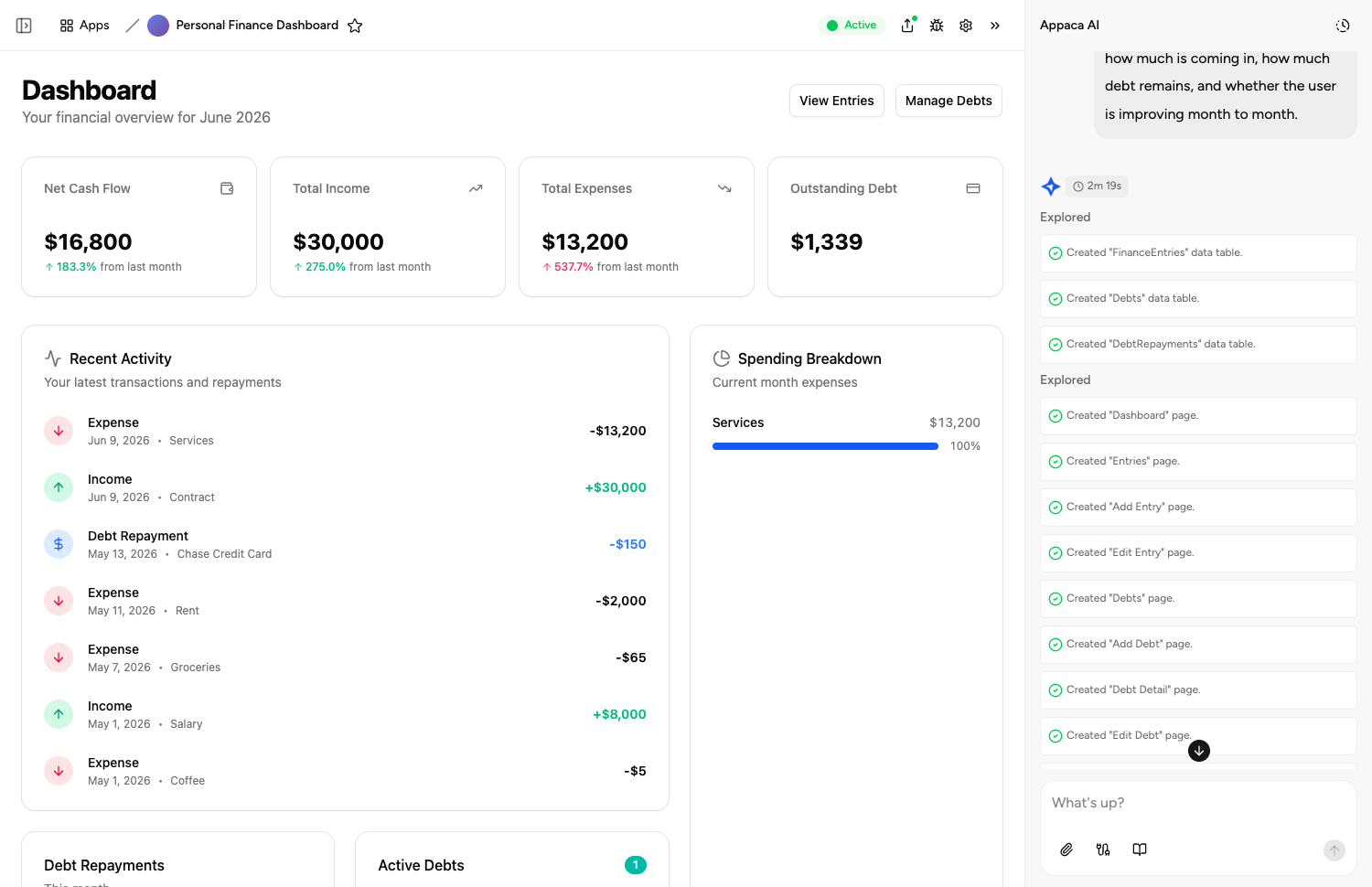
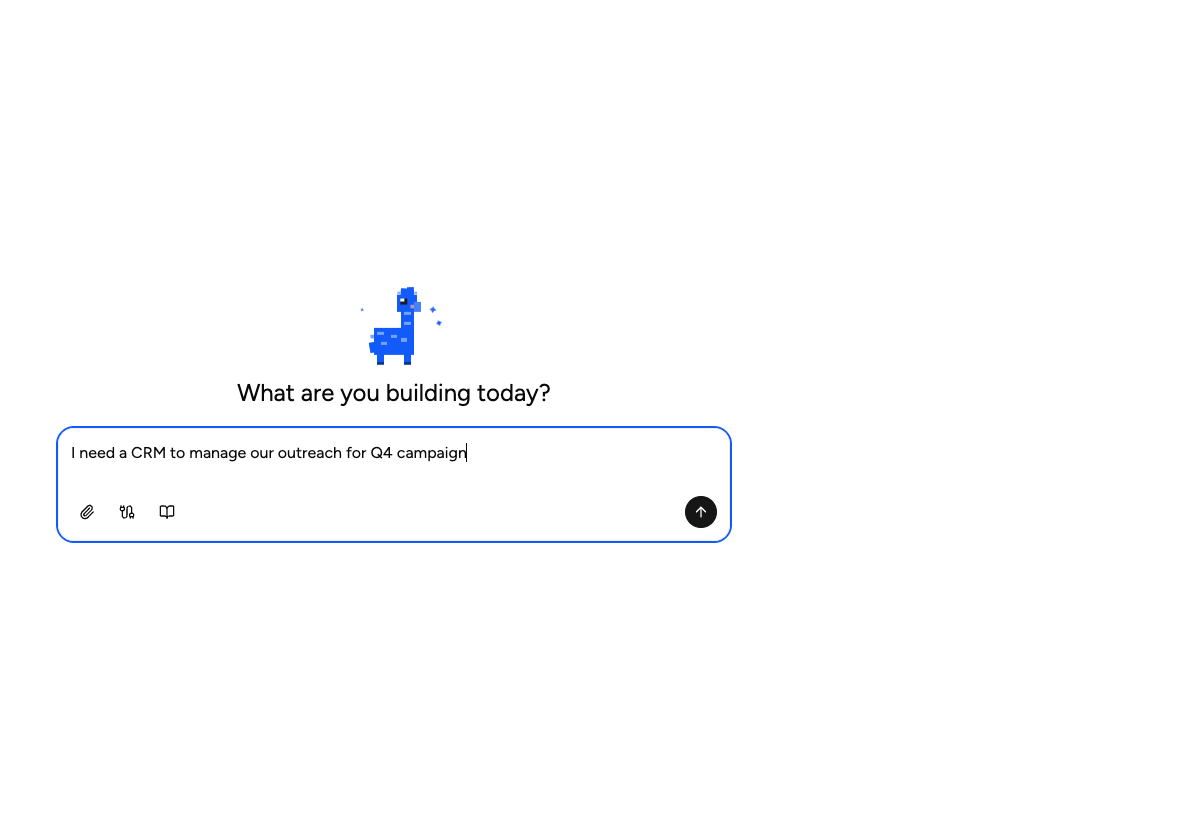
Tell the Appaca agent the internal tool you need for content creation and it builds a working app powered by GPT-5.5 or Claude 4 Sonnet. No code, no API keys, no deployment.
Switch models without rebuilding
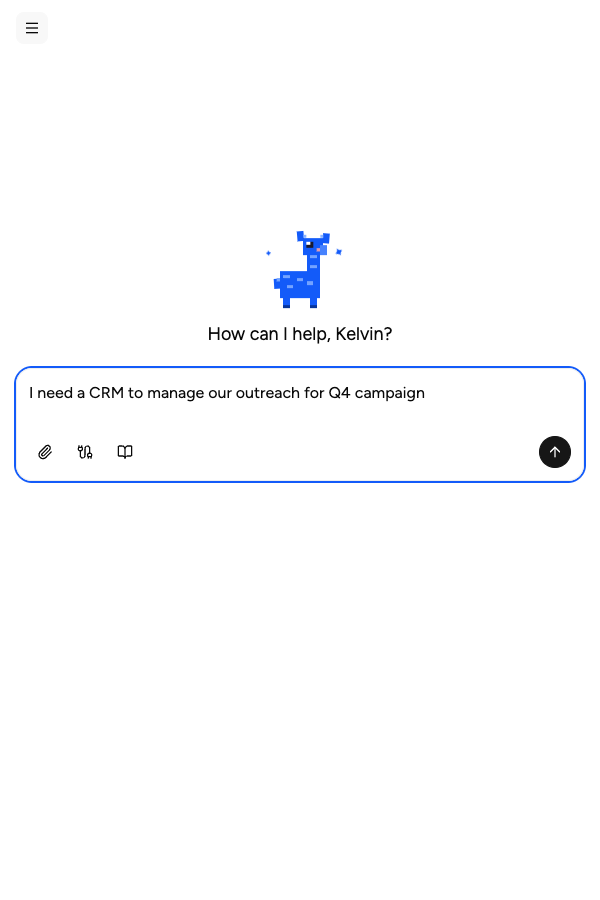
Start on GPT-5.5, test the same tool on Claude 4 Sonnet, and keep whichever performs better for your content creation workflow - the rest of your app stays exactly as it is.
Automated for the whole team
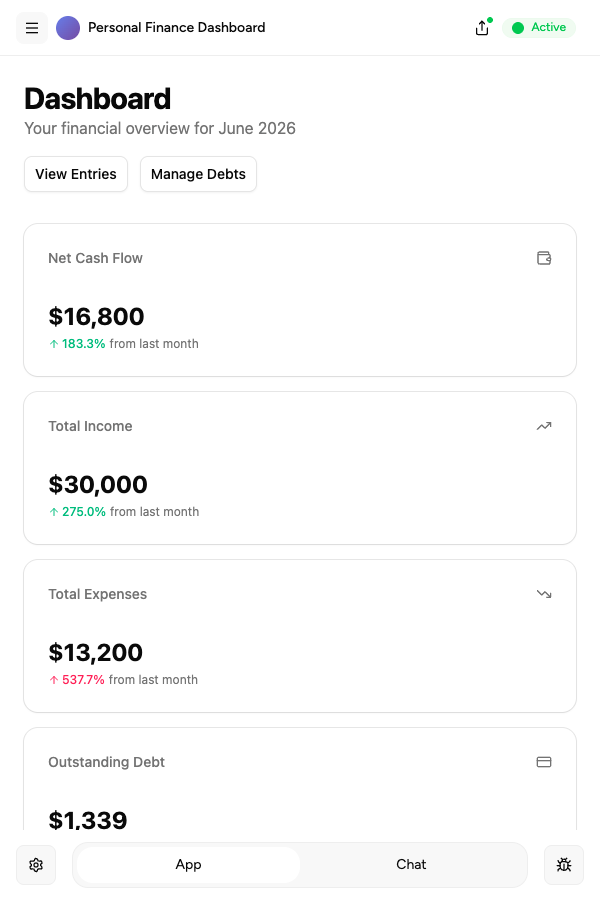
Schedule tools to run on autopilot - daily digests, weekly reports, real-time triggers - and share them with your whole team from one workspace.
Describe it, and it's built
Tell the Appaca agent what your team needs for content creation and it builds a working app powered by GPT-5.5 or Claude 4 Sonnet - connected to the tools you already use.





Keep comparing for Content Creation
More side-by-side model comparisons for content creation tasks.
FAQs
Claude 4 Sonnet and GPT-5.4 are the top content creation LLMs in 2026. Claude 4 Sonnet produces more original, less formulaic content and maintains quality across long-form pieces. GPT-5.4 is strong for SEO-structured content like listicles, how-to guides, and pillar pages where consistent formatting matters. For high-volume production at low cost, Gemini 2.5 Flash is the most efficient option.
Claude 4 Sonnet is generally cheaper: $3 input / $15 output per million tokens, versus $5 / $30 for GPT-5.5. Actual cost depends on how many tokens your content creation workload reads and writes.
They are equal: both GPT-5.5 and Claude 4 Sonnet support a 1M tokens context window.
Yes. Appaca is a no-code AI workspace: describe the internal tool your team needs for content creation and the Appaca agent builds it as a working app powered by GPT-5.5, Claude 4 Sonnet, or any other model in the directory - with a built-in database, team access, and integrations. No API keys to wire up and nothing to deploy.
Build Content Creation tools with GPT-5.5 or Claude 4 Sonnet
Describe the content creation tool your team needs and get a working app powered by the model you choose - with a built-in database, team access, and integrations. No code, no deployment.