Best AI Models for Content Creation
Content creation at scale requires a combination of creative range, SEO awareness, and production speed. The best LLMs for content creation handle an entire editorial workflow - from topic research and structured outlines to polished, format-specific final drafts - without degrading in quality across high volumes.
Top AI models for Content Creation
Ranked by real-world performance on content creation tasks - pricing, context windows, and strengths for each.
Claude 4 Sonnet
text 1M tokens contextA balanced-hybrid reasoning model tuned for everyday assistant and high-volume tasks.
GPT-5.4
text 1.1M tokens contextOpenAI's frontier model for complex professional work with best intelligence at scale for agentic, coding, and professional workflows.
GPT-5.5
text 1M tokens contextOpenAI's smartest and most capable model yet for agentic coding, knowledge work, and computer use, delivering a new class of intelligence at GPT-5.4 latency.
Gemini 2.5 Flash
text 1M tokens contextA fast, cost-efficient multimodal model optimized for everyday tasks with strong speed, long context, and native audio capabilities.
Claude 4 Opus
text 200K tokens contextThe flagship model, focused on deep reasoning, large-scale coding and sustained multi-step agentic workflows.
Evaluation criteria for Content Creation
The four factors that matter most when choosing an AI model for content creation tasks.
Creative range and originality
SEO-aware structuring and formatting
Consistency across content series
Speed for high-volume publishing workflows
Compare top Content Creation models
Side-by-side pricing, specs, and strengths for every pair of top content creation models.
GPT-5.4 vs Claude 4 Sonnet
OpenAI vs Anthropic for content creation - pricing, context windows, and strengths compared.
See the comparisonGPT-5.5 vs Claude 4 Sonnet
OpenAI vs Anthropic for content creation - pricing, context windows, and strengths compared.
See the comparisonGemini 2.5 Flash vs Claude 4 Sonnet
Google vs Anthropic for content creation - pricing, context windows, and strengths compared.
See the comparisonClaude 4 Sonnet vs Claude 4 Opus
Anthropic vs Anthropic for content creation - pricing, context windows, and strengths compared.
See the comparisonGPT-5.5 vs GPT-5.4
OpenAI vs OpenAI for content creation - pricing, context windows, and strengths compared.
See the comparisonGPT-5.4 vs Gemini 2.5 Flash
OpenAI vs Google for content creation - pricing, context windows, and strengths compared.
See the comparisonGPT-5.4 vs Claude 4 Opus
OpenAI vs Anthropic for content creation - pricing, context windows, and strengths compared.
See the comparisonGPT-5.5 vs Gemini 2.5 Flash
OpenAI vs Google for content creation - pricing, context windows, and strengths compared.
See the comparisonGPT-5.5 vs Claude 4 Opus
OpenAI vs Anthropic for content creation - pricing, context windows, and strengths compared.
See the comparisonGemini 2.5 Flash vs Claude 4 Opus
Google vs Anthropic for content creation - pricing, context windows, and strengths compared.
See the comparisonBuild Content Creation tools with the right model
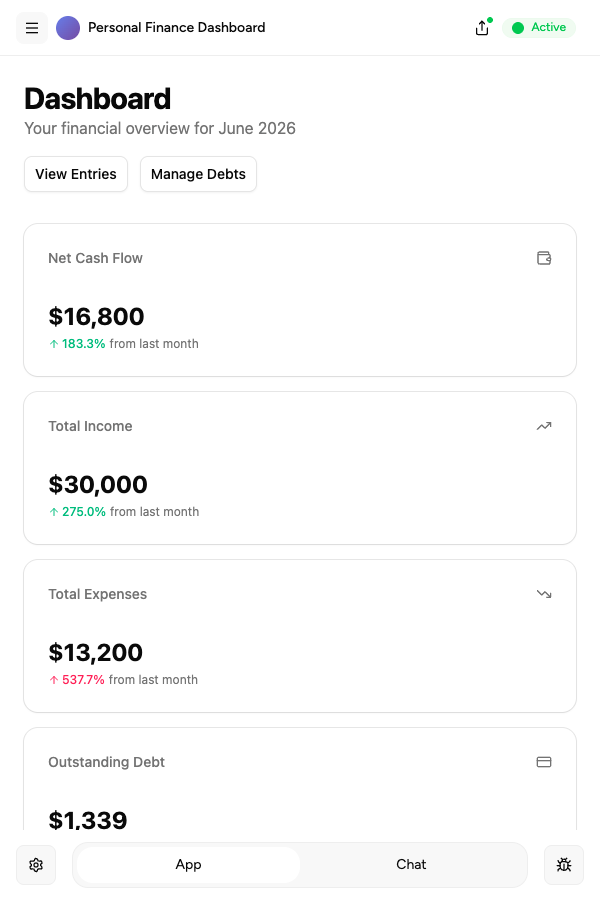
Appaca is the AI workspace for operators. Build internal tools and AI co-workers powered by any of these models - connected to your real data and ready for your whole team. No code, no deployment.
Build content creation tools instantly
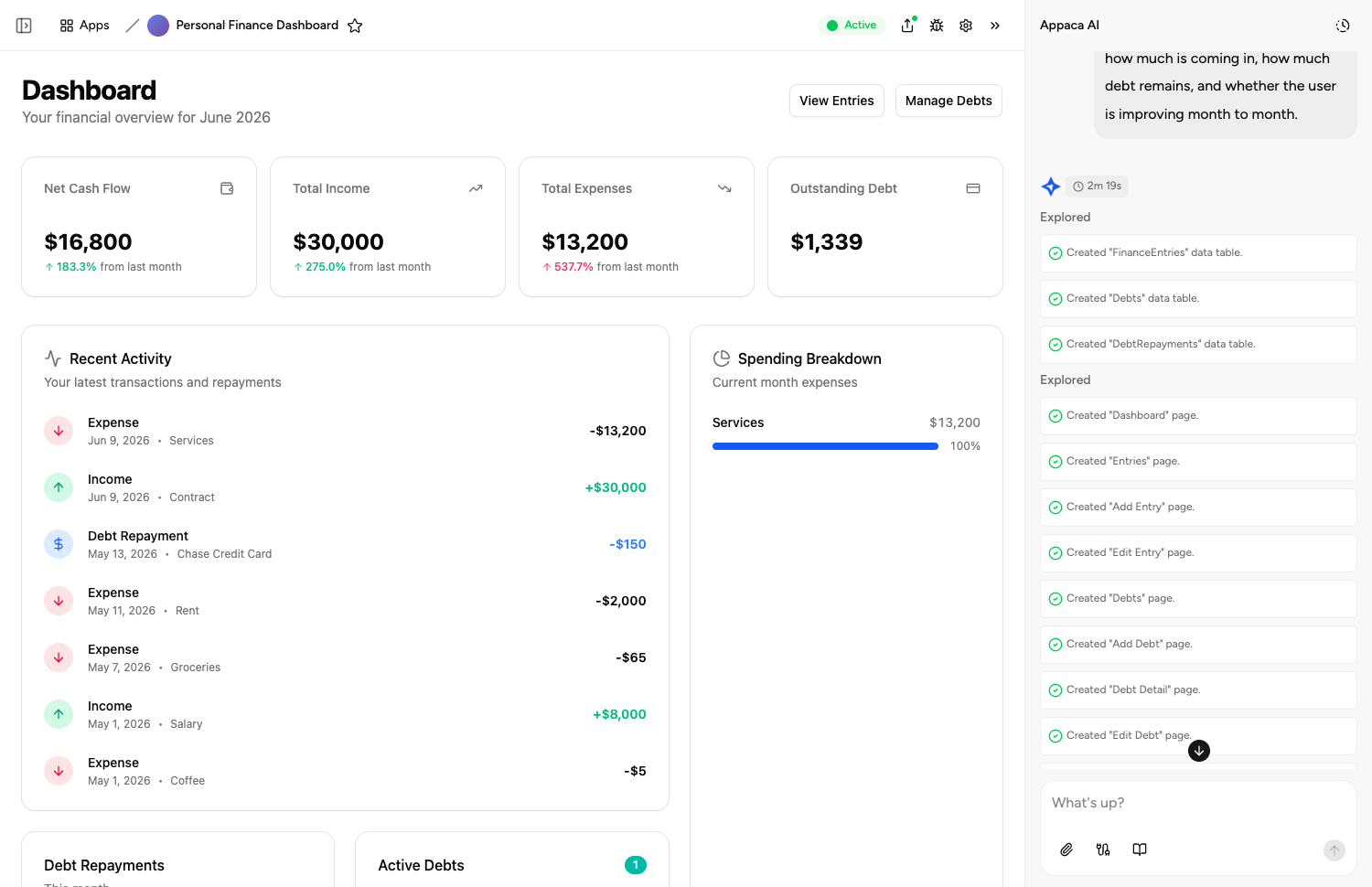
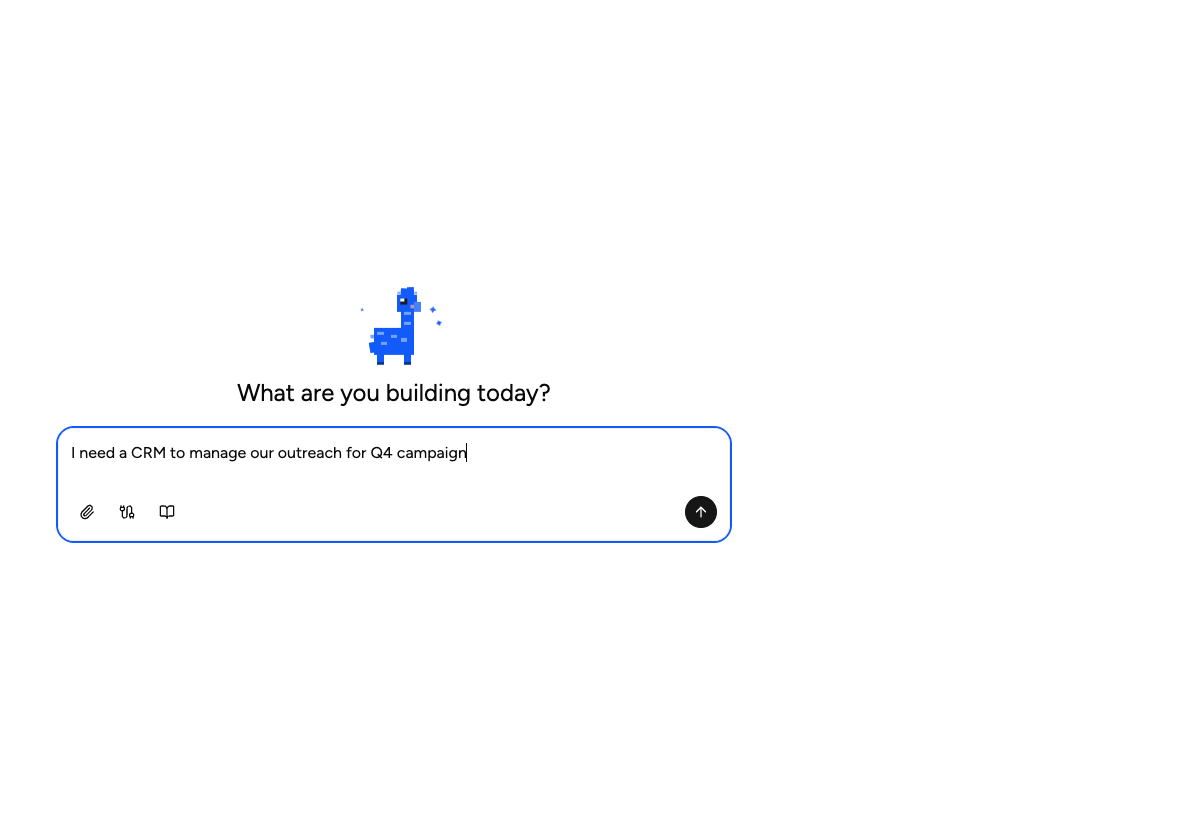
Tell the Appaca agent the internal tool you need and it builds a working app powered by the model you choose for content creation. No code, no API keys, no deployment.
Connected to your real data
Connect Slack, Notion, Google Sheets, Airtable, and more, plus a built-in database - so your AI tools work with your team's real context instead of generic answers.
Automated for the whole team
Schedule tools to run on autopilot - daily digests, weekly reports, real-time triggers - and share them with your whole team from one workspace.
Describe it, and it's built
Tell the Appaca agent what your team needs and it builds a working app powered by the model you choose - connected to the tools you already use.





Explore more use cases
Top-ranked AI models for other common business tasks.
FAQs
Claude 4 Sonnet and GPT-5.4 are the top content creation LLMs in 2026. Claude 4 Sonnet produces more original, less formulaic content and maintains quality across long-form pieces. GPT-5.4 is strong for SEO-structured content like listicles, how-to guides, and pillar pages where consistent formatting matters. For high-volume production at low cost, Gemini 2.5 Flash is the most efficient option.
Yes, with proper guidance. Provide the target keyword, search intent, competitor structure, and required headings. LLMs can produce well-structured, search-intent-aligned content, but originality, topical depth, and E-E-A-T signals still require human contribution. Use LLMs to build the framework and expand sections - then add original research, quotes, and expert perspective before publishing.
Claude 4 Sonnet and GPT-5.4 both perform well for scripts. Claude 4 Sonnet produces more natural, conversational dialogue that translates well to spoken audio. GPT-5.4 is better at structured narrative arcs and scripted explainer-style content. For YouTube scripts specifically, providing a hook framework and desired CTA significantly improves both models' output.
Yes, if you build structured workflows rather than open-ended prompting. Define templates for each content type, use consistent system prompts, and implement a review layer for quality control. Claude 4 Sonnet maintains quality across volume better than most models - it is less likely to produce repetitive filler content when generating at scale.
Claude 4 Sonnet and GPT-5.4 both handle content repurposing well - adapting a blog post into a LinkedIn thread, email newsletter, or Twitter/X carousel. Claude 4 Sonnet tends to produce better format-native adaptations (it writes a LinkedIn post that sounds like LinkedIn, not like a blog). Building a repurposing workflow on Appaca lets you automate the process across all your content formats.
Build AI tools for Content Creation
Describe the content creation tool your team needs and get a working app powered by the right model - with a built-in database, team access, and integrations. No code, no deployment.
- 7-day trial
- No credit card
- Cancel anytime