Gemini 2.5 Flash vs Claude 4 Opus for Content Creation
Compare Gemini 2.5 Flash by Google and Claude 4 Opus by Anthropic for content creation tasks - pricing, context windows, and strengths, and see how to put either to work in Appaca.
Gemini 2.5 Flash
A fast, cost-efficient multimodal model optimized for everyday tasks with strong speed, long context, and native audio capabilities.
View Gemini 2.5 FlashClaude 4 Opus
The flagship model, focused on deep reasoning, large-scale coding and sustained multi-step agentic workflows.
View Claude 4 OpusGemini 2.5 Flash vs Claude 4 Opus at a glance
Specs and pricing side by side, from the Appaca AI models directory.
| Spec | Gemini 2.5 Flash | Claude 4 Opus |
|---|---|---|
| Provider | Anthropic | |
| Model type | Text | Text |
| Context window | 1M tokens | 200K tokens |
| Input price | $0.3 / 1M tokens | $15 / 1M tokens |
| Output price | $2.5 / 1M tokens | $75 / 1M tokens |
| Status | Current | Superseded by Claude 4.1 Opus |
What matters for Content Creation
Evaluation criteria and how Gemini 2.5 Flash and Claude 4 Opus compare on what content creation tasks actually require.
Creative range and originality
SEO-aware structuring and formatting
Consistency across content series
Speed for high-volume publishing workflows
-
Gemini 2.5 Flash is 98% cheaper on input tokens ($0.3 vs $15 per million), which adds up quickly on high-volume content creation workloads.
-
Gemini 2.5 Flash is 97% cheaper on output tokens ($2.5 vs $75 per million) - the bigger factor for content creation tasks that generate long responses.
-
Gemini 2.5 Flash's 1M tokens context window is roughly 5x larger than Claude 4 Opus's 200K tokens, so it can handle bigger inputs in a single content creation pass.
-
Claude 4 Opus has been superseded by Claude 4.1 Opus - for new content creation builds, consider the newer model first.
Strengths side by side
Where each model shines, according to benchmarks and provider positioning.
Gemini 2.5 Flash
1. Highly cost-efficient for large-scale workloads
- Extremely low input cost ($0.30/M) and affordable output cost.
- Built for production environments where throughput and budget matter.
- Significantly cheaper than competitors like o4-mini, Claude Sonnet, and Grok on text workloads.
2. Fast performance optimized for everyday tasks
- Ideal for summarization, chat, extraction, classification, captioning, and lightweight reasoning.
- Designed as a high-speed “workhorse model” for apps that require low latency.
3. Built-in “thinking budget” control
- Adjustable reasoning depth lets developers trade off latency vs. accuracy.
- Enables dynamic cost management for large agent systems.
4. Native multimodality across all major formats
- Inputs: text, images, video, audio, PDFs.
- Outputs: text + native audio synthesis (24 languages with the same voice).
- Great for conversational agents, voice interfaces, multimodal analysis, and captioning.
5. Industry-leading long context window
- 1,000,000 token context window.
- Supports long documents, multi-file processing, large datasets, and long multimedia sequences.
- Stronger MRCR long-context performance vs previous Flash models.
6. Native audio generation and multilingual conversation
- High-quality, expressive audio output with natural prosody.
- Style control for tones, accents, and emotional delivery.
- Noise-aware speech understanding for real-world conditions.
7. Strong benchmark performance for its cost
- 11% on Humanity's Last Exam (no tools) - competitive with Grok and Claude.
- 82.8% on GPQA diamond (science reasoning).
- 72.0% on AIME 2025 single-attempt math.
- Excellent multimodal reasoning (79.7% on MMMU).
- Leading long-context performance in its price tier.
8. Capable coding assistance
- 63.9% on LiveCodeBench (single attempt).
- 61.9%/56.7% on Aider Polyglot (whole/diff).
- Agentic coding support + tool use + function calling.
9. Fully supports tool integration
- Function calling.
- Structured outputs.
- Search-as-a-tool.
- Code execution (via Google Antigravity / Gemini API environments).
10. Production-ready availability
- Available in: Gemini App, Google AI Studio, Gemini API, Vertex AI, Live API.
- General availability (GA) with stable endpoints and documentation.
Claude 4 Opus
- Highest capability in the family: described as “our most powerful model yet” by Anthropic.
- Exceptional at long-running tasks requiring thousands of steps and sustained focus (e.g., continuous codebase work for hours).
- Excellent performance on benchmarks: e.g., SWE-bench 72.5 % and Terminal-bench 43.2 %.
- Designed for complex agentic workflows, deep reasoning, tool use, and large context windows.
- Placed under a higher safety classification (ASL-3) due to its frontier capability and risk profile.
Use Gemini 2.5 Flash or Claude 4 Opus - or both
Appaca is the AI workspace for operators. Build internal content creation tools and AI co-workers powered by Gemini 2.5 Flash or Claude 4 Opus - connected to your real data and ready for your whole team. No code, no deployment.
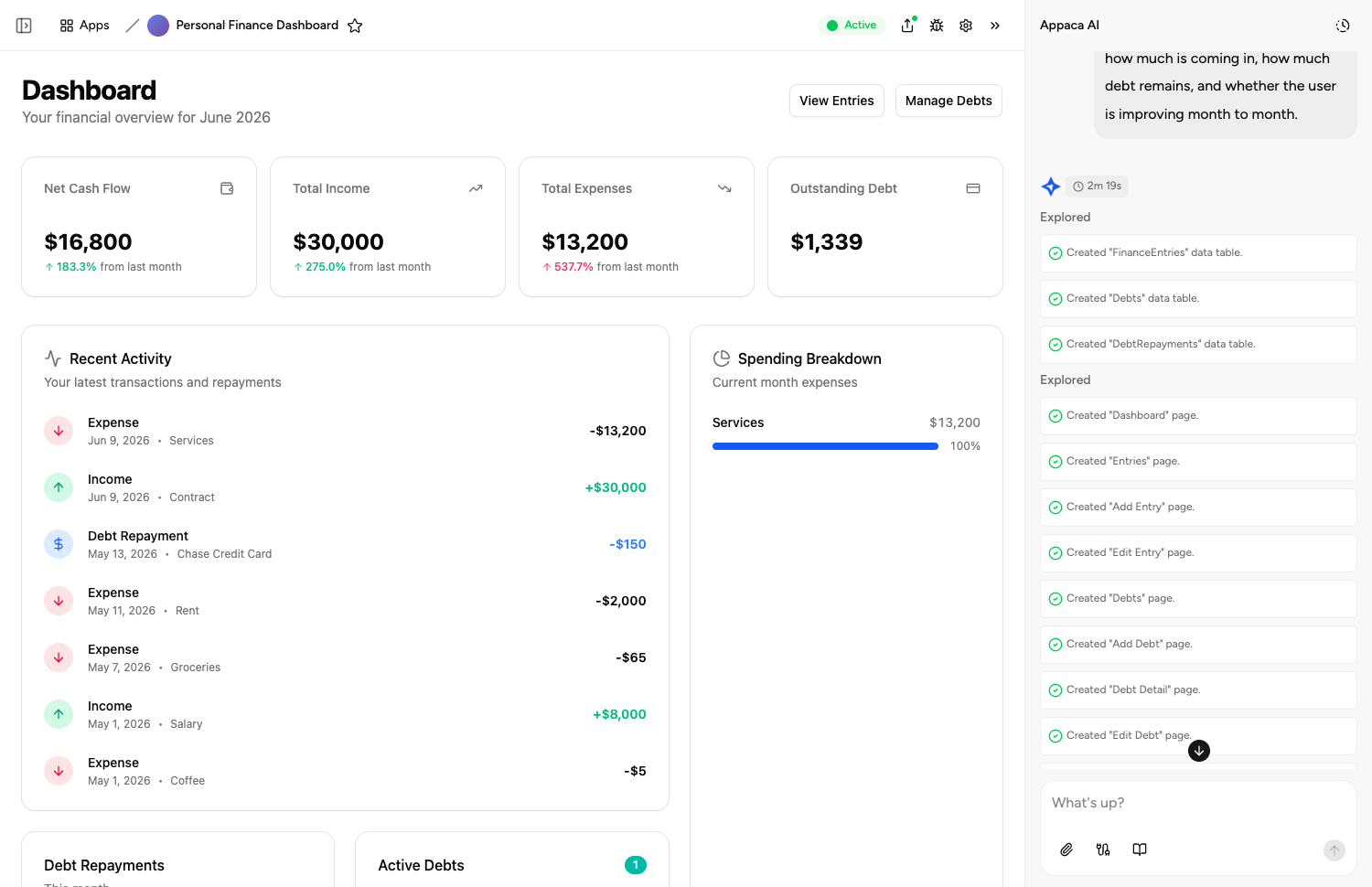
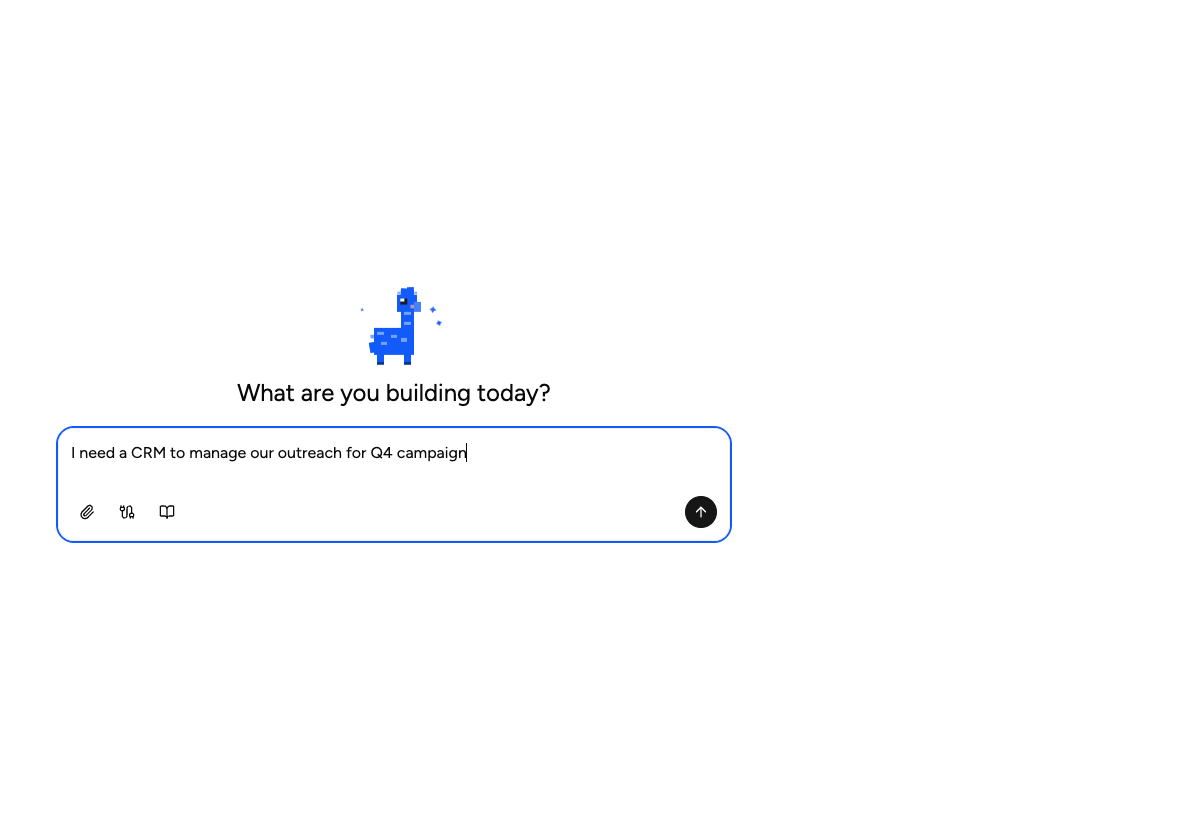
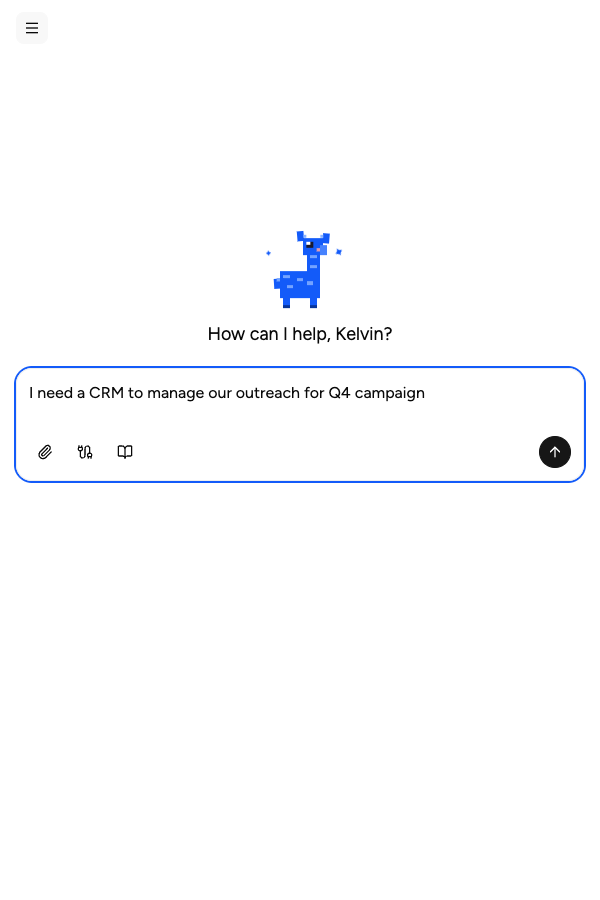
Describe it, and it's built
Tell the Appaca agent the internal tool you need for content creation and it builds a working app powered by Gemini 2.5 Flash or Claude 4 Opus. No code, no API keys, no deployment.
Switch models without rebuilding
Start on Gemini 2.5 Flash, test the same tool on Claude 4 Opus, and keep whichever performs better for your content creation workflow - the rest of your app stays exactly as it is.
Automated for the whole team
Schedule tools to run on autopilot - daily digests, weekly reports, real-time triggers - and share them with your whole team from one workspace.
Describe it, and it's built
Tell the Appaca agent what your team needs for content creation and it builds a working app powered by Gemini 2.5 Flash or Claude 4 Opus - connected to the tools you already use.





Keep comparing for Content Creation
More side-by-side model comparisons for content creation tasks.
FAQs
Claude 4 Sonnet and GPT-5.4 are the top content creation LLMs in 2026. Claude 4 Sonnet produces more original, less formulaic content and maintains quality across long-form pieces. GPT-5.4 is strong for SEO-structured content like listicles, how-to guides, and pillar pages where consistent formatting matters. For high-volume production at low cost, Gemini 2.5 Flash is the most efficient option.
Gemini 2.5 Flash is generally cheaper: $0.3 input / $2.5 output per million tokens, versus $15 / $75 for Claude 4 Opus. Actual cost depends on how many tokens your content creation workload reads and writes.
Gemini 2.5 Flash has the larger context window at 1M tokens, compared to 200K tokens for Claude 4 Opus. For content creation tasks, a larger window means the model can consider more context at once without losing track.
Yes. Appaca is a no-code AI workspace: describe the internal tool your team needs for content creation and the Appaca agent builds it as a working app powered by Gemini 2.5 Flash, Claude 4 Opus, or any other model in the directory - with a built-in database, team access, and integrations. No API keys to wire up and nothing to deploy.
Build Content Creation tools with Gemini 2.5 Flash or Claude 4 Opus
Describe the content creation tool your team needs and get a working app powered by the model you choose - with a built-in database, team access, and integrations. No code, no deployment.
- 7-day trial
- No credit card
- Cancel anytime