
GPT-4.1 Mini vs Claude 5 Sonnet
Compare pricing, context windows, and strengths for GPT-4.1 Mini by OpenAI and Claude 5 Sonnet by Anthropic - and see how to put either to work in Appaca.
GPT-4.1 Mini
Smaller, faster version of GPT-4.1 with low latency, strong instruction following, and a large 1M-token context window optimized for lightweight tasks.
View GPT-4.1 MiniClaude 5 Sonnet
Anthropic's most agentic Sonnet yet, closing much of the gap to Opus 4.8 on reasoning, coding, and tool use while staying at Sonnet's speed and price.
View Claude 5 SonnetGPT-4.1 Mini vs Claude 5 Sonnet at a glance
Specs and pricing side by side, from the Appaca AI models directory.
| Spec | GPT-4.1 Mini | Claude 5 Sonnet |
|---|---|---|
| Provider | OpenAI | Anthropic |
| Model type | Text | Text |
| Context window | 1.05M tokens | 1M tokens |
| Input price | $0.4 / 1M tokens | $3 / 1M tokens |
| Output price | $1.6 / 1M tokens | $15 / 1M tokens |
| Status | Superseded by GPT-5 Mini | Current |
How GPT-4.1 Mini and Claude 5 Sonnet differ
What the numbers mean in practice when choosing between GPT-4.1 Mini and Claude 5 Sonnet.
-
GPT-4.1 Mini is 87% cheaper on input tokens ($0.4 vs $3 per million), which adds up quickly in document-heavy workloads.
-
GPT-4.1 Mini is 89% cheaper on output tokens ($1.6 vs $15 per million) - the bigger factor for tools that generate long documents.
-
Context windows are close: GPT-4.1 Mini handles 1.05M tokens and Claude 5 Sonnet handles 1M tokens.
-
GPT-4.1 Mini has been superseded by GPT-5 Mini - for new builds, consider the newer model first.
Strengths side by side
Where each model shines, according to benchmarks and provider positioning.
GPT-4.1 Mini
1. Fast, Lightweight, and Cost-Efficient
- Designed for speed with low latency, making it ideal for high-volume, real-time applications.
- More affordable than larger GPT-4.1 and GPT-5 models, enabling scalable deployments.
2. Strong Instruction Following
- Excels at following structured instructions and producing concise, deterministic outputs.
- Suitable for assistants, command-style interfaces, and tools that require stable, predictable behavior.
3. Reliable Tool Calling & Structured Outputs
- Built with strong support for:
- Function calling
- Structured outputs (JSON, typed objects)
- Systematic workflows
- Ideal for automation, reasoning over parameters, and multi-step tool pipelines.
4. Multimodal Input (Text + Image)
- Accepts both text and image as input.
- Useful for tasks such as:
- Image captioning
- UI element reading
- Visual question answering
5. Text-Only Output for Clarity
- Outputs text only, ensuring clean and consistent results for:
- Data extraction
- Summaries
- Code comments
- Chat responses
6. Massive 1M-Token Context Window
- Supports 1,047,576 tokens, enabling:
- Long documents or books
- Large codebases
- Extensive conversation memory
- Great for long-context reasoning without requiring chunking.
7. Practical for Everyday AI Applications
- Sweet spot for:
- Customer support agents
- Content rewriting
- Lightweight analysis
- Classification and tagging
- Workflow assistants
- Recommended primarily for simpler use cases, with GPT-5 Mini suggested for more complex tasks.
8. Broad API Support
- Available across:
- Chat Completions
- Responses
- Realtime
- Assistants
- Other major API endpoints
- Compatible with long-context modes for large-scale retrieval and processing.
Claude 5 Sonnet
1. Anthropic's most agentic Sonnet yet
- A substantial upgrade over Sonnet 4.6 on reasoning, tool use, coding, and knowledge work - narrows the gap to Opus 4.8 while staying at Sonnet pricing.
- Early partners describe it finishing multi-step jobs end to end where prior Sonnet models used to stall halfway.
2. Clear benchmark gains over Sonnet 4.6
- 63.2% on SWE-bench Pro (vs 58.1%), 80.4% on Terminal-Bench 2.1 (vs 67.0%), 81.2% on OSWorld-Verified (vs 78.5%), and 57.4% on Humanity's Last Exam with tools (vs 46.8%).
- On the GDPval-AA v2 knowledge-work benchmark it edges past Opus 4.8 (1,618 vs 1,615).
3. Near-Opus performance at a fraction of the price
- Priced at $3/M input and $15/M output - 40% cheaper than Opus 4.8's $5/$25 - with introductory pricing of $2/$10 through Aug 31, 2026 during the rollout.
- Supports
low,medium,high, andxhigheffort levels, covering a wider cost-performance range than Sonnet 4.6 and matching Opus 4.8 on some tasks at higher effort.
4. Long-context, long-horizon reliability
- Full 1M token context window with up to 128K output tokens.
- Adaptive thinking automatically decides how long to reason; better self-correction, fewer tool errors, and steadier follow-through across long agent sessions in Claude Code and Cowork.
5. Safer and more honest than its predecessor
- Lower rates of hallucination, sycophancy, and misaligned behavior than Sonnet 4.6 on Anthropic's automated safety audits.
- Deliberately limited cyber capability compared with Opus-class models, shipped with cyber safeguards enabled by default.
6. Updated tokenizer
- Uses a new tokenizer (shared with the Opus 4.7/4.8 line) that can map the same text to up to 1.35x more tokens than Sonnet 4.6 - introductory pricing is set so the switch is roughly cost-neutral.
Use GPT-4.1 Mini or Claude 5 Sonnet - or both
Appaca is the AI workspace for operators. Build internal tools and AI co-workers powered by GPT-4.1 Mini or Claude 5 Sonnet - connected to your real data and ready for your whole team. No code, no deployment.
Describe it, and it's built
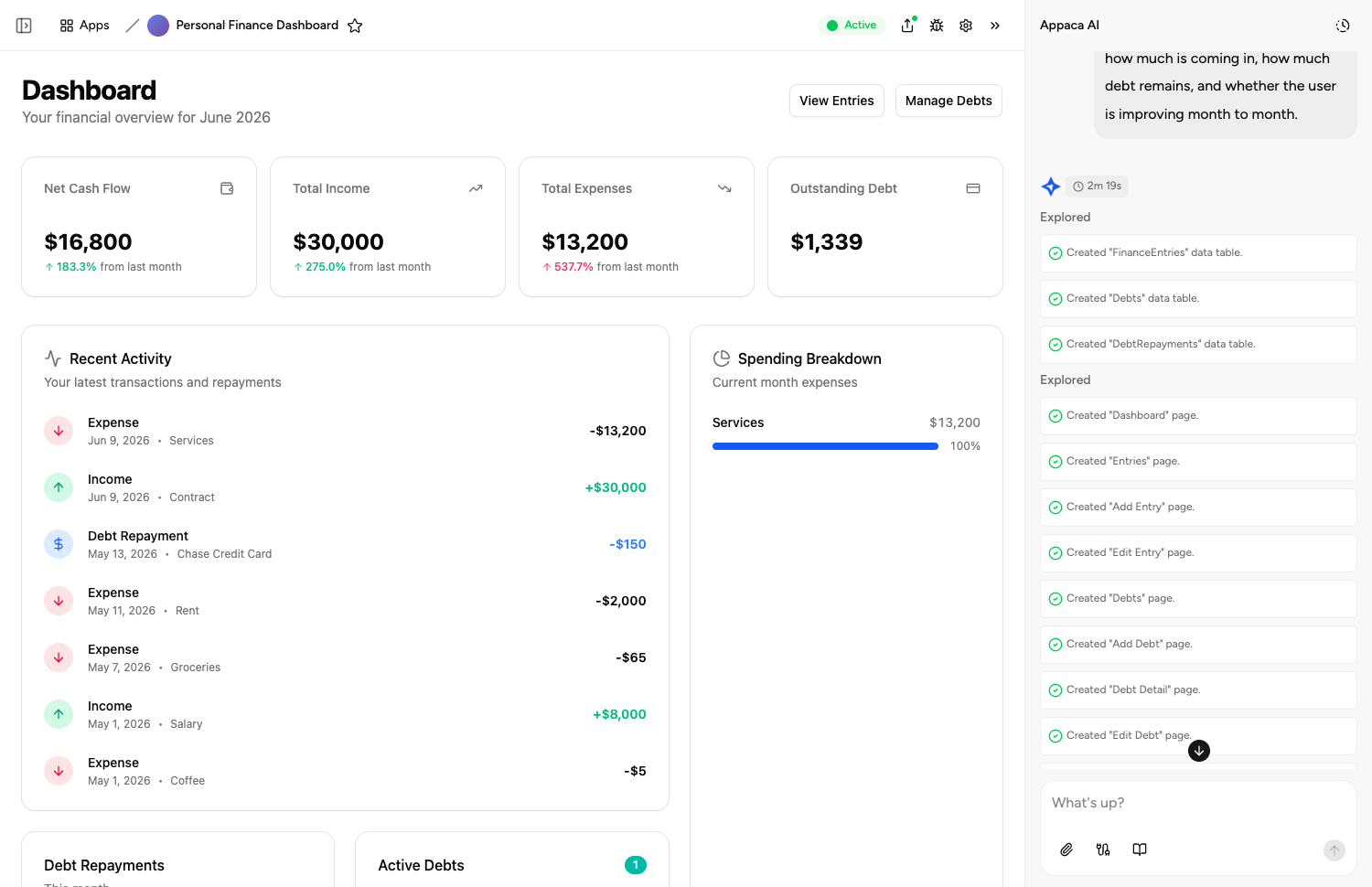
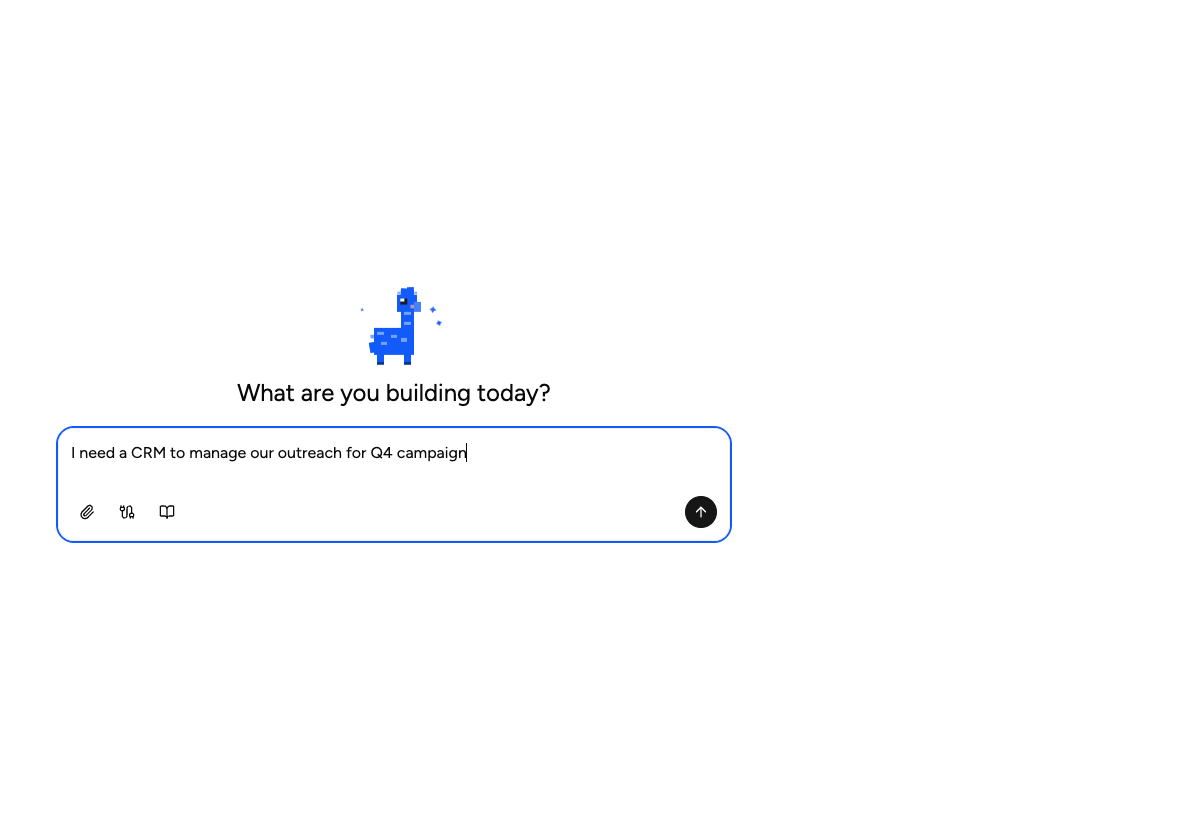
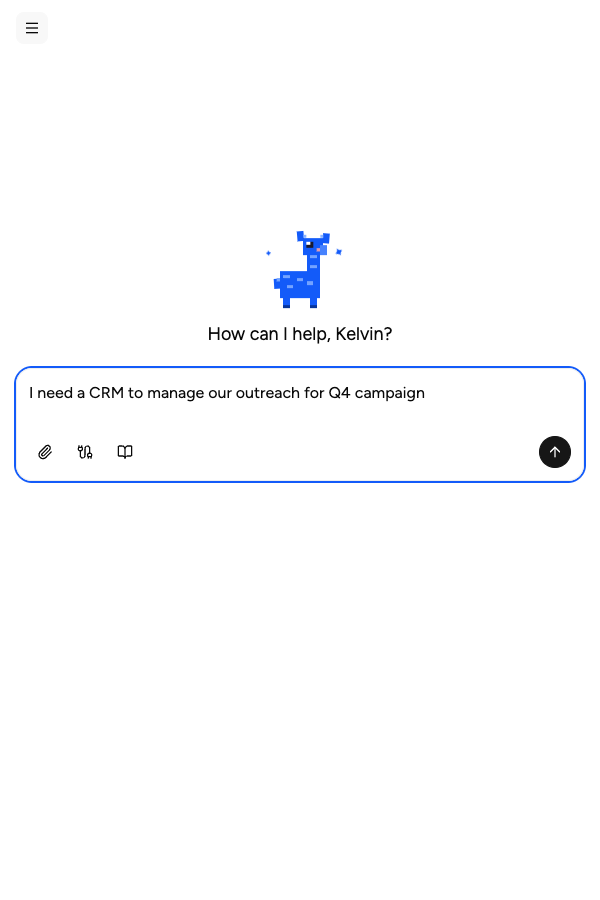
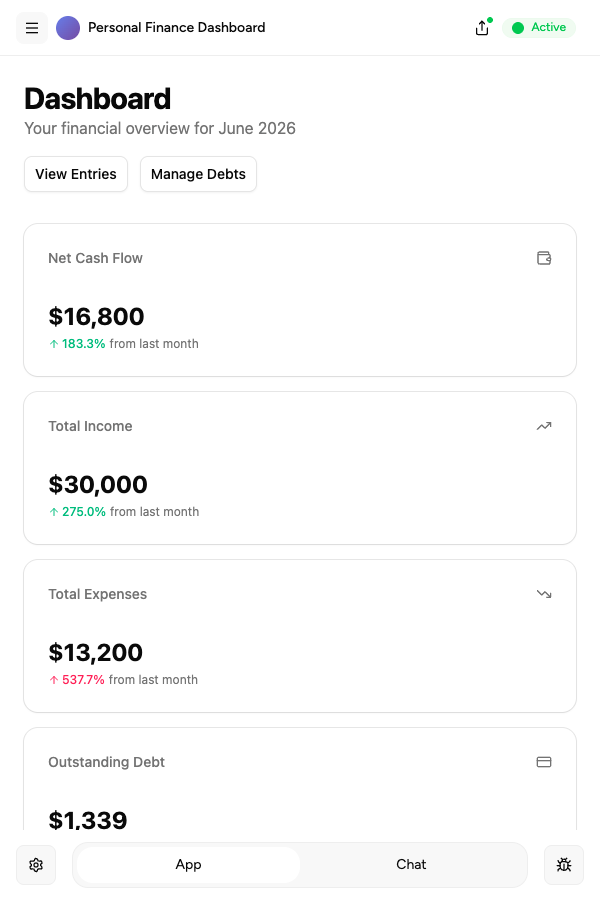
Tell the Appaca agent the internal tool you need and it builds a working app powered by GPT-4.1 Mini or Claude 5 Sonnet. No code, no API keys, no deployment.
Switch models without rebuilding
Start on GPT-4.1 Mini, test the same tool on Claude 5 Sonnet, and keep whichever performs better - the rest of your app stays exactly as it is.
Automated for the whole team
Schedule tools to run on autopilot - daily digests, weekly reports, real-time triggers - and share them with your whole team from one workspace.
Describe it, and it's built
Tell the Appaca agent what your team needs and it builds a working app powered by GPT-4.1 Mini or Claude 5 Sonnet - connected to the tools you already use.





Related comparisons
See how GPT-4.1 Mini and Claude 5 Sonnet stack up against other models in the directory.
FAQs
GPT-4.1 Mini is generally cheaper: $0.4 input / $1.6 output per million tokens, versus $3 / $15 for Claude 5 Sonnet. Actual cost depends on how many tokens your workload reads and writes.
GPT-4.1 Mini has the larger context window at 1.05M tokens, compared to 1M tokens for Claude 5 Sonnet. A larger window means the model can consider more text at once - useful for long contracts, codebases, or months of records.
It depends on the job. Compare the pricing, context window, and strengths above against your workload - and remember the choice isn't permanent. In Appaca you can build a tool on GPT-4.1 Mini, test the same tool on Claude 5 Sonnet, and switch at any time without rebuilding anything.
Yes. Appaca is a no-code AI workspace: describe the internal tool your team needs and the Appaca agent builds it as a working app powered by GPT-4.1 Mini, Claude 5 Sonnet, or any other model in the directory - with a built-in database, team access, and integrations. No API keys to wire up and nothing to deploy.
Build AI tools with GPT-4.1 Mini or Claude 5 Sonnet
Describe the tool your team needs and get a working app powered by the model you choose - with a built-in database, team access, and integrations. No code, no deployment.
- 7-day trial
- No credit card
- Cancel anytime