
Claude 4.8 Opus vs Claude 4 Sonnet
Compare pricing, context windows, and strengths for Claude 4.8 Opus by Anthropic and Claude 4 Sonnet by Anthropic - and see how to put either to work in Appaca.
Claude 4.8 Opus
Anthropic's flagship model for coding and agents, building on Opus 4.7 with stronger reliability, a cheaper fast mode, and gains across coding, computer use, and professional work.
View Claude 4.8 OpusClaude 4 Sonnet
A balanced-hybrid reasoning model tuned for everyday assistant and high-volume tasks.
View Claude 4 SonnetClaude 4.8 Opus vs Claude 4 Sonnet at a glance
Specs and pricing side by side, from the Appaca AI models directory.
| Spec | Claude 4.8 Opus | Claude 4 Sonnet |
|---|---|---|
| Provider | Anthropic | Anthropic |
| Model type | Text | Text |
| Context window | 1M tokens | 1M tokens |
| Input price | $5 / 1M tokens | $3 / 1M tokens |
| Output price | $25 / 1M tokens | $15 / 1M tokens |
| Status | Current | Superseded by Claude 4.5 Sonnet |
How Claude 4.8 Opus and Claude 4 Sonnet differ
What the numbers mean in practice when choosing between Claude 4.8 Opus and Claude 4 Sonnet.
-
Claude 4 Sonnet is 40% cheaper on input tokens ($3 vs $5 per million), which adds up quickly in document-heavy workloads.
-
Claude 4 Sonnet is 40% cheaper on output tokens ($15 vs $25 per million) - the bigger factor for tools that generate long documents.
-
Both models offer the same 1M tokens context window.
-
Claude 4 Sonnet has been superseded by Claude 4.5 Sonnet - for new builds, consider the newer model first.
Strengths side by side
Where each model shines, according to benchmarks and provider positioning.
Claude 4.8 Opus
1. Modest but tangible gains across the board
- 69.2% on SWE-bench Pro (+4.9 points over Opus 4.7's 64.3%), 88.6% on SWE-bench Verified, and a 1,890 Elo on GDPval-AA - about 121 Elo ahead of GPT-5.5.
- Anthropic frames it as an incremental refinement of Opus 4.7 rather than a step-change release.
2. The most reliable agent model Anthropic has shipped
- The only model to complete every case end-to-end on Anthropic's internal Super-Agent benchmark, beating prior Opus models and GPT-5.5 at parity on cost.
- Leads CursorBench across every effort level with more efficient tool calling - fewer steps for the same intelligence.
- 84% on Online-Mind2Web and stronger OSWorld-Verified scores make it the strongest computer-use and browser-agent model Anthropic has tested.
3. New highs for professional and legal work
- Highest score ever recorded on Anthropic's Legal Agent Benchmark, and the first model to break 10% on its all-pass standard.
- Roughly a 4x improvement in honesty and calibrated uncertainty versus Opus 4.7 on Anthropic's evaluations.
4. Cheaper, faster controls
- Standard pricing holds at $5/M input and $25/M output, unchanged from Opus 4.7.
- Fast mode now runs at 2.5x speed for $10/M input and $50/M output - about a third of what fast mode cost on prior Opus releases.
- A new effort dial gives finer control over how hard the model works before answering.
5. Long-horizon agent workflows
- 1M token context window in beta and up to 128K output tokens.
- Introduces Dynamic Workflows (research preview) in Claude Code - Opus can write its own orchestration script and run up to 16 concurrent / 1,000 total subagents in a single session.
Claude 4 Sonnet
- Hybrid reasoning: supports both fast (“near-instant”) and extended thinking modes.
- Optimised for responsiveness, cost and high-volume production workloads.
- Strong coding performance relative to prior Sonnet versions (improved over Sonnet 3.7).
- Available even in free tiers (alongside paid plans).
- Better suited for general-purpose use and agents where speed + cost-efficiency matter.
Use Claude 4.8 Opus or Claude 4 Sonnet - or both
Appaca is the AI workspace for operators. Build internal tools and AI co-workers powered by Claude 4.8 Opus or Claude 4 Sonnet - connected to your real data and ready for your whole team. No code, no deployment.
Describe it, and it's built
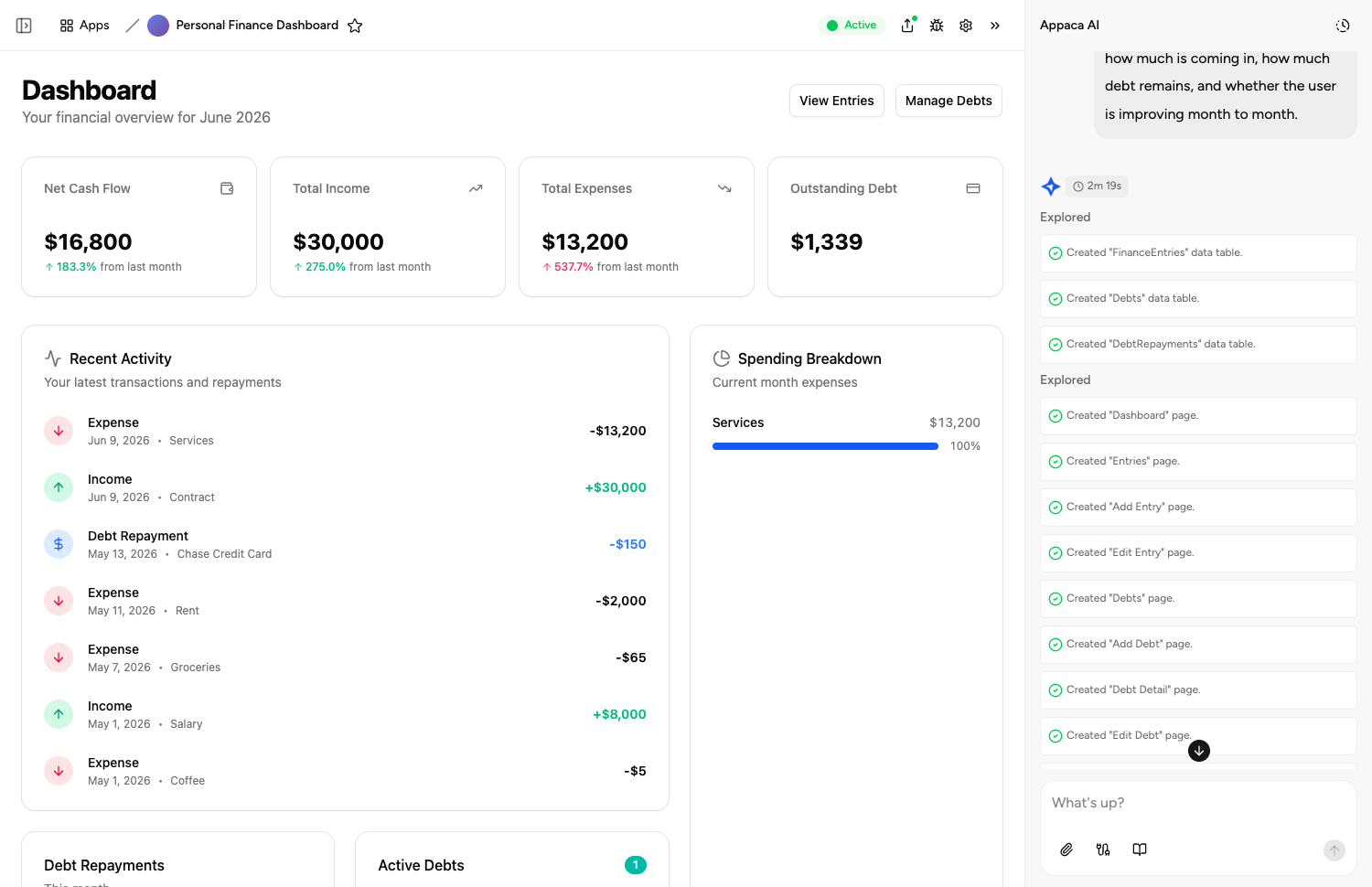
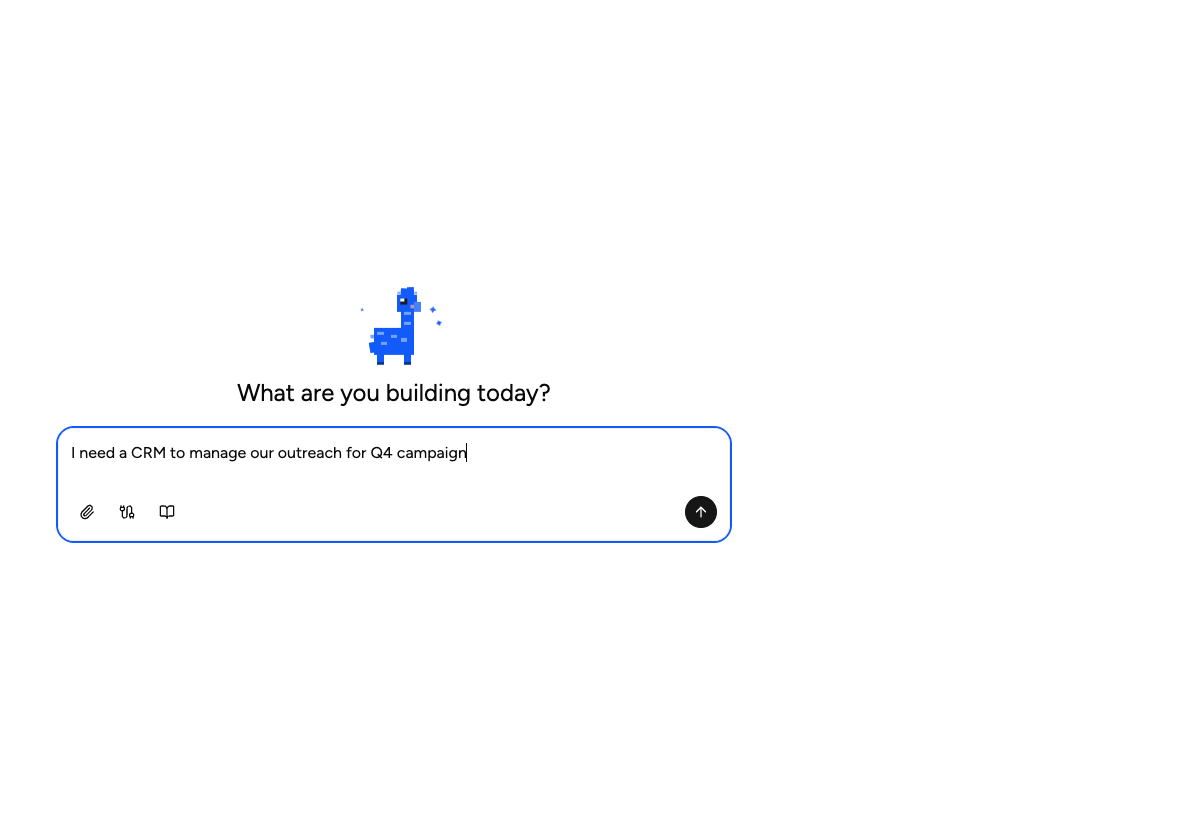
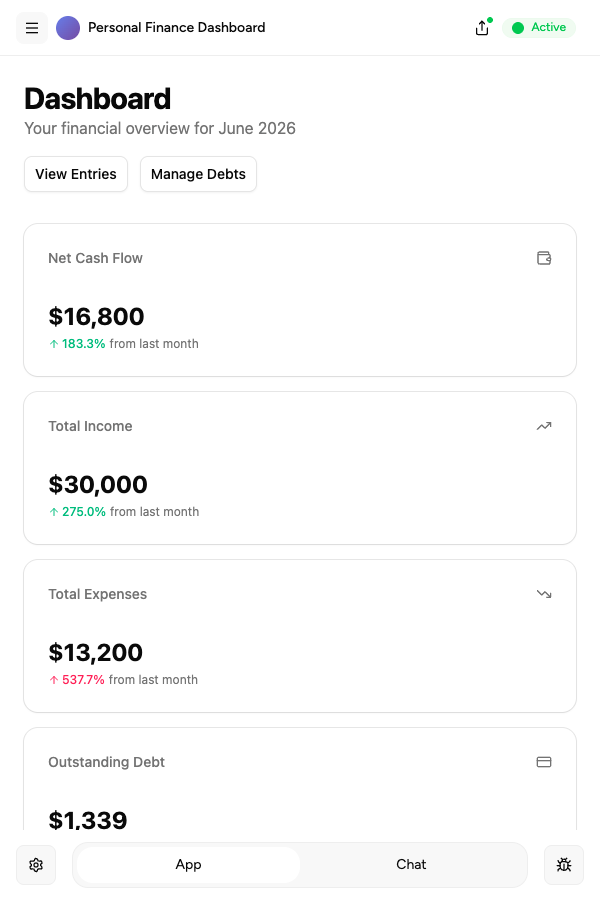
Tell the Appaca agent the internal tool you need and it builds a working app powered by Claude 4.8 Opus or Claude 4 Sonnet. No code, no API keys, no deployment.
Switch models without rebuilding
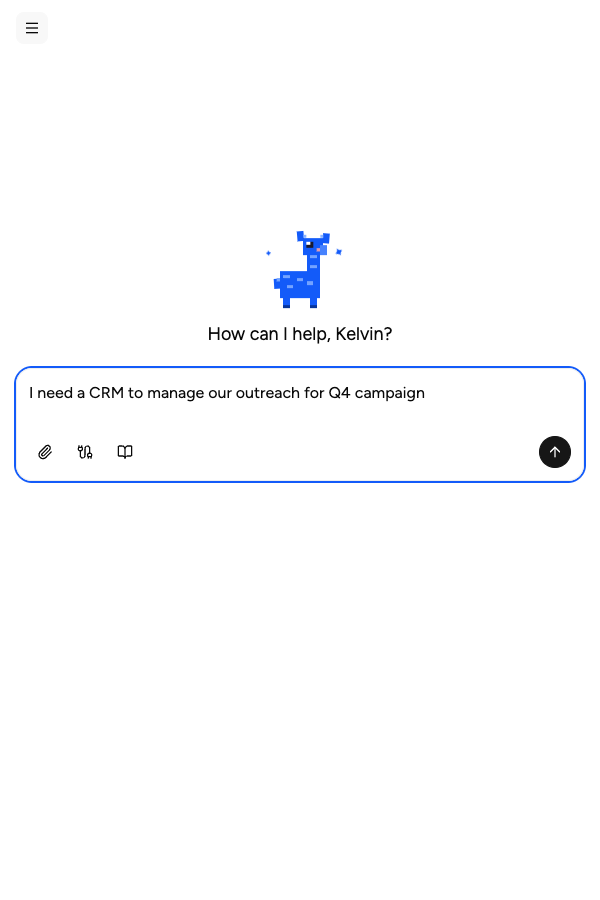
Start on Claude 4.8 Opus, test the same tool on Claude 4 Sonnet, and keep whichever performs better - the rest of your app stays exactly as it is.
Automated for the whole team
Schedule tools to run on autopilot - daily digests, weekly reports, real-time triggers - and share them with your whole team from one workspace.
Describe it, and it's built
Tell the Appaca agent what your team needs and it builds a working app powered by Claude 4.8 Opus or Claude 4 Sonnet - connected to the tools you already use.





Related comparisons
See how Claude 4.8 Opus and Claude 4 Sonnet stack up against other models in the directory.
FAQs
Claude 4 Sonnet is generally cheaper: $3 input / $15 output per million tokens, versus $5 / $25 for Claude 4.8 Opus. Actual cost depends on how many tokens your workload reads and writes.
They are equal: both Claude 4.8 Opus and Claude 4 Sonnet support a 1M tokens context window.
It depends on the job. Compare the pricing, context window, and strengths above against your workload - and remember the choice isn't permanent. In Appaca you can build a tool on Claude 4.8 Opus, test the same tool on Claude 4 Sonnet, and switch at any time without rebuilding anything.
Yes. Appaca is a no-code AI workspace: describe the internal tool your team needs and the Appaca agent builds it as a working app powered by Claude 4.8 Opus, Claude 4 Sonnet, or any other model in the directory - with a built-in database, team access, and integrations. No API keys to wire up and nothing to deploy.
Build AI tools with Claude 4.8 Opus or Claude 4 Sonnet
Describe the tool your team needs and get a working app powered by the model you choose - with a built-in database, team access, and integrations. No code, no deployment.